Reviews

Nevinson war art shows fascinating creations of a rebel which enraged censors

If, like me, you’ve stayed clear of most things to do with commemorating the start of the First World War, you might like to change your mind where a current exhibition is concerned.

There’s only three more weeks left to see Rebel Visions, The War Art of CRW Nevinson at the Barber Institute of Fine Arts in Birmingham.  Complementing it though very different is German Expressionist Prints from the Barber Collection, another fine set of works which were exhibited and held up to derision by the Nazis in the 1930s, frightened of their brutal honesty and power.

The Nevinson exhibition tells his story, from being alienated as pretty much the only British Futurist on the outbreak of war, to not being able to fight on health grounds to subsequently serving as a driver and caring for injured soldiers, experiences which soon put him off the futurists’ glorification of war. He returned to France to create art officially though as this exhibition explains, some of his works did not meet with full approval; an oil painting entitled A Group of Soldiers was not thought to be heroic enough, and other works were censored.

Another work was partly inspired by his work in France, finding a barn full of injured soldiers who had not been treated for three weeks; The Doctor shows an injured man being treated next to one already dead beside him.

The works combine futurist and cubist techniques; there are sharp angles and limbs, pointed weapons and a geometric neatness to images of loss, horror and futility. A couple of gentle landscapes appear too, a contrast to The Road From Arras to Bapaume, showing the road disappearing into the distance through empty fields, a few walkers and vehicles on it.

Those who profiteered from war were a target for Nevinson, and he painted a man sitting contemplatively in his living room, the photo of a soldier behind him; it’s called He Gained a Fortune But He Gave A Son. In another, War Profiteers, artificial lights turn the faces of women made rich by war a deathly pale colour. Women are also pictured working for the war effort at home.

The painting The Unending Cult of Human Sacrifice is the stand-out work for me, combining images of war with religious iconography, planes and modern war technology, painted in the early 1930s and depicting his fear that another war was coming which would destroy Europe.

It’s a powerful exhibition of works from an artist who was clearly an interesting and complex person.

In another gallery, a small display of German expressionist prints from the Barber’s collection includes works by Max Beckmann, George Grosz and Egon Schiele. Depicting war, emotion, loss and Jesus they were all considered un-German in the 1930s and exhibited in a bid to create nationalist fervour against them.

Happily for us they survived as a sobering reminder of what should never be allowed to happen again.

*The CWR Nevinson exhibition is on until January 25.
Coventry and Warwickshire’s art world in 2014 – a quick look back

A tour with Jeremy Deller, an evening with a KLF star, a camp parade, champagne on the terrace – and an embarrassing slip into an art work. Some of my memories of 2014.

As most galleries stay closed today, it’s time to look back at some of the highlights of the last year in the local art world – or my take on them anyway.

I can’t believe it’s nearly a year since I set out on a horrible January night to see George Wagstaffe and Michala Gyetvai’s exhibition at the Michael Heseltine Gallery in Middleton Cheney, near Banbury.

Their combination of sculpture and textiles work well together and it was lovely to see how they’ve inspired and revitalised each other’s art careers.

I ran into them several more times during the year too, at Ragley Hall where artist Dawn Harris had a residency which produced some interesting exhibitions and some fun openings, and where Michala was one of several artists working from studios in the stable block.

Champagne on the terrace outside the Hall in the sun before a tour of the first (and now only) Open exhibition was particularly memorable. It’s a shame that with a year’s worth of events planned Dawn and the other artists were asked to leave a few weeks ago – I hope they find somewhere else soon, but I fear it won’t be so attractive.

As openings go, the best had to be Qasim Riza Shaheen’s exhibition The Last Known Post at the mac in Birmingham. Vodka and orange, live Sufi music, a highly glamorous and camp parade – what’s not to enjoy!

Walking art featured strongly at the start of the year, with exhibitions of various artists’ work at the Mead, the mac in Birmingham and a Richard Long exhibition at The New Art Gallery, Walsall. Long held an In Conversation in Walsall which showed his non-nonsense nature, and the thought of his long walks, carrying everything he needs with him, was very impressive. The New Art Gallery also held an exhibition dedicated to the history of its Garman Ryan Collection and it was great to see the influence of two women on Midlands art.

Nuneaton’s Museum & Art Gallery continued to offer up some little gems of exhibitions in its own quiet way. At the start of the year I enjoyed Shaun Morris’s exhibition of paintings mostly of the underneath of the M6, and later in the year explored the varied world of illustration and some expansive works by Paul Newman.

Romanian-born Coventry University graduate Mircea Teleaga exhibited his moody paintings influenced by his home country at the Lewis Gallery in Rugby School, an attractive gallery which often has interesting exhibitions but is unfortunately only open weekday afternoons.

Other Coventry University graduates were chosen to have their work exhibited as part of New Art West Midlands, and I’m sure we will be seeing a lot more of Lucy Hutchinson’s work in future. Her striking golden wallpaper telling stories of family across the world was a highlight of the show at the Birmingham Art Gallery and Museum.

At Leamington Spa Art Gallery & Museum, Professor David Carpanini brought Welsh valley life into focus in gritty paintings. The Compton Verney the season opened with Moore Rodin, including some striking large works in the grounds which made a great impression, and continued with the Folk Art exhibition which moved up from London later in the year.

At Rugby Art Gallery & Museum the annual show of the Rugby Collection was enlivened with a focus on conservation work, and the end of the year show It’s A Wrap looked at the tradition of wrapping in Japan, furoshiki.

In March, I saw Bill Drummond begin his 12-year world tour at Eastside Projects in Birmingham, which was a fun and predictably wacky occasion – let’s hope we’re both back there for the planned end of it in 2025.

At the Mead, a personal highlight was being shown around the All That is Solid Melts Into Air exhibition by its creator Jeremy Deller, while I interviewed him, then also hearing him talk about it at the Herbert, before being bussed back for the official opening. Very entertaining and interesting.

At the Royal Shakespeare Theatre in Stratford, the interactive exhibition Is This A Dagger? Was a good idea for an exhibition, and a nice excuse to visit the theatre again. And at Packwood House in the summer, Hilary Jack created some great installations to enhance a tour of the lovely grounds.

Coventry Artspace launched a programme of exhibitions looking at Coventry in the former Coventry Blaze shop in the City Arcade in the autumn, and at one event there I stepped back to clap a speech and ingnominously stepped back into Kathryn Hawkins’s installation, river …. splashing water all up the wall. Sorry about that (again).

There were closures too; the Gallery Upstairs in Henley-in-Arden, run by brother and sister Carey and Paul Moon, and previously owned by their parents, closed with a final exhibition in May and the beautiful building was put up for sale.

In Coventry, a group of artists calling themselves Through the Wall Projects, including another New Art West Midlands artist James Birkin, who paints great paintings of mostly derelict buildings, set up shop in one of Coventry’s fairly derelict areas in Bishop Street. Matthew Macaulay of Pluspace got involved to hold a couple more exhibitions there, but unfortunately the threat of business rates saw them having to move out.

The Lanchester Gallery Projects project ended at the building in The Hub after a varied and often challenging series of exhibitions but the university has continued to run it as a gallery, ending the year with a bright exhibition of paintings by John Devane including some influenced by American movies. The American influence was also strong in the closing exhibition of the year at the White Room in Leamington, in which Horace Panter – day job: bassist with the Specials – showed is growing catalogue of paintings.

So that’s it for 2014 – an interesting, if not stand out year. Here’s looking forward to more in 2015 – preview in the Coventry Telegraph, January 2.

The Shed – or Coventry Centre for Contemporary Art – has a new temporary home

The best travelled shed in the Midlands is back in one piece for another exhibition – though it was nearly claimed by Father Christmas!

The shed, officially known as the Coventry Centre for Contemporary Art, was originally used in a Bob and Roberta Smith installation at the Mead Gallery at the University of Warwick in 2009, and was then left for local artists to use. Coventry-based Martin Green and Lorsen Camps used it to exhibit with Joanna Rucklidge in Earlsdon, and the three reunited for an exhibition in the shed, rebuilt at The Herbert in Coventry, this summer.

It has now passed on to the Peapod Collective, based at the Pod in Lamb Street in Coventry, and has landed, in Tardis-type style, at Fargo in Far Gosford Street. However Fargo traders thought it could have a festive use as Santa’s grotto, but it was soon retrieved for its proper purpose.

Exhibiting in it are Eve Hyde-Davis, who graduated from Coventry University this summer, and sound artist HKid.

Eve is also one of three artists using studio space at the Pod which is made available to recent graduates of Coventry University’s Fine Arts degree course. Her work on show at Fargo was also in her degree show in the summer, but there it was hung up high, with other pieces around it, and at Fargo it fills the small shed space, and you just have space to walk around it. The work consists of several large sheets of paper, painted black and with different angular shapes cut out of them.

At a low-key opening Eve said they were typical of her work, “sterile, geometric and lacking in emotion”, which might partly fit in with her interest in brutalist architecture.

“This one was in the bigger show but it was in a much bigger space. It’s really interesting here, it’s got a different feel,” she added.

Eve will be working in studios at the Pod this year, alongside Lauren Heywood and also Jennifer Shufflebotham, who has been selected for the New Art West Midlands 2015 exhibition.

*Eve and HKid’s exhibition at Fargo continues until the end of January, and will be open Thursdays and Fridays from 5-6.30pm, and weekends 2-4pm.

Exhibitions are a delight of an escape from festive shopping

If you’re Christmas shopping in Birmingham and need something more stimulating to get you through the day, there are a few exhibitions which offer a bit of a respite. Well, they worked for me anyway.

At the Ikon gallery, Imran Qureshi’s exhibition is a mixture of his miniature paintings and site-specific installations made for the gallery.

Qureshi is known for using the disciplined miniature painting style of his native Pakistan in the Mughal courts of the sixteenth century and recreating it for the modern day. The miniatures look lovely, all delicate colours and shiny gold, but close up there’s more to see.

After watching on TV the aftermath of a terrorist attack on a marketplace in Lahore in 2010 Qureshi saw the blood-splattered surfaces, and felt a colour in his studio matched it. That red seeps into some of the miniatures, in splodges but also in delicate flower drawings or other patterns, overlaying the original image. In other miniatures, missiles are part of, and also not part of, what is drawn there.

There’s also red patterns across the floor, and on two huge gold ovals made from acrylic and gold leaf, called They Shimmer Still.

The image that has been most recreated from this exhibition in its favourable national reviews is the huge room full of thousands of sheets of crumpled paper. It’s called And They Still Seek The Traces of Blood, and is amazing in size and design.

The Birmingham Museum and Art Gallery as usual has several exhibitions on show. True to Life? New Photography from the Middle East is interesting and thought-provoking, especially in its works related to depictions of women and gender issues.

Static: Still Life Reconsidered is easy to overlook in the Waterhall gallery, and is quietly attractive, with lots of detailed and skilled works. There are also some larger more striking works by Patrick Caulfield, and for me William Nicholson’s work also stood out.

The West Midlands Open in the Gas Hall is large and varied in type of work and quality. Shaun Morris’s large and dramatic painting stood out for me. It was inspired by the land under the motorway around West Bromwich, and painted in the year of Margaret Thatcher’s death. The caption says Morris was struck by how the landscape around there had changed after she came to power, moving from manufacturing to distribution centres.

Also of interest were works by Bethany Kane. Originally from Rugby, she studied at City College Coventry, then the University of Derby. Her photographs are part of a Hidden Hunger project which looks at food poverty in the UK today. Foleshill Baptist church in Coventry and the Chace Hostel feature in this exhibition, both lacking people but with facilities provided to hopefully feed the needy. They are stark and lack warmth, but provide the sort of help no one ever wants to need.

Other paintings might be more cheery, but as a touch of reality in the run up to Christmas both Shaun Morris and Bethany Kane’s works spoke volumes.

The Last Known Pose – a camp parade makes for a memorable night at the mac

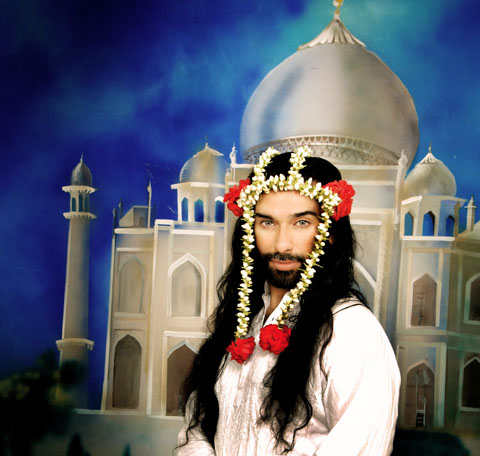
qasim riza shaheen the last known poseQasim Riza Shaheen, The last known pose of Xavier Leroy Frasier (autoportrait, photograph, 2012)

There are art exhibition opening nights – then there was the opening night of Qasim Riza Shaheen’s exhibition The Last Known Post at the mac in Birmingham.

Elegant women clad in white saris paraded slowly around a marked route. A man fell gracefully to the floor, his profile then marked out in red tape in a crime-scene style.

A tall woman in enormous spiky heels and what looked like an Asian wedding outfit joined the parade, followed by a young man with a topknot and enormous platform boots.

A woman who may or may not have been a gallery assistant approached people and recited to them, as did the man. Then another young man in, er, underpants, boots and a long trail made up of squares of paper incorporating a flag sashayed around. Camp did not begin to describe it.

Traditional Sufi music was played live, and slightly incongruously the drinks came courtesy of Absolut so for the first time ever I viewed an exhibition, and one by a Muslim artist at that, with a vodka and orange in my hand. And I rather liked it.

The performance was called One, and was apparently researched and developed earlier this year with local residents and artists at the National Visual Arts Gallery in Kuala Lumpur.

It certainly made for a memorable night, as did seeing Quasim Riza Shaheen urging on the performers, nattily dressed in a stylish outfit incorporating high boots and a neckerchief. It was no surprise at all that he’d once studied fashion, and at Central St Martins in the late 1980s-early 90s, and the outfits of the performers were all his work. Though he said that now he designs only as part of his artworks.

So on to the main show – which takes some effort to interpret, and that is best done with some careful reading of the excellent guide by mac visual arts producer Craig Ashley.

The story of the exhibition is that it’s based around a love letter to the artist before his 40th birthday, reflecting on their love and proposing marriage. The letter is part of the exhibition.

Other works include a two-screen film of the artist dressed as Amy Winehouse telling of his admiration for her in I Lost My Passport in Your Dream, and a set of photos under the title Father Rock Me, showing the artist’s father and the actor Rock Hudson.

In the photo Samson and Delilah the artist looks worried as actress Vanessa Ahmed caresses his lovely long hair, and in the two-screen film A Bride of Khusro he appears as a woman to perform Kathak Dance moves to a Qawali soundscape, in front of a Sufi shrine in Karachi.

In A World Where There Are Five Women I Am The Seventh is a new commission which allows Shaheen to display his costume-making again, showing five sari blouses around a wedding dress; this apparently leaves space for another woman, a space he describes as ‘gender atypical’.

The obvious interest in gender raises questions, but the vital exhibition guide tells us that the adoption of a feminine persona echoes the gender transformation of the Sufi saints into the eternal brides of their masters, apparently.

Shaheen is an artist who has moved away from the ideas of autobiographical work to play with ideas of what may or may not be true, and create from that. The love letter, the guide tells us, is actually a creation of the artist. At the exhibition opening he said that he likes exploring ideas of relationships, but these are always viewed as romantic relationships – whereas to him his most important relationship is with his Kathak dance teacher of the last 20 years – Nahid Siddiqui, who was at the opening and who appears in his video diptych Arya with him, where he reads the love letter aloud.

It’s a striking exhibition, with layers of meaning and misinterpretation possible. And possibly best approached with a vodka in hand.

* Opening the same night, and which I also managed to visit, was the new exhibition at Eastside Projects.

In the large gallery, Turner Prize winning artist Susan Philipsz has created a new site- specific work called Broken Ensemble: War Damaged Musical Instruments (Brass Section).

It consists of speakers from which come the sounds of instruments damaged in various conflicts in the late nineteenth century, including the Balaklava Bugle, used to sound the Charge of the Light Brigade in 1854, and another military bugle damaged by a bullet.

The sounds are as you might expect – but the idea is interesting.

Ragley Gallery and Studios’ first Open is a sunny success

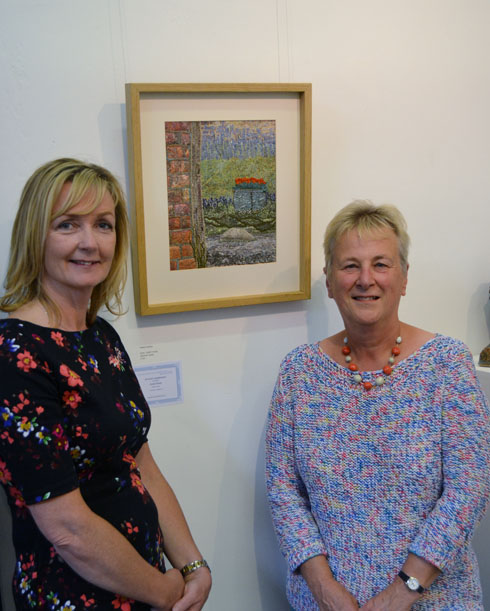
Dawn Harris (left) with Janet Rose, highly commended,               Judge George Wagstaffe (left) with winner Brian Cook

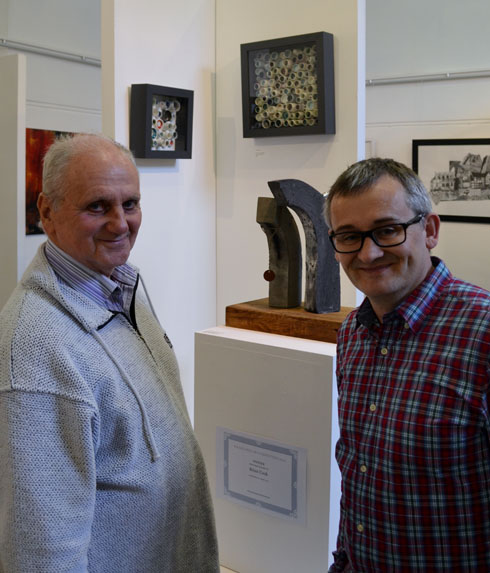
Dawn Harris (left) with highly commended Janet Rose and judge George Wagstaffe with winner Brian Cook (right)

If location is everything, then Ragley Gallery and Studios is way ahead of the crowd.

The opening of the first Ragley Open Art Competition began with glasses of chilled Cava on the terrace of Ragley Hall

the beautiful stately home just outside Alcester. The sun shone and there was a brisk breeze but the views across the long path leading into the distance, the woods and big skies was stunning.

Dawn Harris is enjoying her second year as artist in residence at Ragley Hall, and she works alongside four other artists in studios in the lovely old stable block. Earlier this year she announced the first Ragley Open, and it attracted an impressive 209 entries, with 54 artists chosen to exhibit their works in the gallery which is also in the stables.

The theme of the exhibition is Spirit of Place, and Dawn has described this as fitting into three different categories: “all works refer to the tangible physical aspects of place, (monuments, boundaries, rivers, woods, architectural style, rural crafts styles, pathways, views, and so on); to the invisible weave of culture (stories, art, memories, beliefs, histories, etc.) and to the presence of people (the presence of relatives, friends, kindred spirits, and the like)”.

You could say that encapsulates pretty much everything, but while I was looking around the theme slipped from my mind anyway, and I was impressed with the general high standard of works on show.

One of the judges of the Open was Coventry-based artist and sculptor George Wagstaffe, who attended the opening event. He has previously exhibited recent sculpture at Ragley, and at the Michael Heseltine Gallery in Banbury, and is currently working on some paintings which I look forward to seeing in a future exhibition.

Textile artist Michala Gyetvai who works from a studio at Ragley presented the winners with their prizes – though luckily first prize winner Brian Cook was late arriving from his home near Malvern, so gave us a bit more time to enjoy the Cava and the view!

Brian’s winning work was Two Soldiers in a Supportive Conversation, a small abstract sculpture made mostly of concrete, but also including oak showing two shapes leaning in towards each other.

Brian studied as a mature student at Worcester University between 2009-12. He said: “I graduated, and since then I’ve been enjoying making art.

“I came across concrete when I was at uni. I was working in ceramics but I wanted to make things bigger. My pieces were originally a lot heavier – when you are at university you are in this bubble and can create and there’s no worry about transporting things. I won the Foundation final award and since them I have progressed a bit and come into polishing and looking more at the shape.

“This relates to the First World War and it’s something I have been interested in and wanted to make things to do with, and it’s come at the right time.”

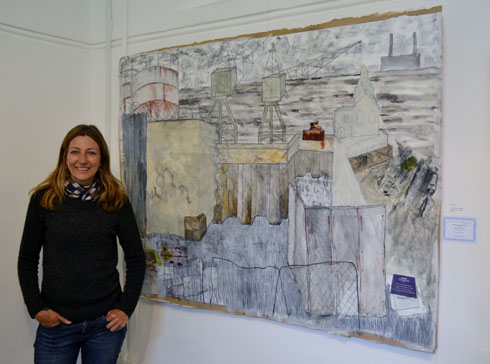
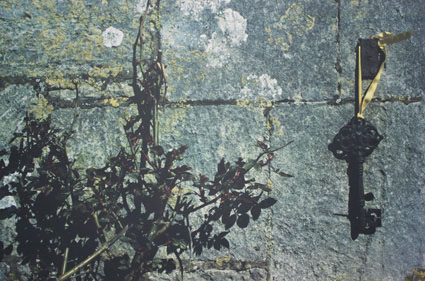
There were four highly commended awards.  Denise Startin, who has previously studied at Coventry University and the Royal College of Art in London,  won for Charlotte’s Locks, a very close-up limited-edition screenprint of a key hanging from a lichen-covered wall, and Linda Davies for Bawley Bay, a large mixed media on board showing an industrial scene of cranes, barbed wire, the Thames and a union safety notice.

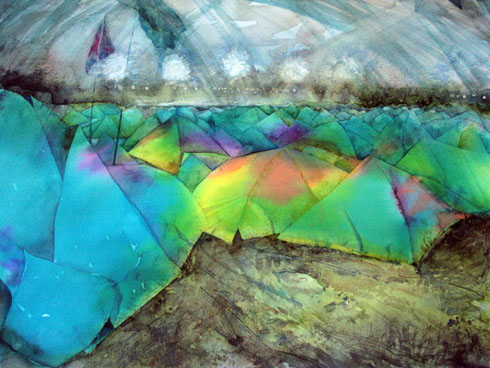
Contrastingly, also highly commended was Janet Rose for her gentle, colourful textile work, Walled Garden, and Janet Tryner for Field C, a mixed media work which struck a chord with me and any other festival-goers as it included some lovely aquamarine and yellow colours, depicting tents crammed together at a festival with bright lights in the distance, and a muddy ground.

Field C by Janet Tryner, highly commended   Linda Davies, highly commended

Highly commended works Field C by Janet Tryner, and Linda Davies with her work Bawley Bay

Other notable works include Neil Spalding’s Raiw Pottery, small models including some of Cornish mine buildings, Julie Robertson’s photograph at Ragley of flowers in a well-lit window and Sally Larke’s two framed sets of small ceramic pots, each with a different coloured inside to them.

Maureen Grimwade has contributed A Cornish Haven, an oil on board work of a peaceful holiday beach, and Fiona Payne’s Washday is a vivid, bright work showing red and yellow houses against a bright background, and her Vacant is a heavily-worked oil.

Michelle Carruthers is showing an unusual work of lines and shapes made up of tiny pieces of pollen on paper, thankfully behind glass.

Shaun Morris who recently exhibited in Nuneaton’s Museum & Art Gallery is exhibiting Silence, showing the shadows underneath a motorway with the artificial yellow of lights showing in the background. Earth Spirit by Pam White is a watercolour showing a warped person and unnatural vegetation.

Open exhibitions can be very mixed and this has a lot of variety, but a good high standard to the work which combined with the interesting setting, and the possible chance to meet the artists currently working in studios in the same building, makes it well worth the trip out. The exhibition is on until September 7.

Charlotte-sLocks_DStartin 72dpi (2)

Charlotte’s Locks by Denise Startin (highly commended)

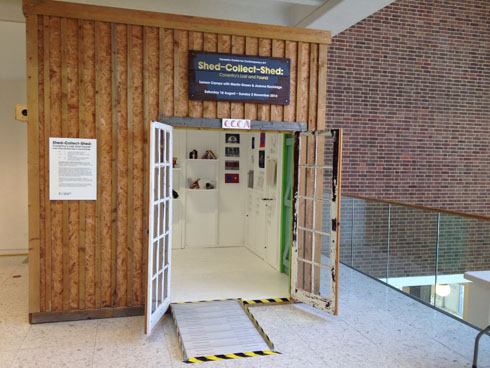
Shed show for found art at The Herbert

Shed in the Herbert   Joanna Rucklidge's work

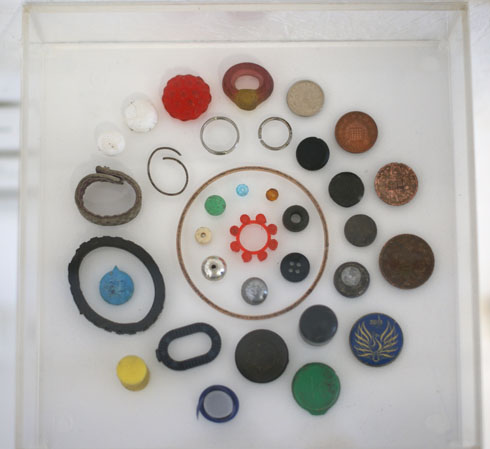
The Shed – Collect – Shed exhibition in The Herbert, and Joanna Rucklidge’s miscellaneous collection

Visitors to the Herbert might wonder why a rather basic-looking shed has suddenly appeared upstairs on the landing.

But it’s a well-travelled shed which has already had several lives as an art gallery, and has re-emerged from artist and curator Lorsen Camps’s Coventry garage for this outing.

The shed is officially known as the Coventry Centre for Contemporary Art, and was taken over by Lorsen after it was used in the Bob and Roberta Smith installation at the Mead Gallery in 2009. Its first appearance was then in the grounds of Earlsdon Primary School, showing an exhibition of found objects by Lorsen, plus Martin Green and Joanna Rucklidge. The three are reunited for this Herbert exhibition.

The show is called Shed – Collect – Shed, playing on the different means of the words, but Lorsen explained the idea is to explore the relationship between their own found objects, and the Herbert’s collection of Coventry-related pieces.

Lorsen said: “We are bringing found objects which are the collection of three artists into the museum setting and starting to play with ideas of what the Herbert specifically does. I met with the Herbert’s collections curator Paul Thompson and he was explaining the Herbert collects Coventry’s identity and that was quite interesting.

The idea is Martin and I collect in Coventry in a different way. Joanna has come down from Sheffield to do a different thing but it’s all related to Coventry.”

Martin and Lorsen also took a trip to one of Coventry’s twin cities, Cork, to create some of the works in the exhibition incorporating photographs and found items, Paradise Disregarded, Paradise Reclaimed, which also uses things found in the Paradise area of Coventry.

They include clips and tiny pens, plus against a Gothic-type image there’s a spooky white eyeless doll, plus a black plastic avenging angel.

Joanna visited Coventry in June and said she ended up with aching thighs after bending down at least 200 times to pick up circular items she wanted to use in this exhibition, noticing a theme from Coventry and its history.

She said: “I was inspired by trying to collect something from the streets of Coventry. The ring road dominates, and there’s the history of Coventry, of clock and watchmaking, cars and cycles and so I thought I’d use all sorts of circular pieces.”

She found all her pieces on four circular walks on one day in June, and has used them in various ways. They are displayed in similar groups, such as clear bottle lids, and metal bottle lids, some just shown and others in colourful screenprints on paper.

Lorsen said about his work: “What I am showing them is an extension of what we showed in the shed. I have played around with the ways the Herbert presents its objects.”

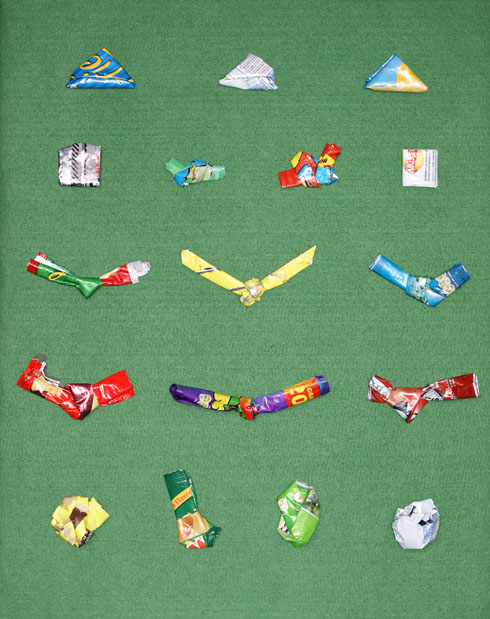
One item, My Fond Knotted Crisp Packet Collection (below), is deliberately like an old-fashioned display board of butterflies pinned to a cork board. A display of Mini Beasts includes plastic animals and toys, a special interest of Lorsen. Standard Triumph uses a row of matchboxes to show small plastic toys. A window frame has been turned into a modern-looking lightbox display with a sea horse air freshener and hairband around it.

My Found Knotted Crisp Packet Collection   Martin Green's City Boxes

Another item is an old found wooden door with small, colourful items stuck neatly to the back of it. Another consists of boxes with bits of jewellery and other sparkly items in them. A found fridge shelf is used to frame a collection of pens and pencils.

Easy to miss, over the door are some trophies, a swan statuette and a plastic flying bat, both in gold-sprayed frames which on closer inspection come from the polystyrene packaging from white goods.

Martin Green’s new work is called City Box (above), and there are 12 boxes, all arranged on some shelves. He said: “It’s based on using boxes as a sculptural form. I was trying to give some sort of personality to the piece so I have collected things to do with travel.”

Each box is held up by a shoe heel found by Martin, or a stand made by a cigarette packet, colourfully wrapped with material from a found umbrella. There are different things in each one. They include wheels from suitcases, zip ties, rucksack buckles, bits of lighters, wheel weights and sunglass lenses.

There is also a DVD slide show with images of 100 items in situ flashing up on the wall outside the shed.

Lorsen admitted he was quite pleased to have the shed out of his garage after three years, and this may be its last outing, at least with him: “We are thinking about what next and we are seeing if other people are interested in taking it over.”

* The exhibition is on until November 2.

Bill Drummond begins 12-year world tour at Eastside Projects, Birmingham

Bill Drummond raft bed with daffodils
An exhibition has opened in Birmingham which is then going on the longest-ever art world tour, ending back in Birmingham on 28 April 2025 – if the artist does not die beforehand, as the publicity materials dryly state.
Bill Drummond is 60, and his name to me and others of a certain age will always be synonymous with a bunch of KLF hit records of the late 1980s and early 1990s, 3am Eternal, Justified and Ancient and others from The White Room, classics of their time.
But Drummond’s life since then has become almost an eternal art performance, and this exhibition which stays in Birmingham until June 14 will see him taking part in many strange acts involving people around the city.

(more…)

Belfast weekend brings wealth of rewarding art exhibitions

What seems to have become an annual weekend in Belfast was a chance to take in some of the latest exhibitions.
At Belfast Exposed, Tom Wood’s photographic exhibition Men and Women makes use of his vast archive to pull out works to make up this gender-related exhibition. People go about daily life, caught in action by Wood, who was born in Mayo in west Ireland in 1951, and studied painting at Leicester Polytechnic. It’s a fascinating set of observations, with Three Wise Women standing out, showing three women, one proudly carrying a new waste bin, carefully walking away from a very tatty outdoor sale.
The mac, Metropolitan Arts Centre, was a new find to me last year, and opened in April 2012. Last year it featured Belfast’s first big Andy Warhol exhibition. This year it’s showing works by Kara Walker, or as the mac puts it “We at the MAC are Exceedingly Proud to Present an Exhibition of Capable Artworks by the Notable Hand of the Celebrated American, Kara Elizabeth Walker, Negress.”

(more…)

mac’s inspiring new exhibition explores art made by taking a walk

Taking a walk as an artistic act is explored in a new exhibition which is full of varied works from the last few decades.
Exhibitions can be like buses – you wait ages for something then two come along at once. Walk On at the mac in Birmingham is billed as the first exhibition to “examine the astonishingly varied ways in which artists since the 1960s have undertaken a seemingly universal act – that of taking a walk – as their means to create new types of art”. The current exhibition at the Mead at the Warwick Arts Centre in Coventry is described as the most comprehensive exhibition of British land art ever. In truth, there’s a lot of pieces which could fit in either exhibition, but the good thing is it means there’s a chance to really immersive yourself in artworks created from this outdoors perspective.
The mac exhibition fills the upstairs gallery, and pieces are dotted around downstairs, with some on TVs easy to miss in the entrance area.

(more…)