Artists

Exhibitions are a delight of an escape from festive shopping

If you’re Christmas shopping in Birmingham and need something more stimulating to get you through the day, there are a few exhibitions which offer a bit of a respite. Well, they worked for me anyway.

At the Ikon gallery, Imran Qureshi’s exhibition is a mixture of his miniature paintings and site-specific installations made for the gallery.

Qureshi is known for using the disciplined miniature painting style of his native Pakistan in the Mughal courts of the sixteenth century and recreating it for the modern day. The miniatures look lovely, all delicate colours and shiny gold, but close up there’s more to see.

After watching on TV the aftermath of a terrorist attack on a marketplace in Lahore in 2010 Qureshi saw the blood-splattered surfaces, and felt a colour in his studio matched it. That red seeps into some of the miniatures, in splodges but also in delicate flower drawings or other patterns, overlaying the original image. In other miniatures, missiles are part of, and also not part of, what is drawn there.

There’s also red patterns across the floor, and on two huge gold ovals made from acrylic and gold leaf, called They Shimmer Still.

The image that has been most recreated from this exhibition in its favourable national reviews is the huge room full of thousands of sheets of crumpled paper. It’s called And They Still Seek The Traces of Blood, and is amazing in size and design.

The Birmingham Museum and Art Gallery as usual has several exhibitions on show. True to Life? New Photography from the Middle East is interesting and thought-provoking, especially in its works related to depictions of women and gender issues.

Static: Still Life Reconsidered is easy to overlook in the Waterhall gallery, and is quietly attractive, with lots of detailed and skilled works. There are also some larger more striking works by Patrick Caulfield, and for me William Nicholson’s work also stood out.

The West Midlands Open in the Gas Hall is large and varied in type of work and quality. Shaun Morris’s large and dramatic painting stood out for me. It was inspired by the land under the motorway around West Bromwich, and painted in the year of Margaret Thatcher’s death. The caption says Morris was struck by how the landscape around there had changed after she came to power, moving from manufacturing to distribution centres.

Also of interest were works by Bethany Kane. Originally from Rugby, she studied at City College Coventry, then the University of Derby. Her photographs are part of a Hidden Hunger project which looks at food poverty in the UK today. Foleshill Baptist church in Coventry and the Chace Hostel feature in this exhibition, both lacking people but with facilities provided to hopefully feed the needy. They are stark and lack warmth, but provide the sort of help no one ever wants to need.

Other paintings might be more cheery, but as a touch of reality in the run up to Christmas both Shaun Morris and Bethany Kane’s works spoke volumes.

Arty-Folks stage Tibetan influenced exhibition

ArtyFolks

Art inspired by colourful mandalas made by Tibetan monks is on show at Coventry’s Central Library.

The drawings and glass paintings were made by members of Arty-Folks, a group for people recovering from mental health problems.

Art tutor Lorella Medici said the works describe how the person feels about themselves in relation to the world around them through patterns, mark making, textures and colour. The works have been inspired by the mandala, which in Sanskrit means circle. Mandalas are spiritual and ritual symbols in Hinduism and Buddhism, representing the universe.

Lorella said: “Our minds are always busy seeking solutions for our many problems.  Making these mandalas has helped people to concentrate on creating beautiful and meaningful artwork, and to give their minds a rest.

“Tibetan monks create intricate mandalas as an aid to meditation and to help stabilize and re-order inner life.  Arty-Folks uses the visual arts in a similar way to help people on their recovery journey. ”

Jean who is one of the people exhibiting says: “I used to believe that art is just for people who are very creative, imaginative or skilled. I started coming to Arty-Folks after I lost my mum and it motivated me to get out the house at least once a week.

“I never saw myself as an arty person but I just got totally caught up with all the different things Arty-Folks introduces me to.  Now I enjoy art because it helps me to communicate and to connect to others, and I have fun experimenting.”

The display includes as step-by-step instruction on how to create your own mandala art.

Arty-Folks meets from 12.30-2.30pm on Wednesdays at the Artspace Studios, 15 Lower Holyhead Road, Coventry. Anyone interested can pop in on a Wednesday, or call 024 7641 4740 for more information. The exhibition at the library is on until November 16.

Also see www.arty-folks.co.uk and Arty-Folks on facebook and twitter.

Bitter-sweet retrospective shows variety of artist’s work

Margarita Rubra work  Seed

Retrospective’s of an artist’s work are always interesting as it’s good to see what they may have created over a long working life, and how their work has changed over time.

I was impressed a couple of years ago to meet the charming Avril Moore and interview her in her retrospective exhibition at the late lamented Roots gallery in Coventry. When I asked why she was holding her retrospective then she said she was over 80 and wanted to plan it herself, which was a good point. Sadly she died a few months later.

I didn’t meet the artist Margarita Rubra (pictured below), whose retrospective exhibition is taking place this week at the Lewis Gallery at Rugby School in Rugby, but I wish I had. There was a good turnout at the exhibition opening of people who obviously knew, liked and respected her.

Margarita was born in 1933 and died last year. She lived in Long Buckby in Northamptonshire but not far from Rugby.

She had exhibited before at the Lewis Gallery with 97 Rush, and the Tantalus Project, and at Rugby Art Gallery & Museum’s Floor One gallery. She trained as a mature student and completed an Art Foundation course and HND in Craft Design Technology.

The work in this exhibition is very varied. There are lots of pieces, many for sale, and varying between £25 and £500 in price, but with more towards the lower end of the scale. She used wood, ceramics, metal and other materials including one remarkable large wood and rope structure.

There’s also an attractive mobile, and lots of smaller pieces with pleasing curves, plus one item which seemed very different, a set of boxes with quotes in them, and what looked like lights attached to them – though I didn’t dare press the switches to see.

Tomorrow is the last day to see the exhibition, 2-5pm, though I’m glad I got to the opening and raised a glass to an artist I was sorry not to have come across before.

Margarita Rubra  Gesture 2

The Last Known Pose – a camp parade makes for a memorable night at the mac

qasim riza shaheen the last known poseQasim Riza Shaheen, The last known pose of Xavier Leroy Frasier (autoportrait, photograph, 2012)

There are art exhibition opening nights – then there was the opening night of Qasim Riza Shaheen’s exhibition The Last Known Post at the mac in Birmingham.

Elegant women clad in white saris paraded slowly around a marked route. A man fell gracefully to the floor, his profile then marked out in red tape in a crime-scene style.

A tall woman in enormous spiky heels and what looked like an Asian wedding outfit joined the parade, followed by a young man with a topknot and enormous platform boots.

A woman who may or may not have been a gallery assistant approached people and recited to them, as did the man. Then another young man in, er, underpants, boots and a long trail made up of squares of paper incorporating a flag sashayed around. Camp did not begin to describe it.

Traditional Sufi music was played live, and slightly incongruously the drinks came courtesy of Absolut so for the first time ever I viewed an exhibition, and one by a Muslim artist at that, with a vodka and orange in my hand. And I rather liked it.

The performance was called One, and was apparently researched and developed earlier this year with local residents and artists at the National Visual Arts Gallery in Kuala Lumpur.

It certainly made for a memorable night, as did seeing Quasim Riza Shaheen urging on the performers, nattily dressed in a stylish outfit incorporating high boots and a neckerchief. It was no surprise at all that he’d once studied fashion, and at Central St Martins in the late 1980s-early 90s, and the outfits of the performers were all his work. Though he said that now he designs only as part of his artworks.

So on to the main show – which takes some effort to interpret, and that is best done with some careful reading of the excellent guide by mac visual arts producer Craig Ashley.

The story of the exhibition is that it’s based around a love letter to the artist before his 40th birthday, reflecting on their love and proposing marriage. The letter is part of the exhibition.

Other works include a two-screen film of the artist dressed as Amy Winehouse telling of his admiration for her in I Lost My Passport in Your Dream, and a set of photos under the title Father Rock Me, showing the artist’s father and the actor Rock Hudson.

In the photo Samson and Delilah the artist looks worried as actress Vanessa Ahmed caresses his lovely long hair, and in the two-screen film A Bride of Khusro he appears as a woman to perform Kathak Dance moves to a Qawali soundscape, in front of a Sufi shrine in Karachi.

In A World Where There Are Five Women I Am The Seventh is a new commission which allows Shaheen to display his costume-making again, showing five sari blouses around a wedding dress; this apparently leaves space for another woman, a space he describes as ‘gender atypical’.

The obvious interest in gender raises questions, but the vital exhibition guide tells us that the adoption of a feminine persona echoes the gender transformation of the Sufi saints into the eternal brides of their masters, apparently.

Shaheen is an artist who has moved away from the ideas of autobiographical work to play with ideas of what may or may not be true, and create from that. The love letter, the guide tells us, is actually a creation of the artist. At the exhibition opening he said that he likes exploring ideas of relationships, but these are always viewed as romantic relationships – whereas to him his most important relationship is with his Kathak dance teacher of the last 20 years – Nahid Siddiqui, who was at the opening and who appears in his video diptych Arya with him, where he reads the love letter aloud.

It’s a striking exhibition, with layers of meaning and misinterpretation possible. And possibly best approached with a vodka in hand.

* Opening the same night, and which I also managed to visit, was the new exhibition at Eastside Projects.

In the large gallery, Turner Prize winning artist Susan Philipsz has created a new site- specific work called Broken Ensemble: War Damaged Musical Instruments (Brass Section).

It consists of speakers from which come the sounds of instruments damaged in various conflicts in the late nineteenth century, including the Balaklava Bugle, used to sound the Charge of the Light Brigade in 1854, and another military bugle damaged by a bullet.

The sounds are as you might expect – but the idea is interesting.

Tate St Ives and other exhibitions in town add to September visit

A little trip down to St Ives, and I somehow managed to sniff out an exhibition opening night – and also visit what I think is probably the best exhibition I’ve seen at the Tate.

While wandering off to dinner I discovered Wild Heaven opening at Uys Gallery in Tregenna Hill, St Ives, described as a celebration of landscape by St Ives artists, with the exhibition continuing throughout the current St Ives festival. A cheeky glass of red and a look round before my meal were both rewarding.

There are 45 pieces by a number of artists, and include paintings, drawings, and ceramics. Barbara Turner Jones’s three paintings, Wave Near Godrevy I, II and III are well executed and attractive, small works with close ups of the waves and some background detail.

Michele Wright’s Oystercatchers and other works from nature show quality detailed observations from nature. Samuel Winterburn’s three works showing an interesting use of colour and tight detail, especially Fox Loves the Foxgloves.

Colin Smith’s Engine House is a line drawing of a typical St Ives sight, Mel Sheridan’s Nancledra seems to show allium heads against a background, and works by Melanie Uys, Trevor Price and Liz Luckwell also stand out. There are many galleries in St Ives but this one’s definitely worth a look round.

Also showing some big-name works is Belgrave St Ives, where pieces by Roger Hilton, Wilhelmina Barnes-Graham, Sven Berlin, and Terry Frost amongst others are also on show until the end of September.

The Tate St Ives is celebrating its twenty first year in the town, and its current exhibition also until September 28 is International Exchanges: Modern Art and St Ives 1915-65, which according to the publicity aims to show the art of St Ives “to place it not in relation to where it was made but in relation to what was made, how it was made and its position in wider international modern art”. What this means is an exhibition of works by artists associated with St Ives, but also pieces from wider afield.

My favourites were sculptures by Brancusi and Giacometti. There are also sculptural pieces from Naum Gabo, Barbara Hepworth, Eric Gill, and The Spider, a suspended work by Alexander Calder.

Other memorable pieces include Cossacks 1910-11 by Kandinsky, Schooner Under the Moon by Arthur Wallis (amongst others), George Bracque’s Guitar and Jug, Bryan Wynter’s Cyclamen, a Rothko, Number 23 by Jackson Pollock, and works by Peter Lanyon and Patrick Heron. Ceramics are represented by Bernard Leach and Shoji Hamada.

Information boards and a guide bring it all together in a way that makes sense, as well as including some top quality works by well-known St Ives artists, and those not normally associated with the town.

If there was ever an excuse needed to get down to St Ives before the end of September, the current exhibitions there seem to provide it.

Leamington offers up nudity and vivid landscapes in night of two art show openings

What a fun night for the art show ligger in Leamington.

On Friday, Arts Trail Gallery in Regent Court, Livery Street, held a private view of a new exhibition entitled Le Maison Bleu, paintings by Bryan B Kelly, curated by Grazia Carano. I was invited to that so decided to visit. At the same time, Gallery 150, which has just moved across the street to different premises in Regent Court, held a opening night for its new exhibition, Human Spaces. I wasn’t invited to that, but as the galleries are only three doors apart, what the hell, I wasn’t going to miss it.

The exhibitions couldn’t be more different. Human Spaces, which I visited first, consists of works by seven artists, plus Kate Spence who gave a live performance in the window space at the opening. The exhibition was described as a figurative exhibition, which doesn’t have to mean naked, but that’s mainly what was on show.

Stand out works for me were Ray Spence’s series of photographs of life models, not in their ‘work’, but posing naked in more domestic situations. Alongside each was a question and answer session with the model. It’s refreshing to see the models have a voice, and also that they’re not all young and slight. Domenica, 58, lays back on a rooftop near a railway line, as the photo is taken from next door where a man cuddles his pet dog.

Anna, 45, lays on her kitchen worksurface, while Kadi, 28, is in two pictures while her partner and young child carry on with life oblivious. Cressida, 44, sits around while a man practises his French horn, and Arthur 79, poses imaginatively while a woman does the housework and makes a phone call around him. Only ‘H’, a heavily tattooed and, er, intimately pierced man doesn’t benefit us with his thoughts.

Ray’s works feel different for giving the models a voice, but there seems little new or different about many of the other works to show the theme of the nude has moved on at all, and some have odd overtones.

There are two paintings of Sophie, by Melvyn Warren-Smith, and the model tells, slightly worryingly, how she was persuaded to pose naked after visiting Melvyn and his wife at their home, but how liberating she found the experience ….

Neil Moore’s Release shows a naked woman with piles of ropes laying around her. It was a relief to see Emma Tooth’s paintings of a muscley breakdancer, complete with trousers.

By this time, at a packed opening, the gallery had run out of wine though there were still plenty of good-quality nibbles around. But there was more wine (and equally good nibbles) available at Arts Trail Gallery, though Gerry Smith who runs it suggested we visit his installation gallery first.

This is an empty shop within sight of the gallery where there’s a large window space. It’s been furnished brightly in a way which fits in with the paintings of Bryan B Kelly, which are all in very vivid colours. There were also some of Bryan’s accomplished pottery pieces on show there too, which were in more earthy colours and were rather stylish.

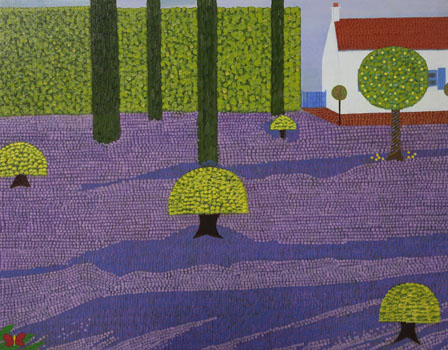
Paintings included The Little Red Butterfly, with the creature in the bottom left corner of the big, busy work showing purple and green fields. Four Sheep show the animals in one field, amidst a bigger landscape, and Herons Cove shows the bird on an island, again bottom left, on a huge expanse of aquamarine colour surrounded by fields.

The Little Red Butterfly by Bryan B Kelly

The Round Tower shows the uncharacteristically grey tower in a landscape, reminding me of a trip I made many years ago to Bryan’s home country of Ireland. Bryan studied textiles and garment design in the 1960s and has only begun painting in more recent years, and describes his paintings as “naïve with more than a hint of surrealism”. Some of the repetitive dots and patterns also suggest an interest in Aboriginal art too.

Anyway, wine drunk, nibbles eaten it was time to move on from Leamington’s busiest art quarter of the night after what had been an interesting, and certainly varied night.

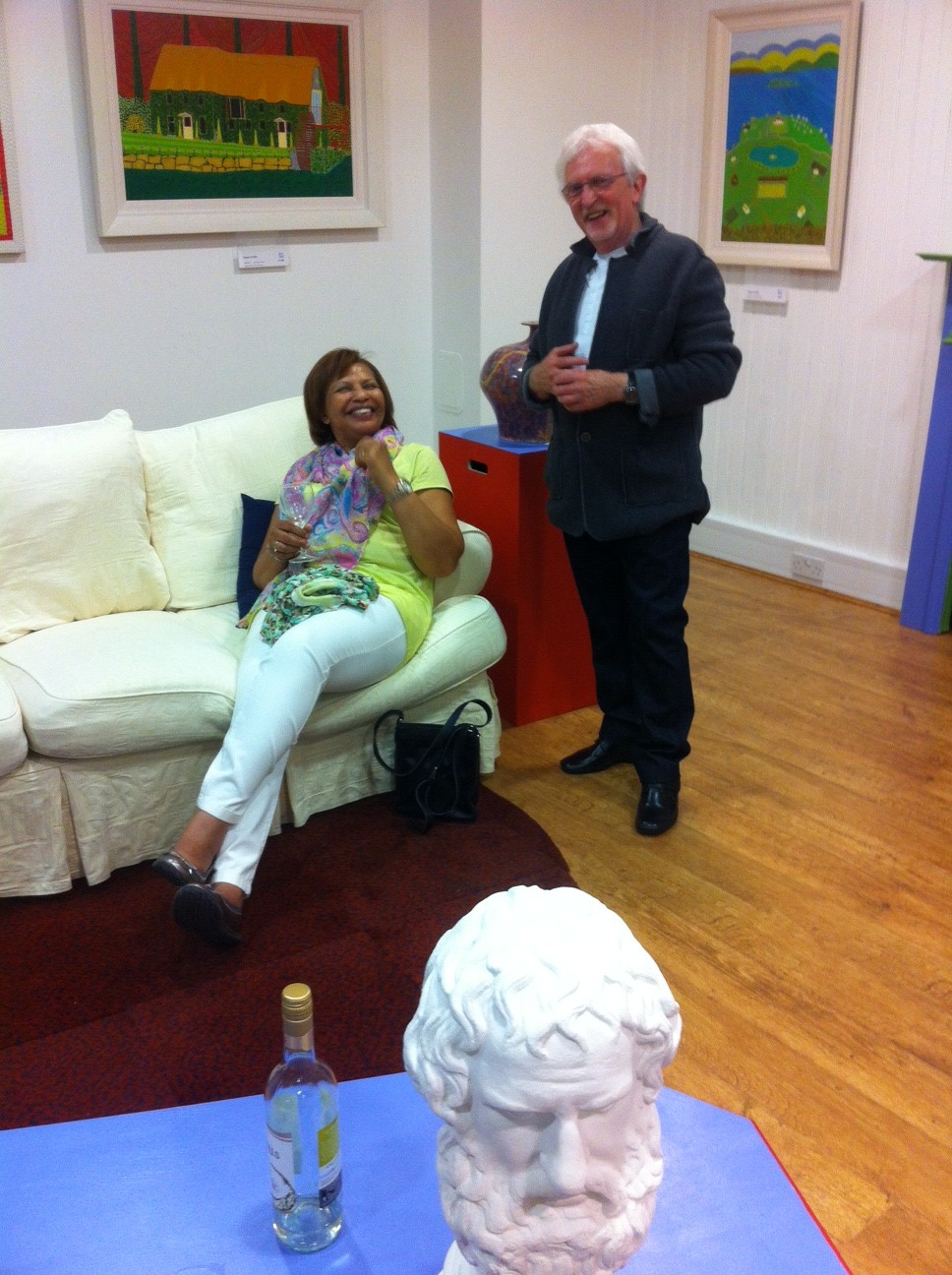
Bryan and visitor in the installationPictures – The Little Red Butterfly, and Bryan with a visitor in the installation

Ragley Gallery and Studios’ first Open is a sunny success

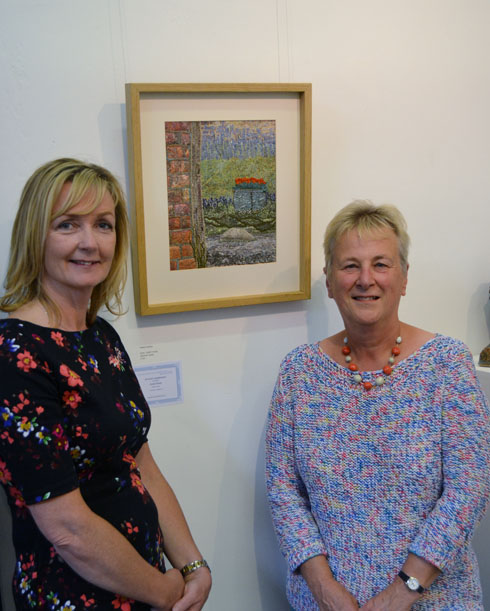
Dawn Harris (left) with Janet Rose, highly commended,               Judge George Wagstaffe (left) with winner Brian Cook

Dawn Harris (left) with highly commended Janet Rose and judge George Wagstaffe with winner Brian Cook (right)

If location is everything, then Ragley Gallery and Studios is way ahead of the crowd.

The opening of the first Ragley Open Art Competition began with glasses of chilled Cava on the terrace of Ragley Hall

the beautiful stately home just outside Alcester. The sun shone and there was a brisk breeze but the views across the long path leading into the distance, the woods and big skies was stunning.

Dawn Harris is enjoying her second year as artist in residence at Ragley Hall, and she works alongside four other artists in studios in the lovely old stable block. Earlier this year she announced the first Ragley Open, and it attracted an impressive 209 entries, with 54 artists chosen to exhibit their works in the gallery which is also in the stables.

The theme of the exhibition is Spirit of Place, and Dawn has described this as fitting into three different categories: “all works refer to the tangible physical aspects of place, (monuments, boundaries, rivers, woods, architectural style, rural crafts styles, pathways, views, and so on); to the invisible weave of culture (stories, art, memories, beliefs, histories, etc.) and to the presence of people (the presence of relatives, friends, kindred spirits, and the like)”.

You could say that encapsulates pretty much everything, but while I was looking around the theme slipped from my mind anyway, and I was impressed with the general high standard of works on show.

One of the judges of the Open was Coventry-based artist and sculptor George Wagstaffe, who attended the opening event. He has previously exhibited recent sculpture at Ragley, and at the Michael Heseltine Gallery in Banbury, and is currently working on some paintings which I look forward to seeing in a future exhibition.

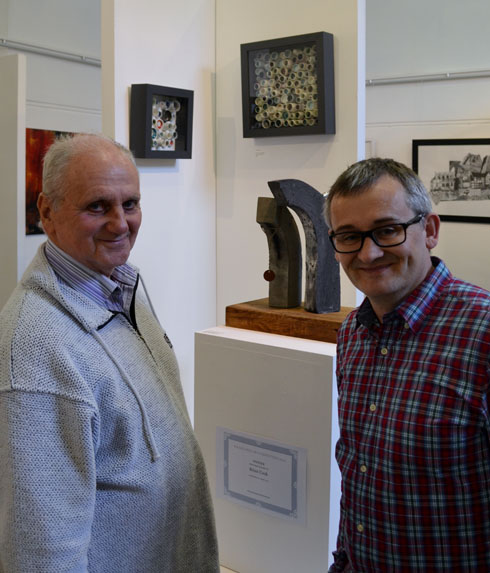
Textile artist Michala Gyetvai who works from a studio at Ragley presented the winners with their prizes – though luckily first prize winner Brian Cook was late arriving from his home near Malvern, so gave us a bit more time to enjoy the Cava and the view!

Brian’s winning work was Two Soldiers in a Supportive Conversation, a small abstract sculpture made mostly of concrete, but also including oak showing two shapes leaning in towards each other.

Brian studied as a mature student at Worcester University between 2009-12. He said: “I graduated, and since then I’ve been enjoying making art.

“I came across concrete when I was at uni. I was working in ceramics but I wanted to make things bigger. My pieces were originally a lot heavier – when you are at university you are in this bubble and can create and there’s no worry about transporting things. I won the Foundation final award and since them I have progressed a bit and come into polishing and looking more at the shape.

“This relates to the First World War and it’s something I have been interested in and wanted to make things to do with, and it’s come at the right time.”

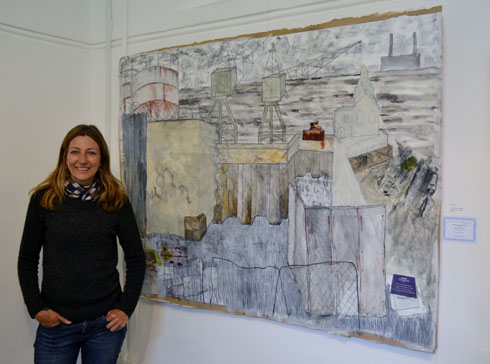
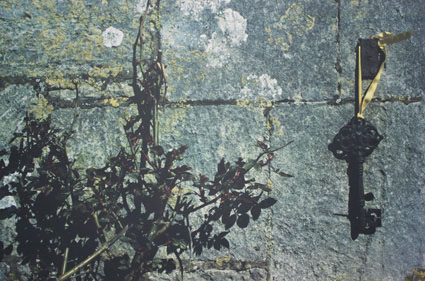
There were four highly commended awards.  Denise Startin, who has previously studied at Coventry University and the Royal College of Art in London,  won for Charlotte’s Locks, a very close-up limited-edition screenprint of a key hanging from a lichen-covered wall, and Linda Davies for Bawley Bay, a large mixed media on board showing an industrial scene of cranes, barbed wire, the Thames and a union safety notice.

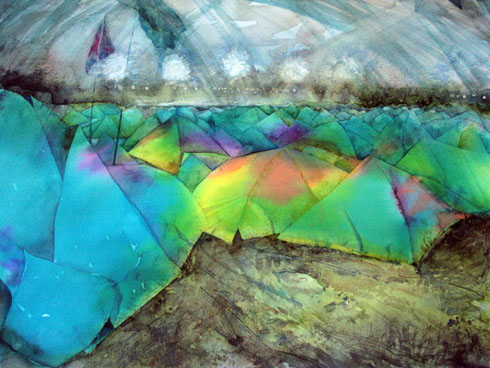
Contrastingly, also highly commended was Janet Rose for her gentle, colourful textile work, Walled Garden, and Janet Tryner for Field C, a mixed media work which struck a chord with me and any other festival-goers as it included some lovely aquamarine and yellow colours, depicting tents crammed together at a festival with bright lights in the distance, and a muddy ground.

Field C by Janet Tryner, highly commended   Linda Davies, highly commended

Highly commended works Field C by Janet Tryner, and Linda Davies with her work Bawley Bay

Other notable works include Neil Spalding’s Raiw Pottery, small models including some of Cornish mine buildings, Julie Robertson’s photograph at Ragley of flowers in a well-lit window and Sally Larke’s two framed sets of small ceramic pots, each with a different coloured inside to them.

Maureen Grimwade has contributed A Cornish Haven, an oil on board work of a peaceful holiday beach, and Fiona Payne’s Washday is a vivid, bright work showing red and yellow houses against a bright background, and her Vacant is a heavily-worked oil.

Michelle Carruthers is showing an unusual work of lines and shapes made up of tiny pieces of pollen on paper, thankfully behind glass.

Shaun Morris who recently exhibited in Nuneaton’s Museum & Art Gallery is exhibiting Silence, showing the shadows underneath a motorway with the artificial yellow of lights showing in the background. Earth Spirit by Pam White is a watercolour showing a warped person and unnatural vegetation.

Open exhibitions can be very mixed and this has a lot of variety, but a good high standard to the work which combined with the interesting setting, and the possible chance to meet the artists currently working in studios in the same building, makes it well worth the trip out. The exhibition is on until September 7.

Charlotte-sLocks_DStartin 72dpi (2)

Charlotte’s Locks by Denise Startin (highly commended)

Shed show for found art at The Herbert

Shed in the Herbert   Joanna Rucklidge's work

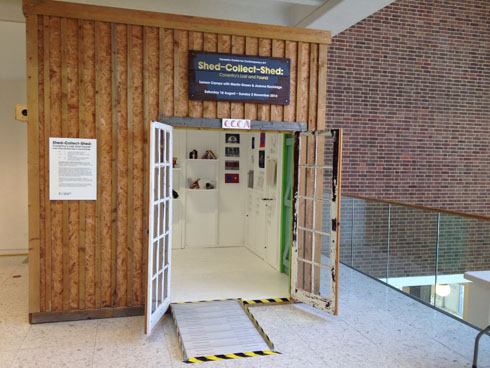
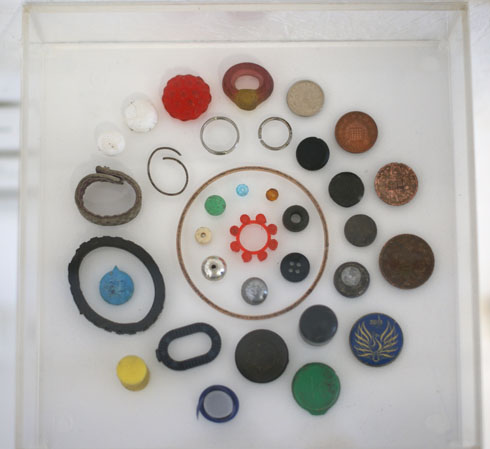
The Shed – Collect – Shed exhibition in The Herbert, and Joanna Rucklidge’s miscellaneous collection

Visitors to the Herbert might wonder why a rather basic-looking shed has suddenly appeared upstairs on the landing.

But it’s a well-travelled shed which has already had several lives as an art gallery, and has re-emerged from artist and curator Lorsen Camps’s Coventry garage for this outing.

The shed is officially known as the Coventry Centre for Contemporary Art, and was taken over by Lorsen after it was used in the Bob and Roberta Smith installation at the Mead Gallery in 2009. Its first appearance was then in the grounds of Earlsdon Primary School, showing an exhibition of found objects by Lorsen, plus Martin Green and Joanna Rucklidge. The three are reunited for this Herbert exhibition.

The show is called Shed – Collect – Shed, playing on the different means of the words, but Lorsen explained the idea is to explore the relationship between their own found objects, and the Herbert’s collection of Coventry-related pieces.

Lorsen said: “We are bringing found objects which are the collection of three artists into the museum setting and starting to play with ideas of what the Herbert specifically does. I met with the Herbert’s collections curator Paul Thompson and he was explaining the Herbert collects Coventry’s identity and that was quite interesting.

The idea is Martin and I collect in Coventry in a different way. Joanna has come down from Sheffield to do a different thing but it’s all related to Coventry.”

Martin and Lorsen also took a trip to one of Coventry’s twin cities, Cork, to create some of the works in the exhibition incorporating photographs and found items, Paradise Disregarded, Paradise Reclaimed, which also uses things found in the Paradise area of Coventry.

They include clips and tiny pens, plus against a Gothic-type image there’s a spooky white eyeless doll, plus a black plastic avenging angel.

Joanna visited Coventry in June and said she ended up with aching thighs after bending down at least 200 times to pick up circular items she wanted to use in this exhibition, noticing a theme from Coventry and its history.

She said: “I was inspired by trying to collect something from the streets of Coventry. The ring road dominates, and there’s the history of Coventry, of clock and watchmaking, cars and cycles and so I thought I’d use all sorts of circular pieces.”

She found all her pieces on four circular walks on one day in June, and has used them in various ways. They are displayed in similar groups, such as clear bottle lids, and metal bottle lids, some just shown and others in colourful screenprints on paper.

Lorsen said about his work: “What I am showing them is an extension of what we showed in the shed. I have played around with the ways the Herbert presents its objects.”

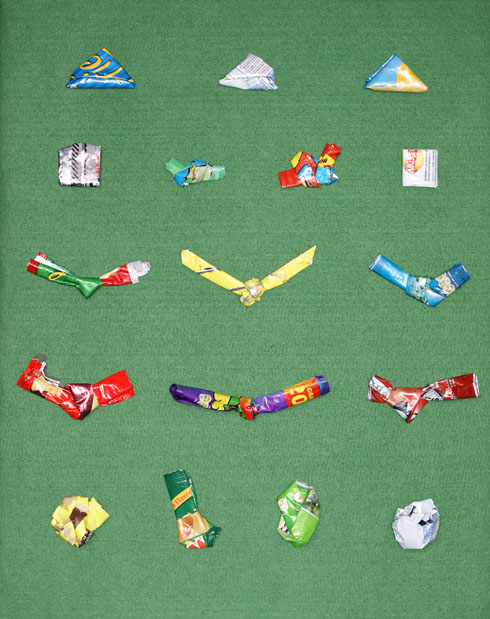
One item, My Fond Knotted Crisp Packet Collection (below), is deliberately like an old-fashioned display board of butterflies pinned to a cork board. A display of Mini Beasts includes plastic animals and toys, a special interest of Lorsen. Standard Triumph uses a row of matchboxes to show small plastic toys. A window frame has been turned into a modern-looking lightbox display with a sea horse air freshener and hairband around it.

My Found Knotted Crisp Packet Collection   Martin Green's City Boxes

Another item is an old found wooden door with small, colourful items stuck neatly to the back of it. Another consists of boxes with bits of jewellery and other sparkly items in them. A found fridge shelf is used to frame a collection of pens and pencils.

Easy to miss, over the door are some trophies, a swan statuette and a plastic flying bat, both in gold-sprayed frames which on closer inspection come from the polystyrene packaging from white goods.

Martin Green’s new work is called City Box (above), and there are 12 boxes, all arranged on some shelves. He said: “It’s based on using boxes as a sculptural form. I was trying to give some sort of personality to the piece so I have collected things to do with travel.”

Each box is held up by a shoe heel found by Martin, or a stand made by a cigarette packet, colourfully wrapped with material from a found umbrella. There are different things in each one. They include wheels from suitcases, zip ties, rucksack buckles, bits of lighters, wheel weights and sunglass lenses.

There is also a DVD slide show with images of 100 items in situ flashing up on the wall outside the shed.

Lorsen admitted he was quite pleased to have the shed out of his garage after three years, and this may be its last outing, at least with him: “We are thinking about what next and we are seeing if other people are interested in taking it over.”

* The exhibition is on until November 2.

Noémie plays with sense of time and space at The New Art Gallery, Walsall

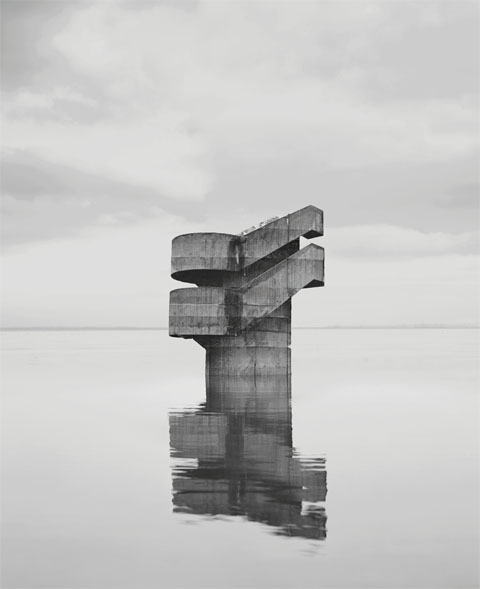
Observatoire III

Measurements of time and space are played with to give an illusion of permanence in an exhibition by French artist Noémie Goudal.
The Geometrical Determination of the Sunrise at The New Art Gallery in Walsall comprises photographs, films and installations. In the work Goudal is described as exploring “the relationship between reality and artifice and the intersection between nature and the man made”.
In a series of black and white photographs, Observatoires 2013-14, the artist has taken her reference point from the astronomical observatories built by Maharajah Jai Singh II in Jaipur and Delhi, inspired by the sun, moon and stars and used as an astronomical observatory.

(more…)

Dreams Part II: Two women’s gift which transformed a town’s landscape is celebrated 40 years later

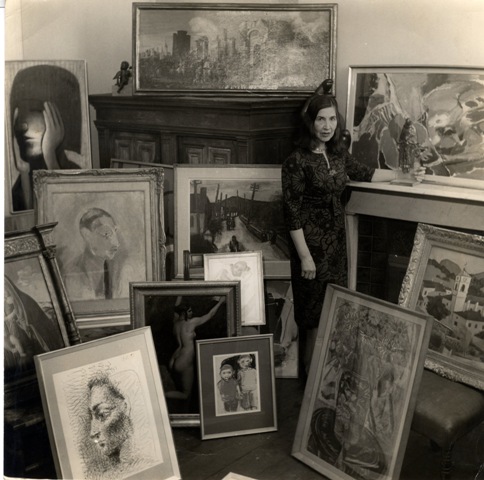
Kathleen Garman Ryan
Lady Kathleen Epstein with some of her art collection C.1972
(Image ref: GarmanRyanCollection)

It is 40 years since the Garman Ryan collection was created and given to the people of Walsall, and put on show for everyone from further afield to enjoy.
The permanent exhibition at The New Art Gallery in Walsall has been supplemented with lots of archival material for the anniversary exhibition, entitled Dealing with Dreams, which tells more about the history of its creation by two generous and insightful women. There’s also a room dedicated to works left by another woman who is part of their complicated story.
The story of the Garman Ryan collection is one of generosity and loss.

(more…)