Artists

Artists Workhouse is setting for abstract painting exhibition

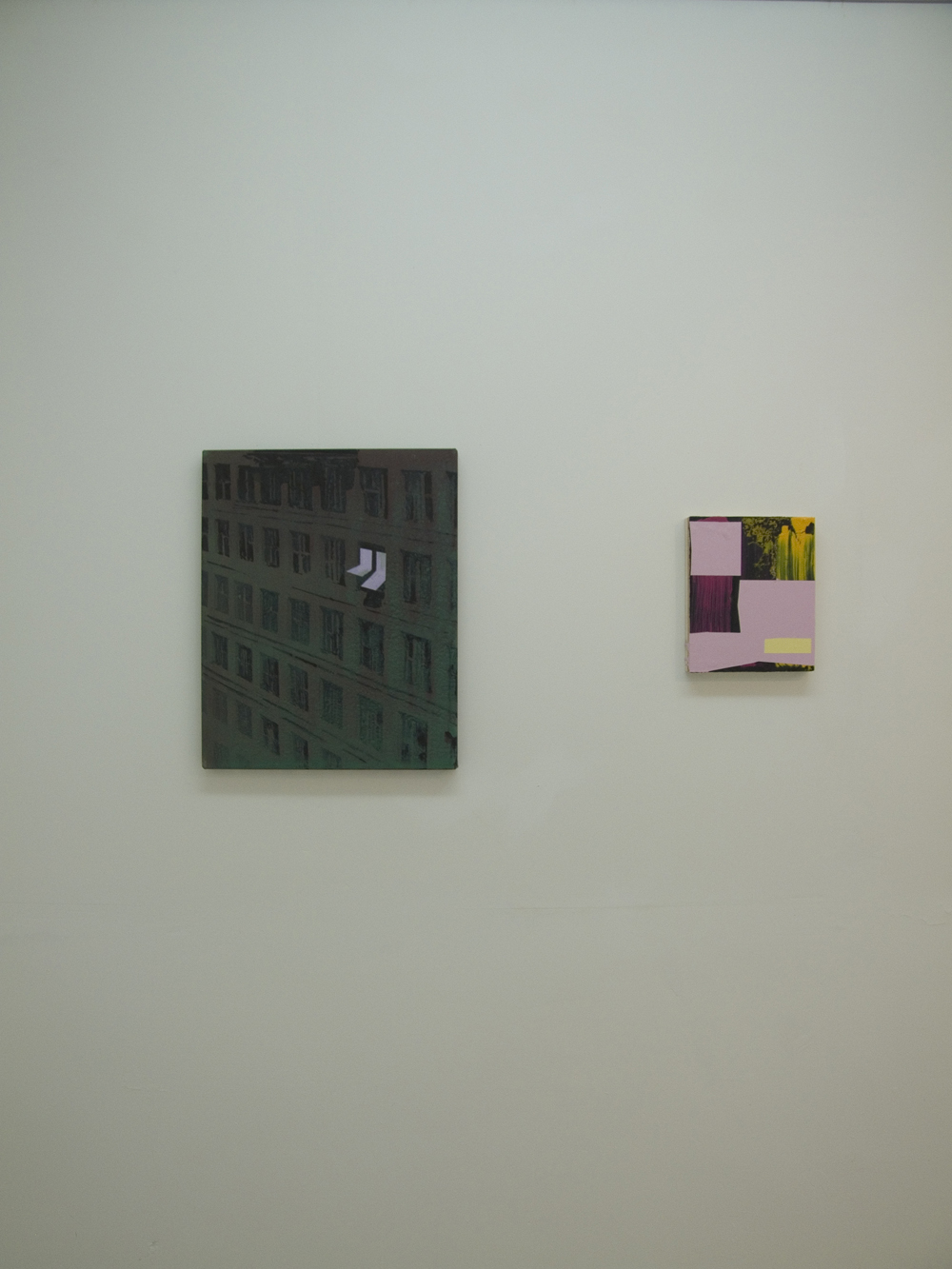
A new-ish gallery space is showing an exhibition entitled Windows, and it brings together two artists I’ve met running galleries in different places.

The Artists Workhouse in Studley is being developed by Dawn Harris, an artist currently studying for her MA in Fine Art at Gloucester University, and who previously was artist in residence at Ragley Hall where she also became Director of Ragley Gallery and Studios. There were several fun openings there, where visitors drove up to the stately home to enjoy drinks in the luxuriant setting, and then visit the exhibition in the atmospheric stable block.

This show is curated by Matthew Macaulay, a Coventry University art graduate who amongst other things set up the Pluspace Gallery in Coventry which made use of an empty space overlooking Broadgate and showed some good exhibitions, before he went on to work under the Pluspace banner for various other projects.

But good things at Ragley and Coventry city centre both came to an end, and Dawn has now moved on to establish The Artists Studio in Studley, which is being promoted as “an artist-led studio, gallery and project space benefiting from a collaborative environment”, with studios, workshops, events and exhibitions. And as Matthew put it, he was curated to curate the exhibition there.

window -3-

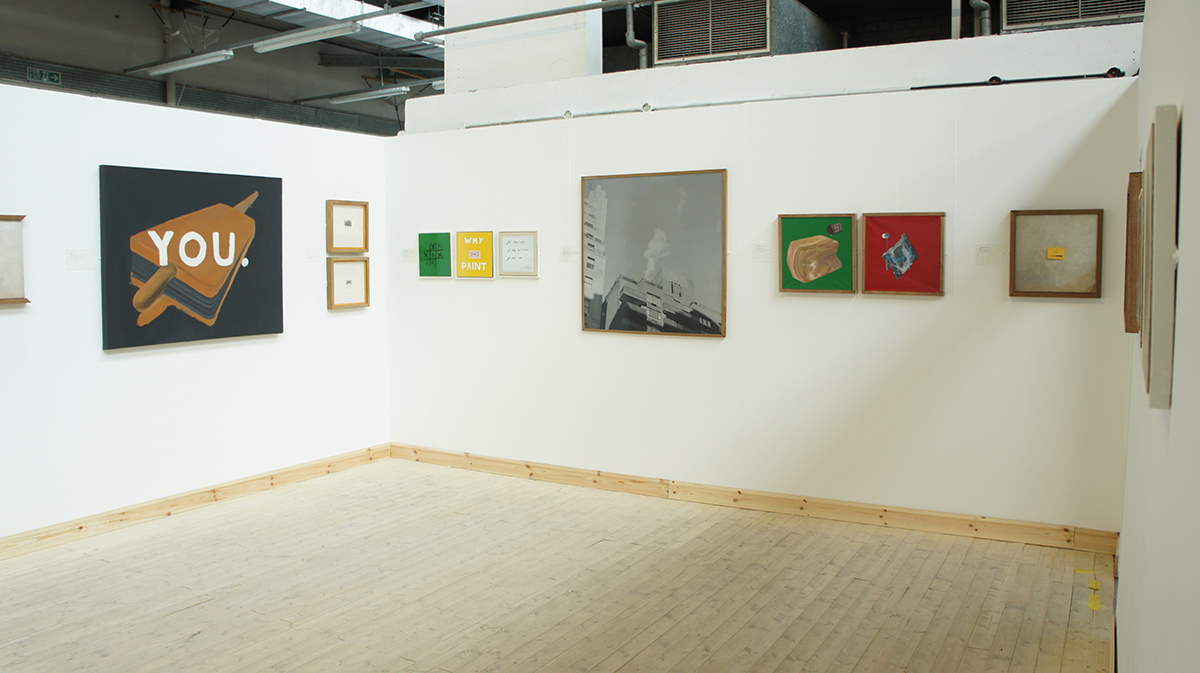
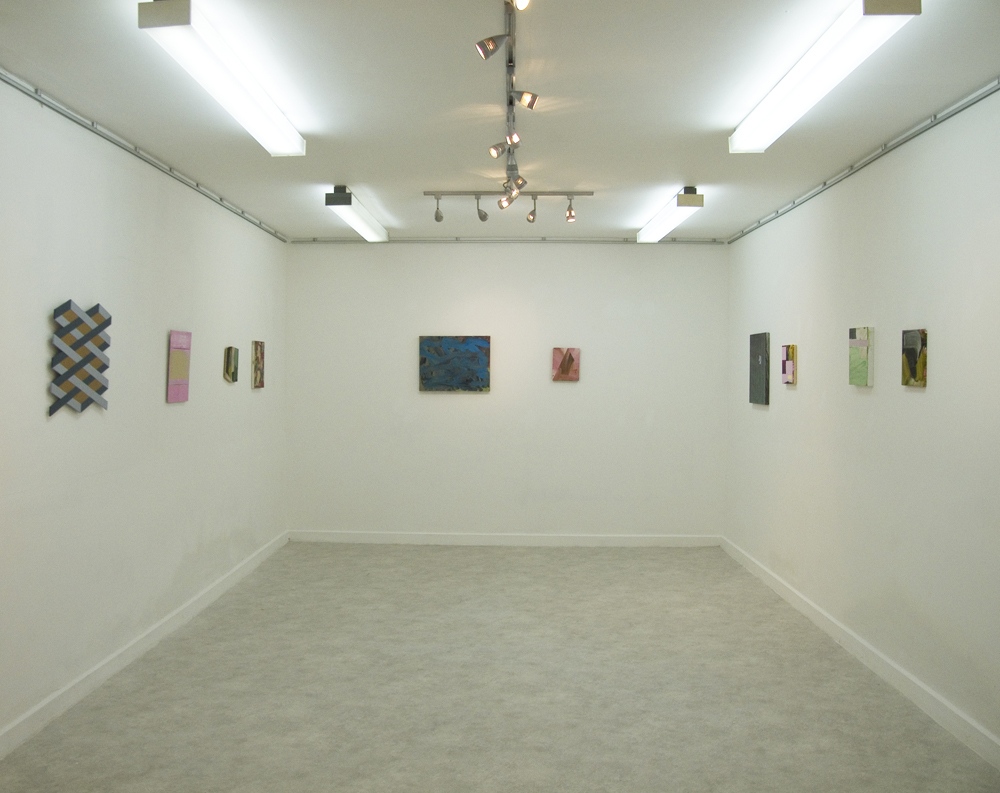
The show consists of 25 works by various artists from countries including the UK, Germany and Romania, and is over two floors at the venue.

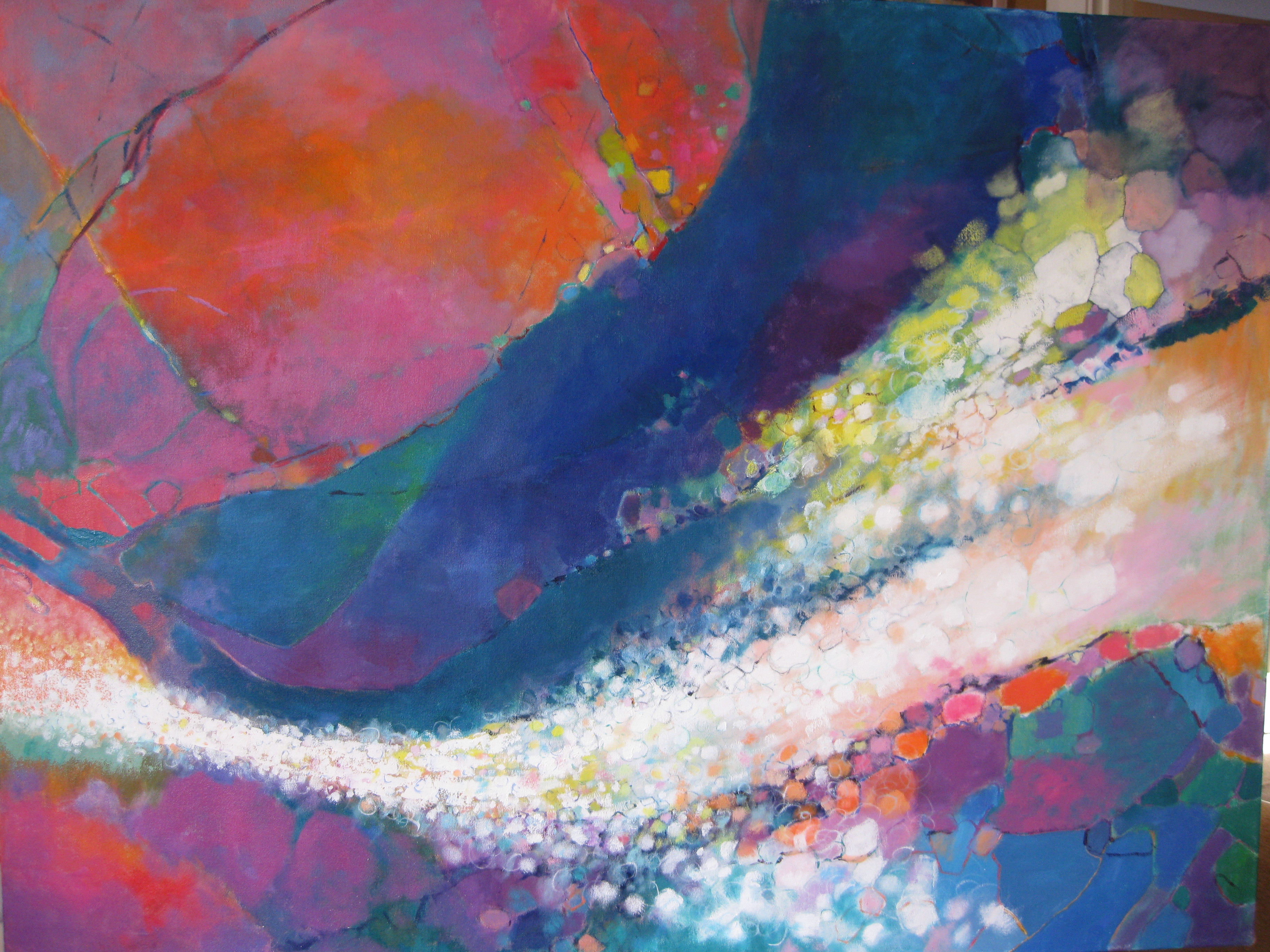
The paintings are mostly abstracts, and include some by Matthew including the lagre and striking Southside (Lewis), a mostly-green abstract of his homeland.

Three works by Coventry University lecturer Graham Chorlton actually feature windows in the paintings; in one, bright blinds seem to stick out of a dull-coloured building, and another looks like it’s painted from within a building in another country, with wooden blinds and attractive architectural buildings visible through it.

window -5-

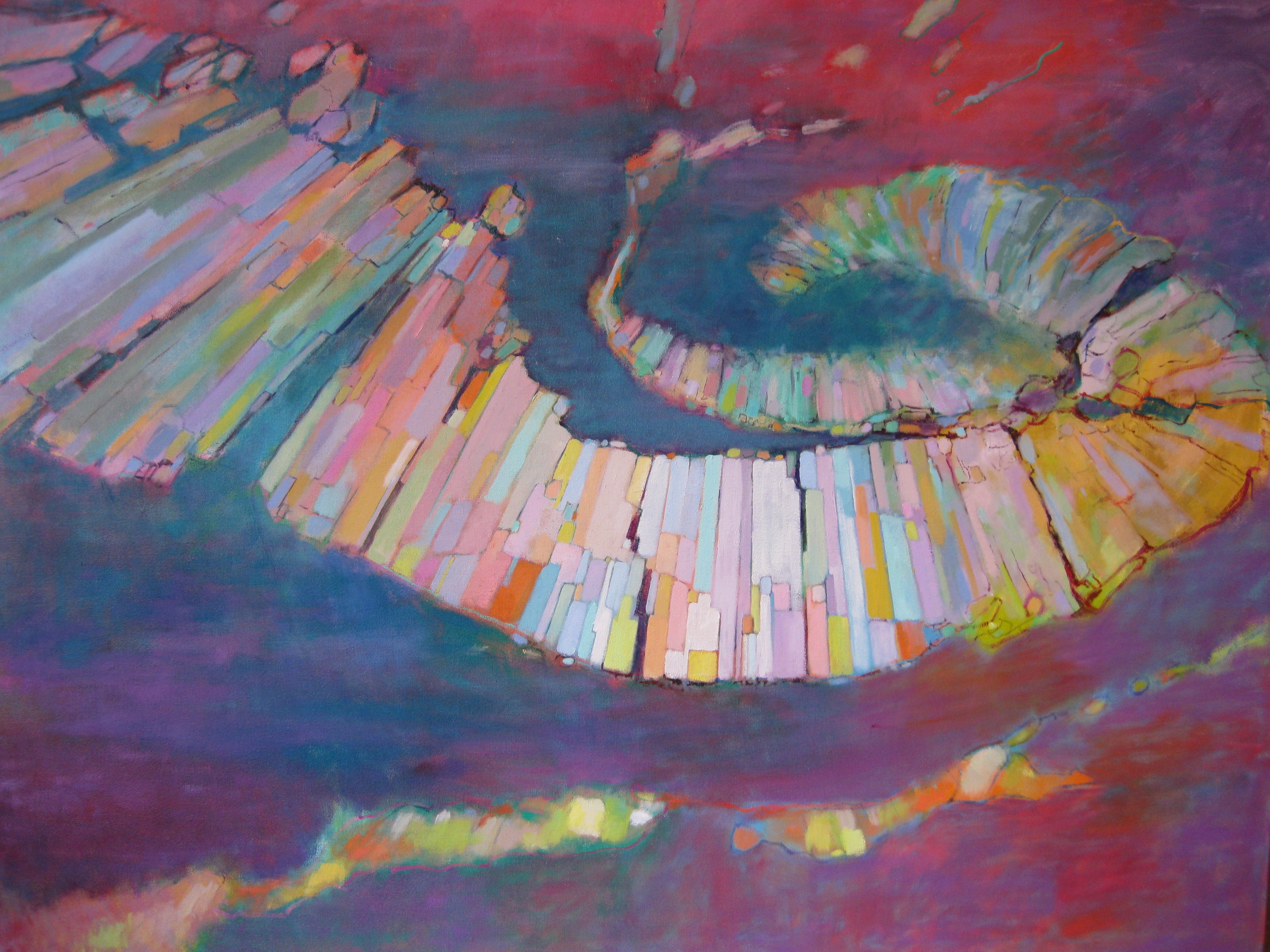
New works by another Coventry University graduate Mircea Teleaga, now studying at the Slade, both called Untitled (Night Clouds) are also different to previous ones I’ve seen, with dark blue/black swirls of what could be water or clouds. Damir Sobota’s criss-cross stripes of colour are a big contrast. Terry Greene’s ‘Water s very important for life but we need it to wash our hands’ has the longest title but is a smallish work with a U shape in blue, and Erin Lawlor’s small works seem to consist of several large brush strokes.

It’s an interesting exhibition in a good new space.


Celebrate Shakespeare’s influence on artists through the ages in Compton Verney exhibition

Visitors to an exhibition celebrating the plays of Shakespeare in art may feel they are stepping on to the stage themselves.

The exhibition at Compton Verney is arranged in eight acts focussing on different plays. It has been designed by the Royal Shakespeare Company’s Director of Design Stephen Brimson Lewis and this brings a dramatic air to the gallery spaces, and really enhances the exhibition.

Entering Act 1 brings a disorienting feeling and it’s quickly clear that’s from the different slopes to the temporary wooden floor, with light shining through it, representing the shipwreck in The Tempest, and the sound of the sea. Works on show there include a large dramatic oil, The Shipwreck by Philip de Loutherbourg, showing two figures clinging to rocks. In contrast, there’s Antony Sher’s contemplative self portrait from 2009 of himself as Prospero. Karl Weschke’s image of Caliban shows a strange misshapen figure on the beach.

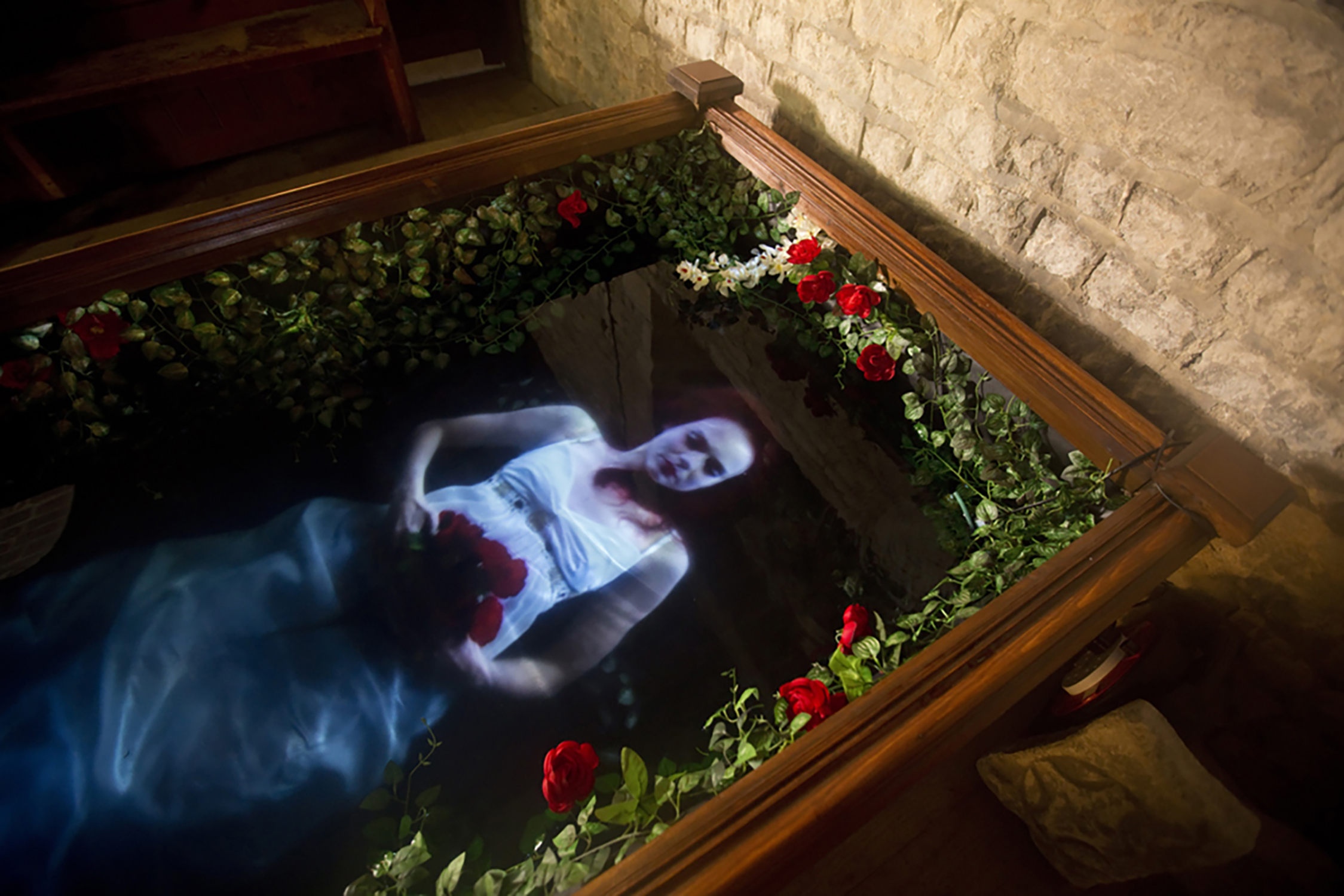
Act 2 explores the deaths of Ophelia and Lady Macbeth, and is dominated by a dark, carpeted side room featuring Davy and Kristin McGuire’s Ophelia’s Ghost (below), a holographic projection on to water. Kristin was filmed multiple times under water ‘drowning’ for this work which now looks beautiful and ethereal, the image seen through bubbling water and colourful flowers.

Ophelia’s Ghost © Kristin and Davy McGuire, photograph by Electric Egg

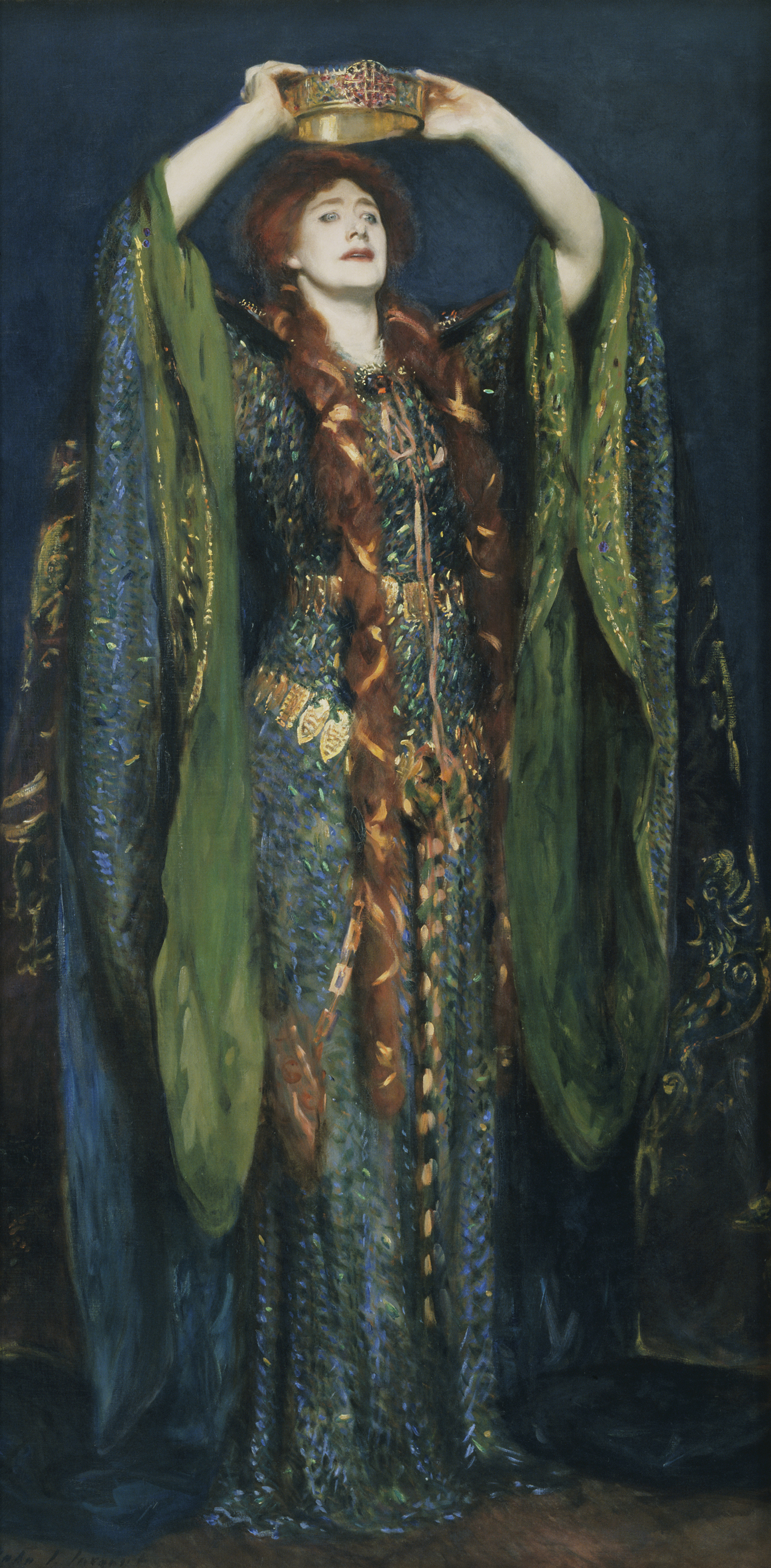
Also featured are Simeon Solomon’s Ophelia from 1887, a Rossetti drawing of Lady Macbeth and Bryan Organ’s 1973 work, Ophelia after Millais, the drawing gird marks still visible. Above them all stands the dramatic tall portrait of a crazed looking Ellen Terry as Lady Macbeth by John Singer Sargent (below). A spooky soundtrack adds to the ambience.

Act 3 celebrates the work of designer, director and writer Edward Gordon Craig, with some lovely, clean cut modernist woodcuts included. Act 4 features a new commission by Tom Hunter, in which he re-enacts Ophelia’s death in modern costume, in the Compton Verney lake. You walk below green foliage, and movements trigger audio recordings of plays in this gallery.

Act 5 shows more of his dramatic photos showing samba dancers, a thrash metal band and Pearly Kings and Queens playing roles from A Midsummer Night’s Dream; the gallery is split up with a wall with a chink in it, drawing on a line from the play.

Ellen Terry as Lady Macbeth

Ellen Terry as Lady Macbeth

Acts 6-8 features King Lear, Macbeth and Henry VIII. Henry Fuseli’s paintings from the late eighteenth century stand out for their dramatic use of light and dark, especially in The Weird Sisters and The Vision of Katharine of Aragon. A room of his work features a silver floor and moving lights.

Paired with Shakespeare in Art: Tempests, Tyrants and Tragedy, is Boydell’s Vision: The Shakespeare Gallery in the 18th Century, which examines the history of John Boydell’s gallery which opened in 1789 in London, using the Bard to develop a national form of history painting. It contains prints and paintings from that period, plus a digital re-enactment of what the gallery may have looked like.

It’s interesting, but the main exhibition can take a bow for being an appropriately and enjoyably dramatic show.

A look back at the art highlights of 2015 in Coventry and Warwickshire

As I take a rest before throwing myself bravely into a new year of trying to balance a wine glass, note book and pen at exhibition openings, there’s time to reflect on a year of varied shows – and meeting two gallery bosses called Kate who really suffer for their art.

In July, a retrospective exhibition by Coventry-based artist Nancy Upshall was my first experience of the Deasil Art Gallery in Oxford Street in Leamington. I talked to Nancy about her artistic career and paintings made in Coventry from the 1950s onwards, and also Kate Livingston and Kate Bramwell who run it.

Openings at Deasil are always fun, and Kate B welcomed me to one, when she had her hands full, by inviting me to pour my own Prosecco and “fill it to the brim” – a girl after my own heart. The exhibitions I’ve enjoyed the most have been Nancy’s and also Inked Palette, which brought a new audience to the gallery, as it showed works by people who normally work as tattoo artists. The two Kates really showed their commitment to their work at that exhibition, as each got a tattoo live at the opening – I’m glad to say I’d left by that point, though Kate B has an artist’s palette on her abdomen and Kate L a letter on her leg as a memento of it!
Adrift Adrift by Nancy Upshall

Earlier in the year, Gallery 150 bowed out of its central space in Leamington after Englandia, an exhibition by former Coventry University lecturer John Yeadon, an investigation into England’s national identity which John said doesn’t exist. I met up again with John at the Hunger Meal at Coventry Cathedral, organised by Artspace’s City Arcadia project, where we were among the naughty children, including Dean John Whitcombe, who didn’t join the organised conversations, but still enjoyed the talk and food enormously.

Rugby Art Gallery started the year in uncertain silence, with the Rugby Collection making an earlier than normal showing, including some new additions to the collection. Its later Open, fairly predictably inspired by the Rugby World Cup, was a bit disappointing but The Gain Line by Ravi Deepres was a mesmerising film which held my attention thoroughly, partly through merging local scenes from the town with a game at a huge venue.

The Mead Gallery at the University of the Warwick began the year with some fascinating Russian photographs from the early twentieth century, and by five contemporary photographers. And, not usually a huge fan of film installations, I was blown away by The Unfinished Conversation, a three-screen installation by John Akomfrah about cultural theorist Prof Stuart Hall. The summer exhibition focused on the Mead’s own collection, now in its 50th year. It was an excellent chance to see together works which are generally spread around the university.

I was also lucky enough, on a beautiful bright day, to be invited to the installation of a new work by David Nash at the University of Warwick’s Diamond Wood, accessible from the Coventry to Kenilworth cycle route and walkway. I talked to the artist as the work was painstakingly winched into place and David positioned it down to the last millimetre. It’s called Habitat and the idea is that local wildlife such as bats, birds and insects will use it; I must return to see how it’s bedded in.

The Mead’s final exhibition of the year, Making it: Sculpture in Britain 1977-1986 was a thorough and educational exhibition about the works in this period, but my overwhelming feeling afterwards was that this wasn’t the most interesting period of sculpture by a long way.

Nuneaton’s Museum & Art Gallery does a valiant job in staging two or three exhibitions at the same time, and it continued to show some small and interesting ones this year, including some inspired by works left to the museum. It started the year with an exhibition of miniatures, which revealed some lovely works by Lady Stott, who’d lived an interesting life. A later exhibition of works by Jhinuk Sarkar was inspired by a collection of items owned by Canon John Turner during his time as a missionary in Baffin Island early last century. It’s amazing where these things end up. Other good shows there this year included urban landscapes of Coventry, Nuneaton and Senegal painted by Sarah Moncrieff, and cartoons by Nuneaton-born professional cartoonist Noel Ford.

The White Room in Leamington continued to lay on fun opening nights, packing people, wine and nibbles into the small but perfectly formed gallery space.

The Lanchester Gallery had been in the prominent and easily accessible spot on a corner in Jordan Way in Coventry for the last couple of years, and flockOmania, which combined giant jewellery and performance, was one of the oddest. It’s a shame it’s now back inside the far less accessible art school building on the corner of Cox Street.

The RSC in Stratford continued to surprise with some good exhibitions, including one about Bruce Bairnsfather, the Warwickshire-born wartime cartoonist I had never heard of but was fascinated to learn about.
In In In   MichaelCarrMessagetoyourudy Foremark Reservoir IIShufflebotham

Works by Jade Blackstock, Michael Carr and Jennifer Shufflebotham in New Art West Midlands.

New Art West Midlands was challenging, not least to me when I found myself shut outside Birmingham Art Gallery & Museum desperate to get in early before a drive to Colchester (don’t ask). Thankfully PR Helen Stallard rescued me and it turned into a fun opening, with chats to several lovely artists including Michael Carr who I kept running to at exhibitions throughout the year.

Compton Verney had what felt like a good year, starting with an exhibition entitled Canaletto: Celebrating Britain, which showcased his paintings from 1746-55, and I was glad to have attended the official opening and heard gallery director Dr Stephen Parissien put them in their artistic, social and historical context.

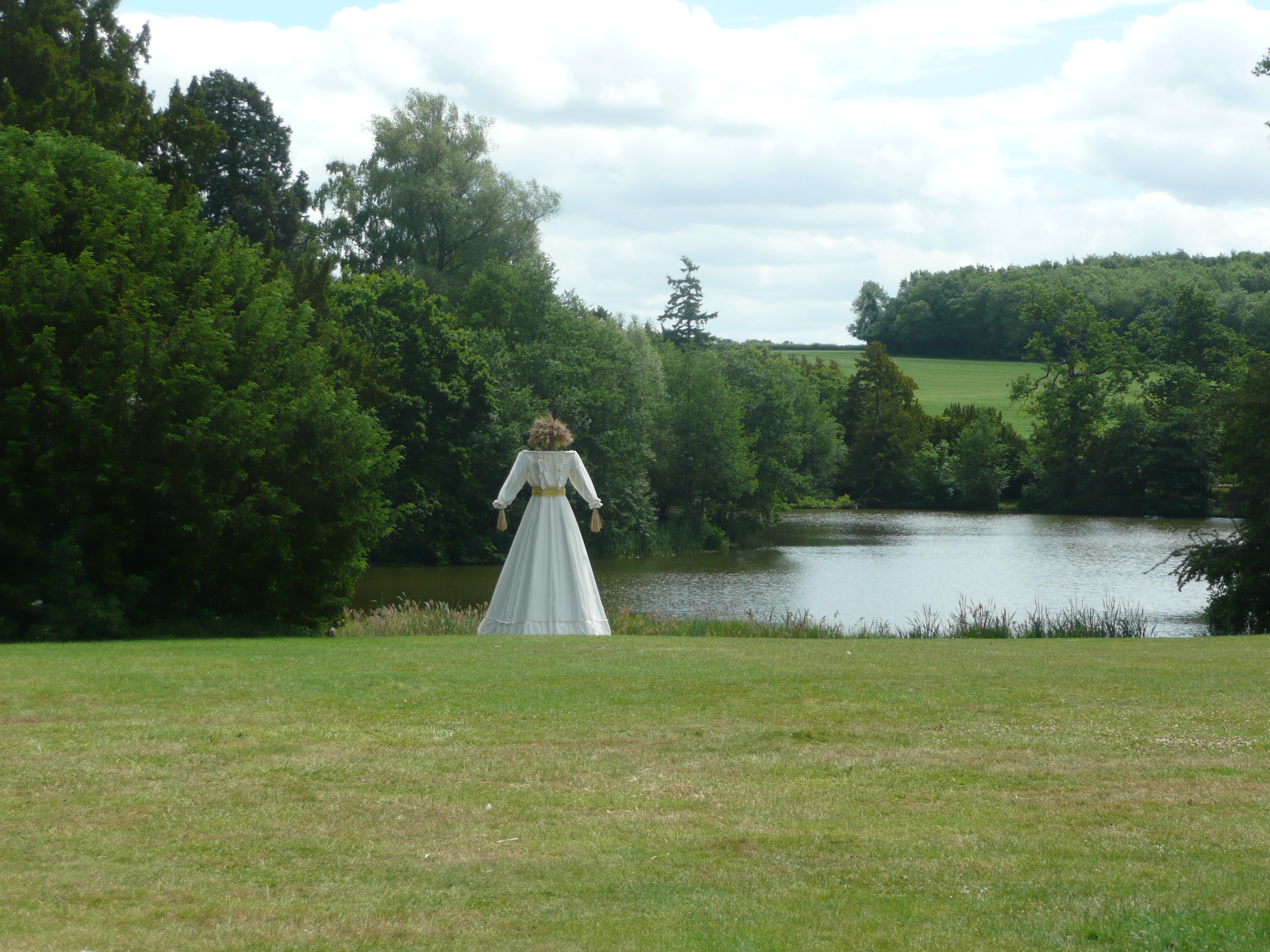
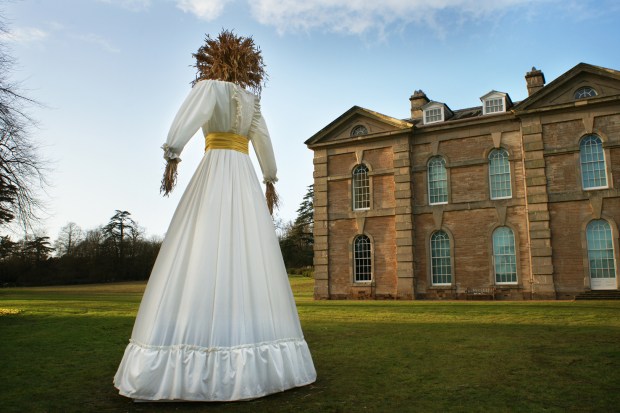
Warwickshire-based artist Faye Claridge’s Kern Baby was on show outside all season, a five metre-high faceless, gowned creature, inspired by some Benjamin Stone photographs, with some of her admittedly “edgy” photos inside. I described Kern Baby at the time as looking as though she’d escaped from the building. Months later I visited to find her down by the lake; apparently her prominent position – great as an art work – didn’t go down so well with the venue’s wedding business and photo opportunities.
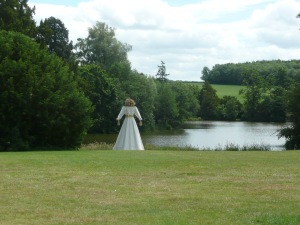


P1080567


Kern Baby’s second position, by the lake.

The Chinese Collection enjoyed a big revamp after winning funding, and it made a huge difference, showing the importance of the collection rather than just being on a route between galleries.

Leamington Art Gallery & Museum held A Leamington Lad brought together lots of works by Terry Frost, 100 years after his birth in the town. It was brought to life by some recordings of interviews with the characterful Frost. Later in the year I chanced upon another Frost exhibition in Banbury, Frost, Family and Friends, showing works loaned by individuals rather than galleries, and the often personal stories behind them. The works were mostly smaller and not all in Frost’s usual style, which made it fascinating; it’s on until January 9 so there’s still time to see it.

Recording Britain at The Herbert was a V&A touring exhibition which showed the country in 1939 captured by artists of the time, and many lost scenes were recorded; it was poignant though that not all were lost in the war, some were drowned under reservoirs or lost as industries declined. The autumn season of remembrance at the Herbert included work by contemporary artists, but seeing John Piper’s paintings of the city the day after the Blitz were most memorable.

Away from my usual round of galleries, there were some other gems.

A photographic exhibition at the Belgrade Theatre showed the works of a class of 11 adults studying for City and Guild Level 2 Photography & Photo Imaging at City College, and included some really good works on the theme of city life.
Skateboarder John Blakemore

A skateboarder by Tony Skipper in the Belgrade Theatre exhibition, and a John Blakemore from Imagine Hillfields.

Imagine Hillfields was an exhibition which came from a research project, and brought together works by contemporary and historic photographers depicting Hillfields. Jason Tilley had created new portraits for it, Richard Sadler had documented his grandmother’s life in the 50s and Masterji had documented South East Asian families through the decades; but the most astonishing, by John Blakemore from the 1960s hadn’t been seen before. The bleakness of some of the images was at odds with the fizz-fuelled and fun opening.

Lucy Cash presented a film installation in Gosford Books in Coventry city centre as part of the Dance and Somatic Practices Conference 2015 which was being held in the city; about two people could squeeze in to view it at a time.

In the Michael Heseltine Gallery at Middleton Cheney near Banbury, Coventry artist George Wagstaffe, known for his sculptures, held his first painting exhibition at the age of 80-plus, and it was interesting to hear about how Pre-Raphaelite women he’d seen in paintings in Birmingham around the time of the Second World War were influencing him still.

I discovered CRW Nevinson at the Barber in Birmingham, and loved his attitudes and mix of futurist and cubist styles; the gallery showed German Expressionist prints at the same time, works which were derided by the Nazis and can be appreciated now for their honesty and power. On London visits, I discovered and enjoyed the art galleries at the Imperial War Museum.

My first visit to Bilston Craft Gallery was to see Bilston’s Happy Housing: Otto Neurath’s Vision for Post-War Modern Living, an examination of the plan for homes that would actually make people happy, and what happened to that inspirational idea.

There was an exhibition of photographs as part of Coventry University Romani Week in April, with an introductory talk by the late Deputy Council Leader Phil Townshend, who spoke passionately about the city’s dedication to community cohesion.

On a trip to Cornwall, I was amused to find lots of koans (you know, the pointy thing in front of the Warwick Arts Centre) on show at the Tate St Ives as part of a show of Liliane Lijn’s works. I didn’t get to London often this year but was very glad to make it to Ai Weiwei’s exhibition at the Royal Academy; I had thought he was more interesting as a person and campaigner than artist, but seeing lots of his pieces together made me revise that view – the personal and the political merge to create really great works. An exhibition of portraiture by Giacometti found me also having to look anew at works more on paper than in clay by one of my favourite sculptors.

One of the oddest art experiences of the year was the Art Trail run as part of the Earlsdon Festival, where I paced the streets looking for some elusive art works. It was something I felt could grow and be improved upon in 2016, but with the Earlsdon Festival now not happening perhaps it won’t go ahead at all.

Anyway – thanks for the art, the laughs and the gossiping in gallery corners this year – and looking forward to what 2016 will have to offer!
Fascinating Imagine Hillfields exhibition depicts changing post-war life in Coventry suburb

John Blakemore

An exhibition which is part of a research project has drawn out some amazing never-seen-before photographs of the Hillfields area of Coventry, and added in some new pictures.

The Imagine Hillfields Exhibition is on at the Box in Fargo in Far Gosford Street, Coventry, until the end of the month. It is part of a project of the same name run by a team of sociology researchers from the University of Warwick which in turn is part of a national project looking at the way society imagines its present and future.

There are work by five photographers on show, all showing post-war Hillfields. John Blakemore (one photo top), born in 1936, had wanted to be a social documentary photographer, and his photos from the early 1960s have never been seen before. They are quite astonishing, some looking much older than they are, especially a chimney sweep and his wife in their home with the wallpaper hanging off damp walls.

In many labelled Urban Playground, children play amongst rubble and a terraced street stops dramatically with a gap where a house once stood. In Eric Green’s Triangle lots of terraced houses disappear into the grey background and in another a cheery shopkeeper, cigarette in hand, smiles for the camera. There is a young child in a mosque, and a Sikh family walking down Primrose Hill Street, reminding us Coventry has been welcoming new people for a long time.

Richard Sadler

Richard Sadler, now 87, used to photograph celebrities visiting Coventry, but his pictures on show here document a day in the life of his grandmother, Minnie Sadler (one image above), who lived in Hillfields. She’s seen sitting on the edge of the bed in her tiny attic room, all tussle haired, then looking much smarter when done up. She’s seen washing the doorstep, like a good 1950s woman, going shopping, pictured artily from behind a street display of prams, and having tea. There’s also a little boy dressed as a sailor at the Coronation celebration.

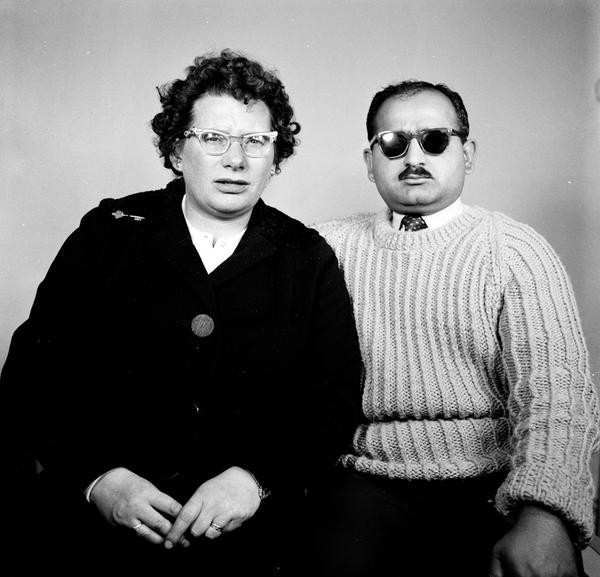
MasterjiMasterji, now 91, came to England from Mumbai in 1951 and became the owner of Master’s photographic studio in Stoney Stanton Road. His images are all portraits of South East Asian families through the decades, and so document changing fashions and styles. There’s strict moustaches on men in 1965, and a more laid –back cool look in 1975. A Sikh family pose in their own home, husband and wife either side of the big TV also in 1975, and Indian weightlifters with long hair show off their muscles at Sidney Stringer School. They are all very atmospheric (one image right).

Jason TilleyJason Tilley, former Coventry Telegraph photographer, has created new works in response to the Blakemore ones, showing in vivid colour portraits of the varied population of Hillfelds today, often looking away from the camera in the street, or proudly outside their own homes, showing the continuing changing make up of the population (image left).

In the entrance area, Nick Stone’s photographs use ghosting to merge old pictures, including a horse-drawn drinks cart, with photos of the area now to show change and continuity in one.

It’s a fascinating exhibition and essential viewing to those keen on photography, social history and Coventry.


Excellent Nancy Upshall exhibition puts Deasil gallery on the map

Adrift

A Coventry-based artist is holding a retrospective of her work with paintings and drawings going back to the 1960s.

Nancy Upshall moved to the city from Dorset to teach art at the then Barkers Butts School in the 1950s.

She said: “I left my first job very easily – I was teaching art and they had a polished floor in the art room and the caretaker would grumble (about it getting dirty) so I gave my notice in. After about two months I thought I better get another job and when I applied for Coventry I thought that’s the furthest north I am going to go. It was a secondary modern school, and they had been told by an inspector their art and music was useless. They wanted to get a graduate in and I thought when I was being shown round, this job is mine!

“I came from a small town in Dorset and coming to Coventry it was so industrial … I couldn’t believe people lived like that, it was a real eye opener for me.”

Nancy thought she might stay in Coventry for a couple of years, but then, as she put it, “love struck” and she has been in the city ever since.

A few of the works in the exhibition are from the early years. Nancy said: “Some of them go back quite a time, and some of the early ones are from when I was first married and living in Coventry.”

She recalled going out on a Sunday morning when she only had her first daughter, Jane, and Nancy would draw and Jane took her drawing book along too, but it got too complicated by the time her second daughter came along.

The post-war reconstruction was going on in earnest. She said: “I remember being on the roof of Broadgate House and painting – there’s one in the Herbert in Coventry which I did of Smithford Street.

“There were car parks which for me were ready made abstracts, you got a space and beyond it another space.”

Now retired but still painting in Earlsdon, Coventry, Nancy taught for many years at Coventry Technical College, a Lanchester Polytechnic annex, Rugby School of Art and until recently on open studies classes at the University of Warwick.

This exhibition at the recently-opened Deasil Art Gallery in The Warehouse in Oxford Street, Leamington, has around 50 paintings, prints and drawings on the walls, plus 70 prints in racks.

The early works include a pen and ink drawing of the Owen Owen building being constructed, with the old stone of Holy Trinity also visible, from 1962, and a painting of the rebuilding made of lots of bright squares from 1964. Portrait of Greta, a delicate close up of a woman with a beehive hairdo is also an early work from 1962.

Later works develop her familiar wide palette of colours, usually including purples. Some works are entirely abstract, others more figurative but in the same colour-filled style. Others stand out as very different.

Mind the Gap from 2004 has what looks like a large cut-away bit of earth so you can see what’s below ground, while the words ‘mind the gap’ are repeated and fall into a hole. Not Waving but Drowning of 1976 is a rather symbolic pencil drawing showing a small hand waving from behind a curtain in a house, which in front of it has a hedge and two fences. Green Belt of 1981 is a larger-than-normal work with a green bit in the middle, dividing many overlapping pencil-drawn houses.

Le Plongeur

There are also a few works inspired by a visit to Ayers Rock in Australia in the 1990s, including Tree Ancestors, a delicate screenprint of strange-faced creatures.

Geranium from 1980 is an identifiable plant, and Inkwells from 1983 uses what is now a flaking orange paint as the background colour, with three inkwells painted on. Other more abstract works feature brightly coloured shapes and swathes of colour, some in series like the Division series of 2007, or the large Rift from 2004. And it’s good to see Nancy’s still working, as the Poseidon’s Kingdom, with what look like watery bubbles, from 2015.

It’s a wide-ranging exhibition from an interesting and popular artist which shows the variety of her work from over the decades, in a pleasant, fresh-looking space which plans to show new exhibitions every three weeks.

The retrospective is the third exhibition at Deasil Art Gallery, a pleasant, clean-looking space on the ground floor of what was Oceans nightclub, and is now occupied by creative businesses,a design company and social media firm.

Deasil is run by Kate Livingston and Kate Bramwell, and the name Deasil apparently comes from the meaning of the direction of the sun’s movement clockwise, moving forward, to tie in with the Kates’ aim of being an Art Agency and displaying art in different venues across the Midlands – moving art forward. I look forward to hearing more from them, and seeing what other exhibitions they put on in the future.


Coventry University degree show is full of art but has painting gone out of style?

Where have all the painters gone? That was what I was left wondering after visiting the Coventry University annual art degree show last night.

Over several floors, graduates showed their skills, from Foundation students fittingly in the basement to graphic design, illustration and fine art. It’s on the top floor where most of the paintings are usually to be found, and there were some, but not as many as expected. It’s a national trend according to a locally-based painter I spoke to later. The opening night seemed quieter than normal but on the plus side, there was a welcome return of lots of (cheap) free wine stations.

But anyway, what’s good to see about the degree show 2015, which continues in the Coventry University Graham Sutherland building on the corner of Gosford Street and Cox Street until Thursday. Photography is also only up the road in the Lanchester Gallery and Glass Box Gallery.

The Foundation students’ work seemed more interesting and better produced than I’ve seen for years, and is definitely worth a visit. Georgiana Irina Catana’s animation entitled Everything Remains Possible, with a little stuffed creature seemingly playing the piano was entertaining, and Tolu Olubrade’s Autonomic brought order to a china animal collection.

Rohanie Campbell-Thakoodun’s use of a polling box type device where people can confess a secret or confide their sorrows, and then shred it, was inventive, and Harjinder Rahore’s painting machine, using bicycle parts to create splattered T shirts was also fun. Testa Joseph’s Restriction in Freedom photographs combined bondage and fashion and Testa is off to Central St Martin’s next year to study fashion design. It’s always worth remembering George Shaw did his foundation year here before moving on.

Also on the ground floor, graduates who’ve created larger more sculptural items are showing. Myah V K Sahota has taken traditional pinafore designs and stitched them with more feminist slogans. Marc Evans was in a separate room and had the best hair of the night, possibly helped by taking a head set on and off again and trying to persuade other people to use it to literally light up the room with the power of their minds.

On the top floor, Camille Louise combined natural objects such as driftwood with weaved wool, and had a room full of sand with paint-splashed walls. Bethany Dartnell’s tiny and detailed drawings of flats in Birmingham were also interesting.

Muziwethu Nduma’s paintings were my favourite of the night, showing in a colourful, direct painting style, parts of Coventry that have become home, including a bus pulling into nearby Cox Street. The image in KFC was particularly arresting, the customer faceless with their back to the door and the two staff equally so, blocked by the customer or items.

I counted three people writing that their inspirations had included Tracey Emin, and one of them was Peige Smith, whose room had a parental guidance warning. In the corner one latex model of several penises dripped a white fluid into a metal bowl. She also referenced Helen Chadwick and Sarah Lucas, and the direct influence of both could be seen in the use of tights to create sexually-outspoken models of genitalia, and plaster casting of male and female genitals.

Eleanor Hudson’s black and white room was also interesting and detailed, and Chidera Ugada’s paintings, inspired by West African masquerades, stood out for their imagery and originality.

In the Lanchester Gallery, Oliver Wood’s The Farewell Train’s Last Whistle photographs of a former rail route were displayed in a interesting concertina way. Jenny Stonely explored the Anglo-Indian experience through portraits, and Ella Parkinson explores the state of dreams though some spooky self portraits.

These are the ones that stood out for me, so have a look and see who you think we should be seeing more of in future years.

Faye Claridge’s Kern Baby is striking sight at Compton Verney this year

A haunting vision greets visitors to Compton Verney art gallery in South Warwickshire all this year.

Kern Baby is the creation of Warwickshire-based artist Faye Claridge. She stands five metres tall, wears a long white gown – and has just wheat for her hands and head. The lack of a face as you approach and realize there is none there is the most striking thing.

The installation is backed up by an exhibition in the café area at the gallery, which explains where she comes from. Faye has had a residency at Library of Birmingham where she was working on the Sir Benjamin Stone photograph collection. Stone was a former Birmingham MP and Mayor of Sutton Coldfield who also travelled widely in the UK to photograph important historical places, festivals and pageants to record them for future generations in the late 1800s and early 1900s.Thousands of his prints are at the V&A and in Birmingham.

Faye said growing up with her Morris dancer father and folk singer mother she can remember a book of Stone’s photographs in the house as they gained a temporary popularity in the 1970s. She said: “To me they are very much about personal identity. Painting was felt to be in decline and photography was the new way of capturing something that was going to be lost.”

One of Stone’s photographs was of a Kern Baby, or corn dolly, from a festival called The Harvest Home in Northumberland in 1901. The community celebrated the wheat harvest by using the last gathered crop to create a human shape dressed in good clothes, and called it the Kern Baby. It was then kept over winter, then buried the next year: “It was buried in the first ploughing and planting in the new ground so the spirits of harvest went back in so she would grow again. I decided it should be revived.”

The work also chimes with the large British Folk Art collection at Compton Verney, and with the “Britishness” theme of the first two other new exhibitions of the year, Canaletto: Celebrating Britain, and The Non-Conformists, photographs by Martin Parr of Hebden Bridge in the 1970s.

The tall Kern Baby can be seen from the distance as you approach the gallery, and from a distance looks like she’s just escaped the building. She’s striking and unsettling, and worth circling to see from all angles and against different backdrops, some including the house and others just the trees and lake.

The structure is Faye’s biggest work to date, and involves more than 30 metres of theatre-grade polyester in the dress, which she sewed herself “on my ancient sewing machine”, and later added an underskirt as the structure underneath could be seen too easily. There is a yellow sash to reference the oilseed rape so prevalent these days.

The metal and water tank ballast which holds her in place was made with the help of a structural engineer and theatre design company, and she took four people six hours to put in place. It is hoped she will withstand the weather between now and December, though she will weather a bit and some wheat might be replaced.

Ironically, the Kern Doll was not conceived as the main part of the exhibition.

In the exhibition, Benjamin Stone’s photo The Harvest Home, Kern Baby, from 1901 is shown, a three foot white-clad figure in a plant bed, and Faye’s is a much bigger version of it. There is also an image of children holding hands around a huge pile of wood, entitled Northumberland Baal Fires: St John’s Eve, the prepared faggots, in what looks like a very strange scene from 1903.

Faye said: “I decided it would be fun to make a great prop to produce a new photo and to create a sculpture, but it was incredibly naïve but it got commissioned. I’ve done nothing on this scale before.”

She has though involved local schoolchildren from Welcombe Hills School and Hampton Lucy C of E primary to make her own version of the photo, with the uniform-clad youngsters solemnly surrounding the Kern Baby on a cold February day at Compton Verney. The photo was taken after working with them so they weren’t spooked by it.

She said: “My children (aged three and five) saw it when it was going dark and it was a full moon and she did look pretty ethereal.”

They gripped her hands tight, asked why she didn’t have a face and turned down an offer to touch!

Other photographs of Faye’s in the exhibition come under the title of A Child for Sacrifice, again inspired by Stone and photographs he took of youngsters in the Warwick pageant, and of the Wroth Silver ceremony. These depict youngsters from Marton, in Warwickshire, posing for her camera. Faye received a Heritage Lottery Fund grant to work with Marton’s Museum of Country Bygones to use some off their items to recreate pictures by Benjamin Stone.

These are the ones, when I’m trying to find the right word, Faye suggests are “edgy”, though parents were always on hand, and the children photographed picked their costumes. It is their confidence in strange garb and poses which is quite unsettling.

In one, a girl sits on a throne in a cornfield, corn sceptre and orb in hand, and in some she has lace obscuring her face. A boy becomes a scarecrow with a blacked-up face, and another boy in Plough’s Demon has some anonymous arms reaching round him. Another very young boy in a field is Faye’s own son.

The Kern Baby is immediately impressive and striking in the landscape but the Stone photos, the stories behind them and Faye’s own photographs inside are also intriguing and throw out questions about traditions from the past and how we relate to them.

* Next year Kern Baby will get a new dress and go on show at Birmingham Library – changing her setting from rural to urban, and where visitors will be able to glide past her on escalators. Three showcases about Faye’s residency in the library are on show at the moment.

Coventry graduates among winners in New Art West Midlands 2015

Foremark Reservoir IIShufflebotham

New Art West Midlands is in its third year and getting your work into it is a prestigious draw for recent art graduates – last year 100,000 people are said to have visited the exhibition across three galleries.

This year there are four involved – the Herbert in Coventry, Birmingham Museum & Art Gallery, Wolverhampton Art Gallery and the Barber Institute of Fine Art, showing the work of 30 people in total. All have graduates in fine art from one of the West Midlands art schools in the past three years, with successful works chosen by artists John Newling and Bedwyr Williams, and art historian Amna Malik.

There are four Coventry University graduates showing in the exhibition, and I spoke to them at the opening in Birmingham.

BA in Fine Art graduate Jennifer Shufflebotham’s work (top) had already been recognised before she was also selected for New Art West Midlands. She was offered a residency at the Pod in Coventry after her degree show last summer.

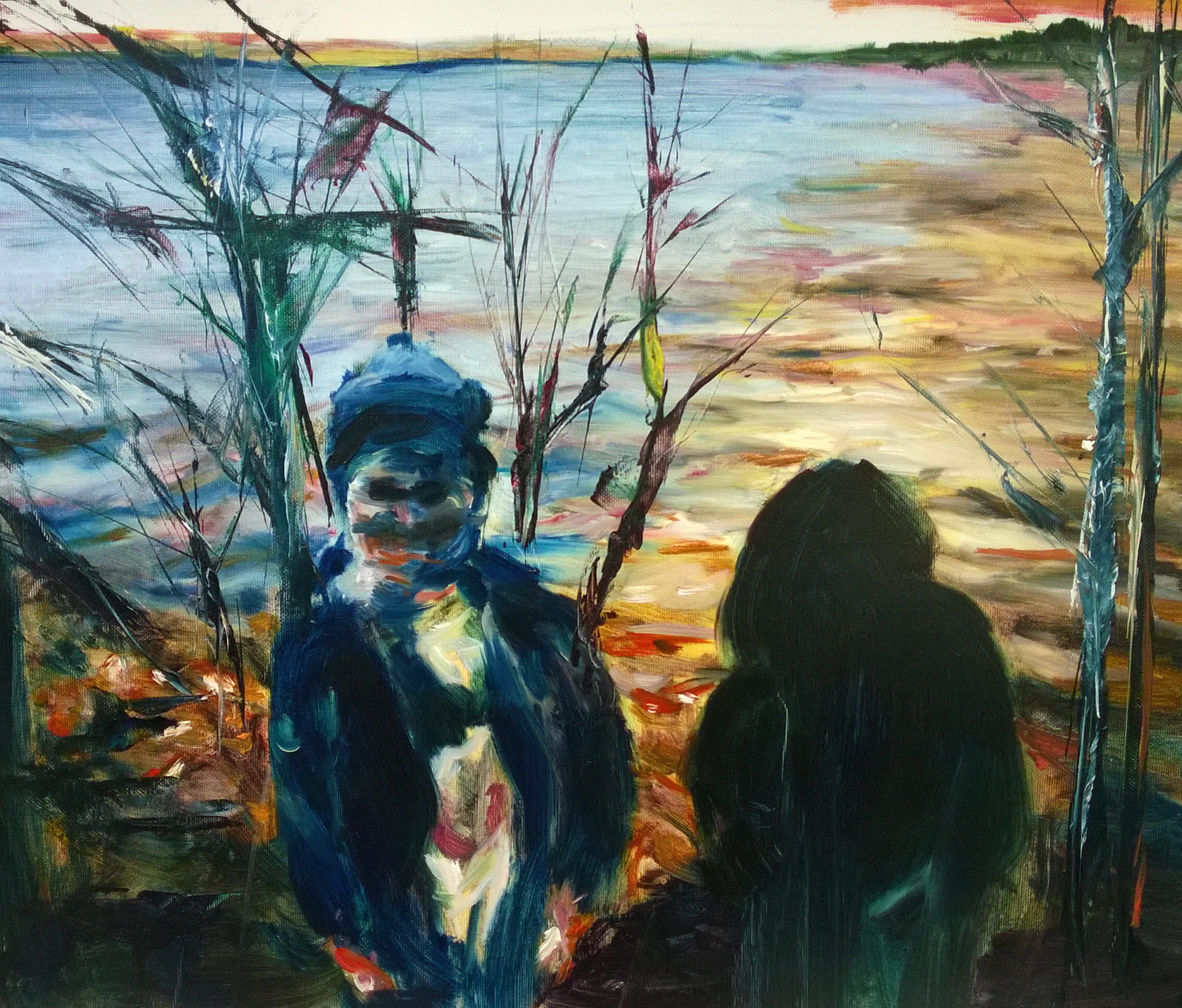
At the Birmingham gallery she I showing two paintings inspired by a box of slides she found in her grandparents’ attic in Burton on Trent about four years ago, showing family holidays in the 1960s, when photography was more of an effort than today when people can take pictures by taking their phone out.

She said: “I’d never come across them before and I was really interested in the balance of analogue photography and the easy access to photography and Instagram that we have today.”

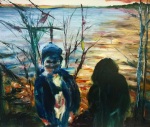
She has re-layered them to create paintings, with blurred and slightly strange images produced. Foremark Reservoir II is particularly interesting, with one person reduced to a dark shape which could be deliberately cloaked.

MichaelCarrMessagetoyourudy

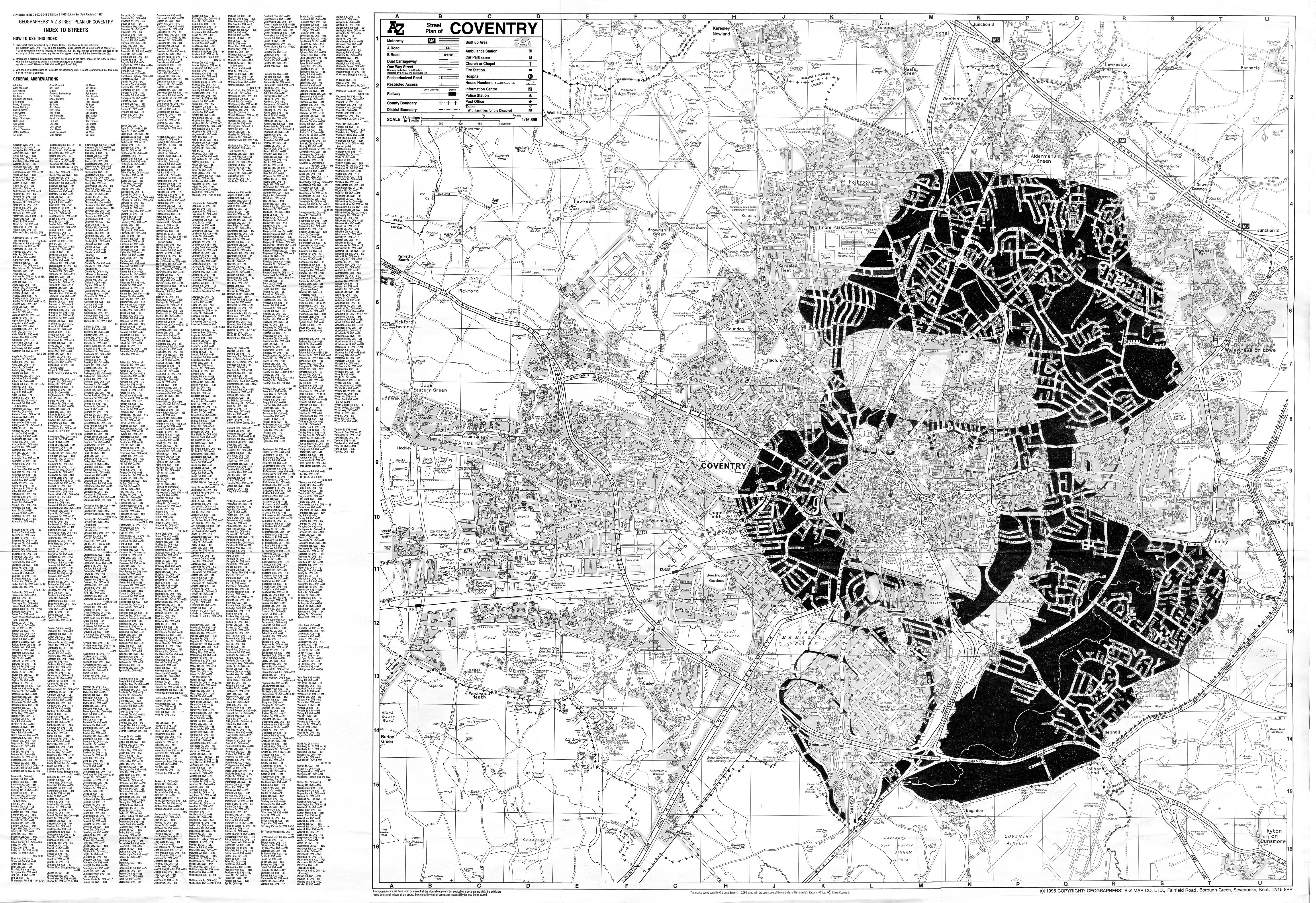
Michael Carr’s work includes Instructions Not Included, a screen print of the instructions for looking after a vinyl disc, and A Message To You Rudy (above), a digital ink work showing Lynval Golding from the Specials depicted on a street map of Coventry. If you pick up the exhibition leaflet you get your own copy of this.

Michael came into the world at the Walsgrave Hospital in Coventry and said music of the Specials had been “a big influence on my life”, and puts the work in the context of “a vision of psycho-geography and how music can motivate and change lives and people”.

He started this work with an illustration of Lady Godiva on a map: “The Specials and Lady Godiva testify to the strength of the city. A lot of people speak badly about Coventry but if you look at the invention of cars, sewing machines, watches and all its industry there’s a lot of strength there.”

Michael has just finished an MA in Contemporary Art Practice but his undergraduate degree was in graphic design, and he hopes to get a studio and have some links to the university still. I’d already seen his work at a couple of exhibitions in Coventry, showing he’s getting out there already, and with his energy and enthusiasm he’s sure to go places.

SONY DSC

Reece Kennedy’s work was inspired by talking to his Coventry University tutors about art education, studying, and the student’s audience. He chose to capture the paradigm of the art fair by creating an installation of a room from the Frieze art show entitled Greatness Engine Future Prospectus (above). Reece graduated with a BA in Fine Art and is running his own printing business in Birmingham.

SparkesAn Ode to Christian Joy

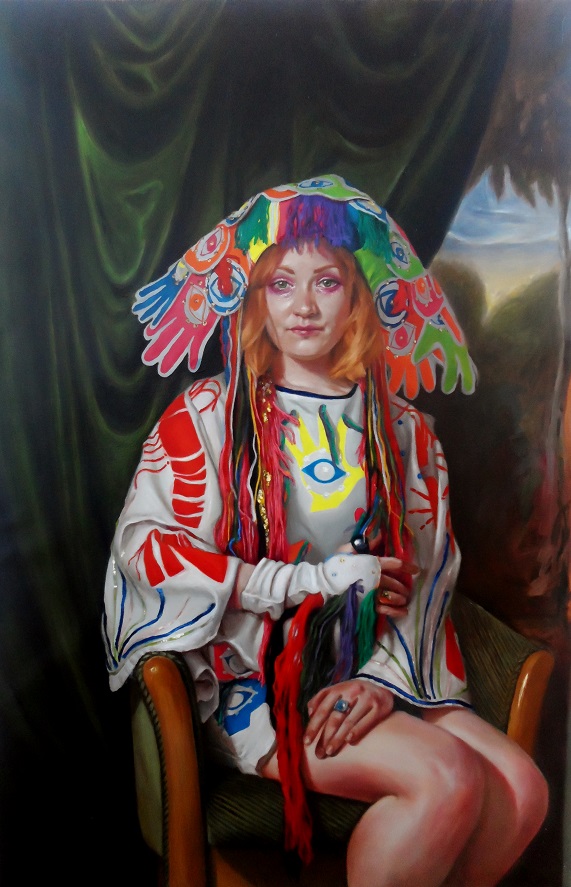
Other works on show at Birmingham Art Gallery & Museum included Emily Sparkes’s self-portrait in a colourful costume, Ode to Christian Joy (above), and she also has some paintings on show at the Herbert of Pearly Queens, relating to cross dressing and gender roles. They are interesting and keep the attention. James Turner’s reworking of paintings from the gallery’s collection sees beams of light coming from the painted women’s eyes, distorting how they are viewed and turning them into light box works.

At the Herbert in Coventry, Andrea Hannon is showing her installation works. Housekeeper is a lightshade with things hanging from it, and Territory Formula features flowered wallpaper and cut outs of women from magazines. Puppeteer includes more cut outs, an old framed mirror, and little character cut-outs, including a Victorian woman.

Coventry born and bred, Andrea has recently completed a Fine Art PhD at Coventry University. She used to do large paintings, but has now moved into multi-media installation and collage works.

She said: “It was during the masters I became interesting in structures of knowledge and how we become defined as one thing or another.”

She uses a lot of magazine and encyclopaedia images, and this set of work is based on the idea of what it means to be the ideal woman, as seen through the media, being good at cooking and housekeeping. Andrea has now moved to live near Stratford, and is teaching at the college there and working with some other former Coventry University students.

FishandChipsMeganSherida

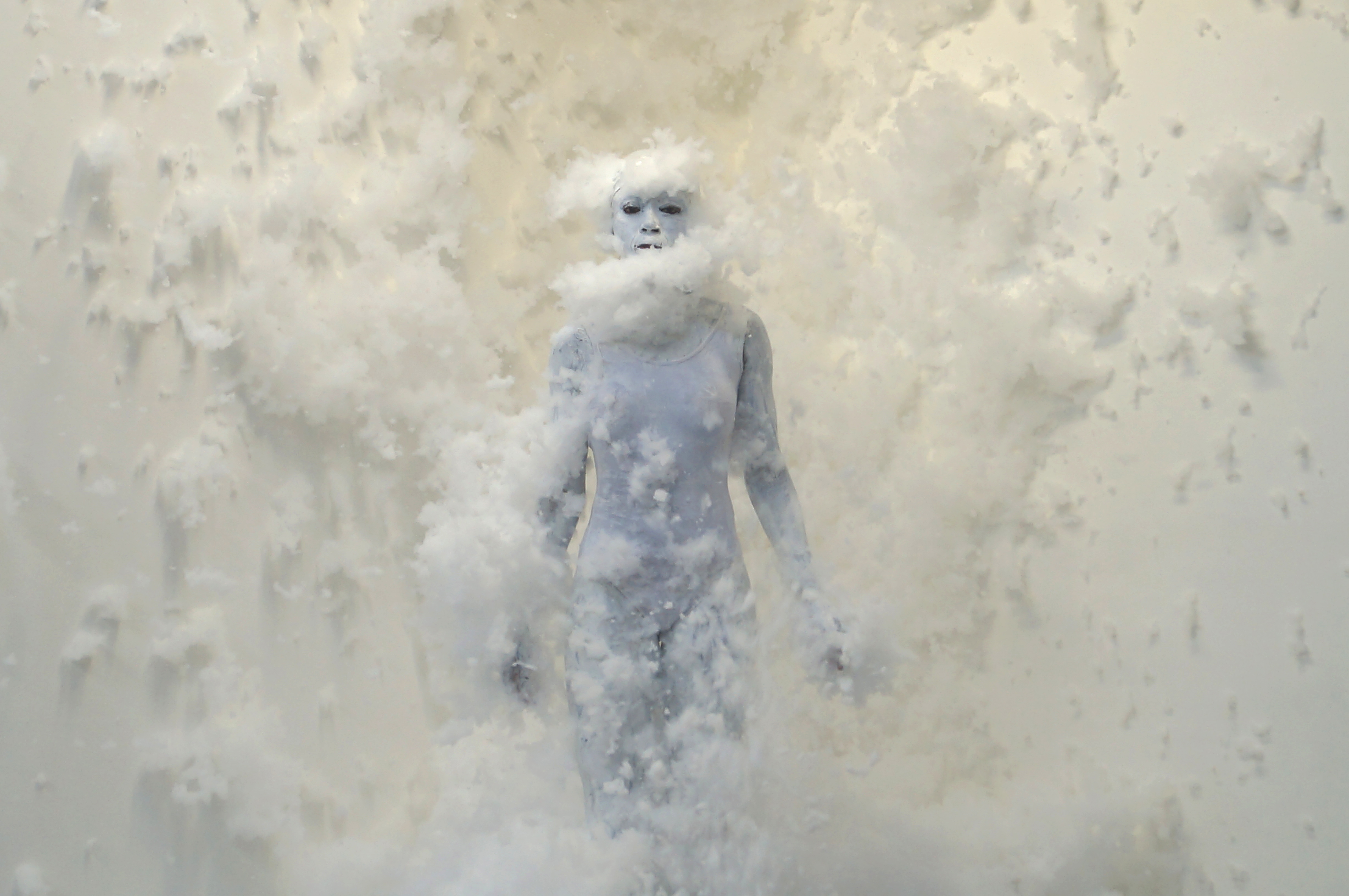
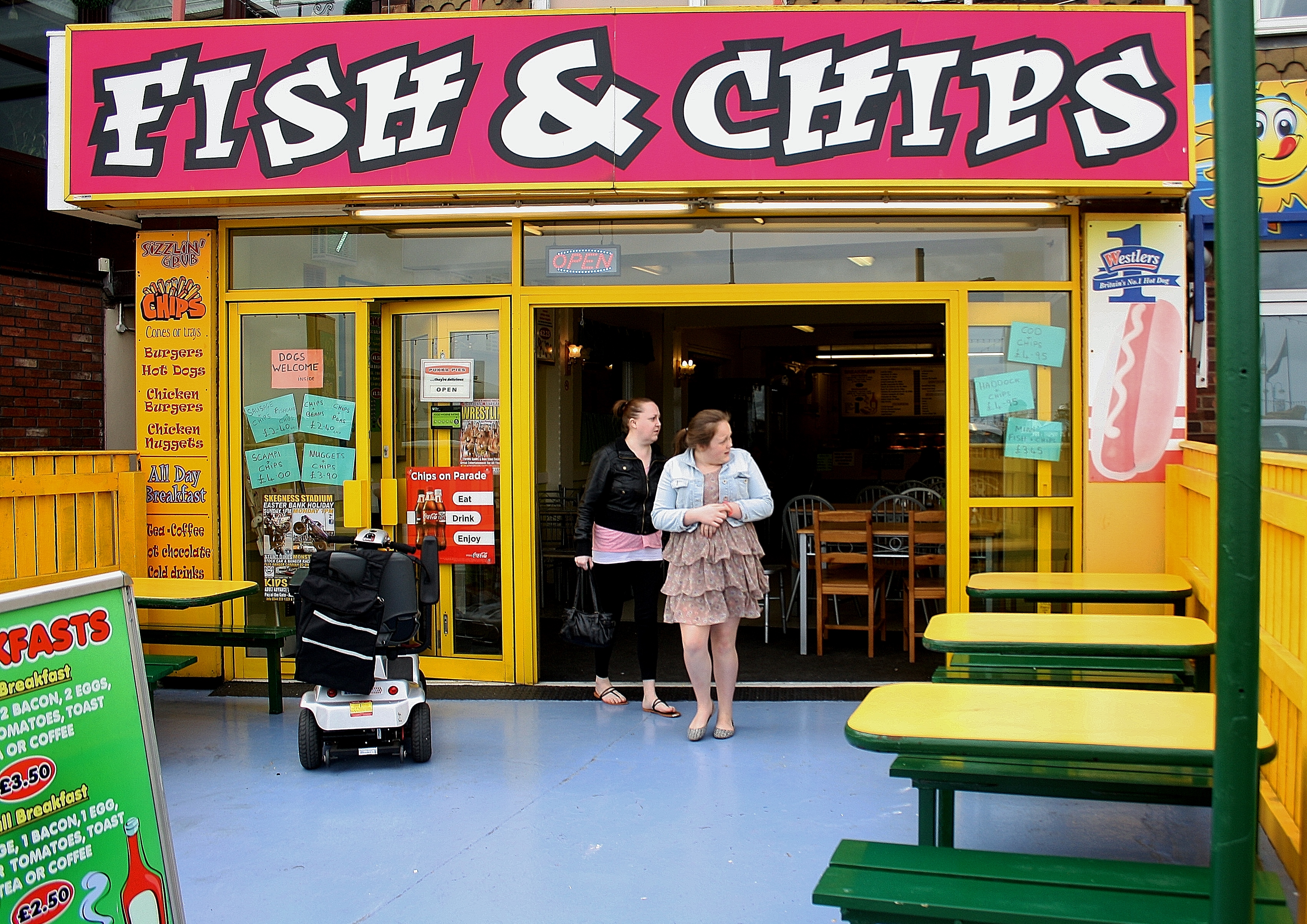
Also at the Herbert are varied works including Megan Sheridan’s documentary-style photographs depicting British people on a traditional seaside holiday (above), or having lunch on the grass in Birmingham’s St Philip’s Square. There’s also an intriguing video from Jade Blackstock entitled In, In, In (below), in which she wears white and paints her skin white and is then sprayed with white liquid foam, an unpleasant claustrophobic experience which aims to turn ‘white’ from an adjective to an actual object.

In In In

I’ve visited two of the galleries and at first sight haven’t been as impressed overall with the selection as last year. Maybe that’s because there’s nothing as stand-out impressive as Lucy Hutchinson’s masks and wallpaper, James Birkin’s paintings, or the transformative sculptures of Sikander Pervez, who is currently exhibiting at the New Art Gallery, Walsall, after being selected for a solo show.

But only time will tell whose work from the 2015 exhibition we will be seeing more of on a larger stage.

*New Art West Midlands is on at Wolverhampton until April 26, both the Birmingham galleries until May 17 and the Herbert until May 31.

Designer of Coventry post-war icons is featured in exhibition – discovered by chance in Leeds

So, my first ever visit to Leeds, for a job, but of course I had to get there early so I could visit the city art gallery.

And just as predictably for me when trying to explore new places, the upper galleries were closed for work, but a wander into the attached Henry Moore Institute produced a surprising and enjoyable find. An exhibition about the work of Dorothy Annan and Trevor Tennant whose work I had seen repeatedly over the last twenty-plus years without ever knowing it.

Everyone who’s ever stopped to look at the Godiva Clock in Broadgate will have seen Tennant’s work in the Godiva figure which rides out every hour, and the Peeping Tom which watches her. There is a lovely photo of a long-lost Broadgate with the Godiva statue facing the clock and people sitting on grass to watch it being unveiled.

If you turn the corner to Broadgate House, those are also his carved figures displayed on it. Entitled People of Coventry they are supposed to represent people in a timeless feeling of continuity, an important aspect to the post-war rebuilding of the city. Broadgate House was a key part of Donald Gibson’s plan for the rebuilding of the city centre, and included in the exhibition is some correspondence between architect and sculptor. There’s also a great picture of Tennant working on the relief figures on a blitzed site in London’s Regent Park.

He also created the Levelling Stone of the Phoenix which now resides in Coventry, and a brick carving of a falcon which is described as being on the side of a Coventry junior school – though it didn’t say which one.

A fascinating series of photos also show Tennant giving a sculpture demonstration at Coventry Training College in 1947, creating a model of a woman sitter’s head in front of a live audience, seemingly all male, who are also shown peering closely at the finished work.

Trevor Tennant and Dorothy Annan were members of Artists International Association (AIA), a left-wing group established in 1932 whose aim was “Unity of Artists for Peace, Democracy and Cultural Development’. They were based in Leamington during the Second World War where they were also members of the Artists and Designers Group and worked on public commissions, influenced by their membership of AIA.

Dorothy Annan’s post-war work included a mosaic entitled The Good Earth for the Rugby Road Junior School in Leamington, an oil on brick mural design produced by the Artists and Designers Group, and showing a combination of industrial and pastoral scenes.

There are also images of her designs for the Neptune Tea Bar and another room at the Finham Park Hostel in Coventry in 1942.

This exhibition also covers the pair’s commissions in London and other parts of the country. Their Dorothy Annan and Trevor Tennant archive joined the Henry Moore Institute Archive of Sculptors’ Papers in 2012, donated by their family. This exhibition brings together photographs, sketchbooks and exhibition catalogues to give a chronological account of their practices and show the role of art in British society post-war. It’s on until March 1 in the Upper Sculpture Study Gallery, and I was glad to have found it.

* I also visited Yorkshire Sculpture Park, though with a bit of a mist about it possibly wasn’t the best day for it. And luckily I had the wellies in the car as it was pretty muddy and slippy and I was mindful of a friend who fell and ended up with a broken arm after a visit! The whole site was too big for me to do it justice in the time I had, but I’d like to return another time. Enjoyed seeing several large Henry Moore sculptures in the landscape, plus Anthony Caro’s large Promenade row of sculptures, Ai Weiwei’s Iron Tree, which was outside the Chapel and Julian Opie’s Galloping Horse lightbox work racing through the gloom.

Inside the chapel was also Nick Crowe and Ian Rawlinson’s Song for Coal, an “immersive audio visual work” created to mark the 30 year anniversary of the miners’ strike. It’s pretty impressive as music and visuals combine to form a stained glass window appearance of miners and their lives on the chapel wall.

An island on the lake also caught my eye – loads of herons perched on nests and flying around, closer than I’ve ever seen them, and near enough to hear their flapping wings. It seems a great place to combine the man-made and the natural in a day out.

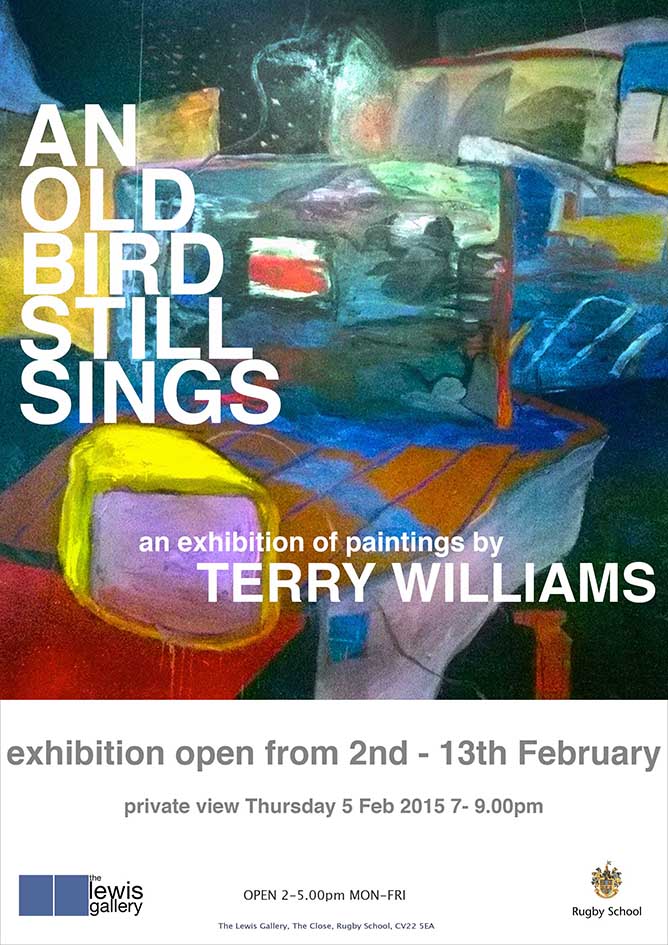
Cardboard ‘canvases’ are a feature of Terry Williams show at Lewis Gallery

         Terry Williams1

An unusual material forms the basis for a new set of paintings by Coventry-based Terry Williams.

Entitled An Old Bird Still Sings, the exhibition includes a number of works painted on what appears to be unfolded cardboard boxes.

Terry said he started off experimentally with the works, then decided they were good enough to keep and exhibit – but then of course began the problems with keeping them safe and in a condition to be displayed on the wall.

They were created at the Artspace Artists Studios in Lower Holyhead Road in Coventry city centre where he is the longest-lasting studio holder. He graduated from Coventry University’s Fine Art degree in the 1980s.

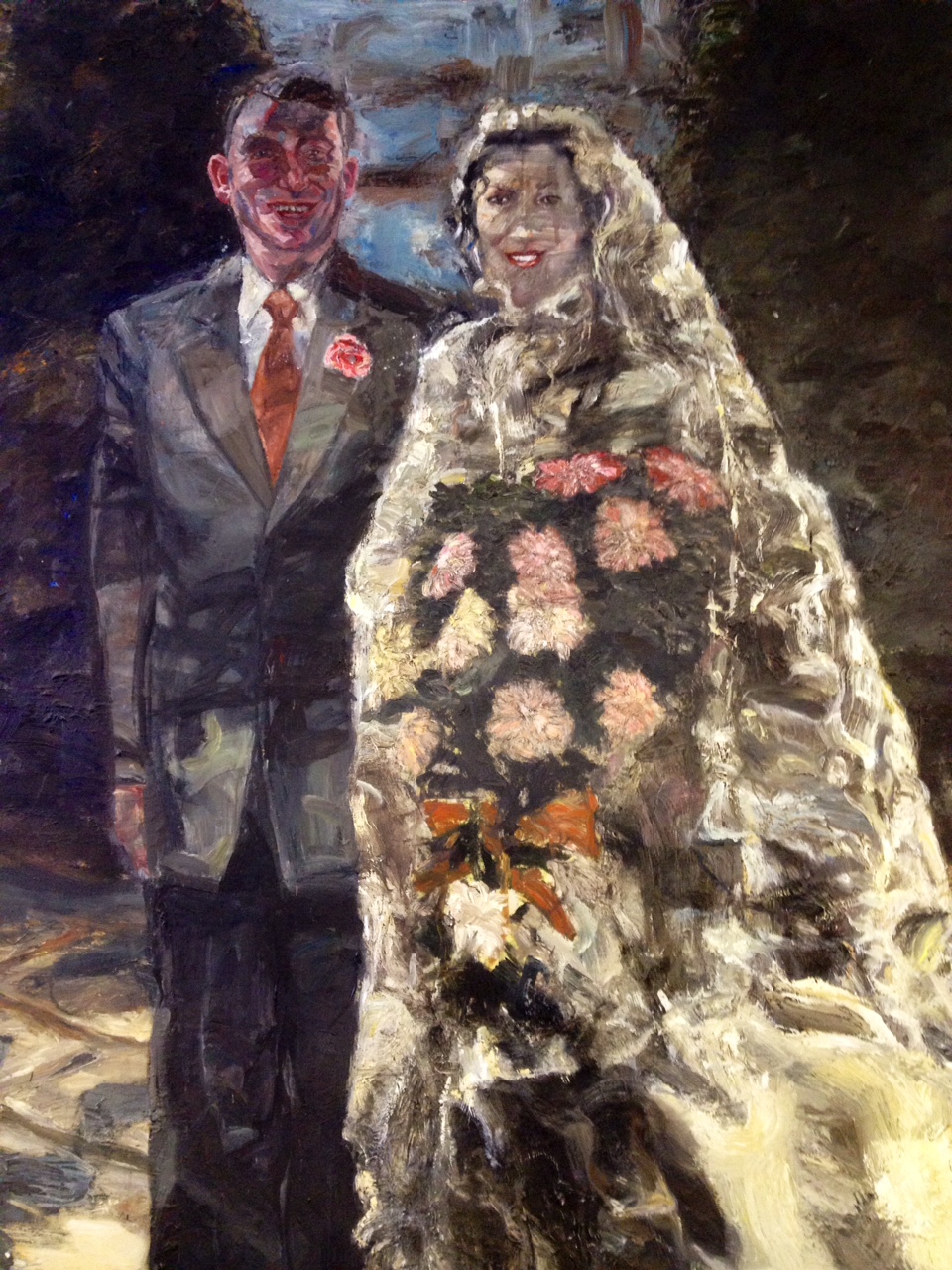
The cardboard-based works in question have an American feel to them – something that seems to be occurring a lot in Coventry and Warwickshire exhibitions recently. Using photographs from various sources, Terry has painted people at leisure, enjoying the sun. The rippling cardboard as the basis for some adds a depth of texture which works well with the ideas of sand and sea. Terry said they were part of a set where he wanted to capture people “in the midst of life”.

Some people are in rows of deckchairs on the beach, with plenty of sunglasses and overflowing swim suits on show, and one shows a cheerful couple in the sea, the man improbably dangling a fish he looks very pleased to have, and it’s called appropriately, Proud. A fat man from one of the pictures is shown in more than one image, including a facial close up, and Terry said he keeps returning to him for more works. A couple in a car, called To The Beach, have a stylish 50s look to them. Sunset shows children frolicking on the beach

Terry’s main interests are figurative, and these works are skilled and show an interest in capturing people at rest but in situations which when put in close focus do appear strange and rather unrelaxed.

Terry Williams2

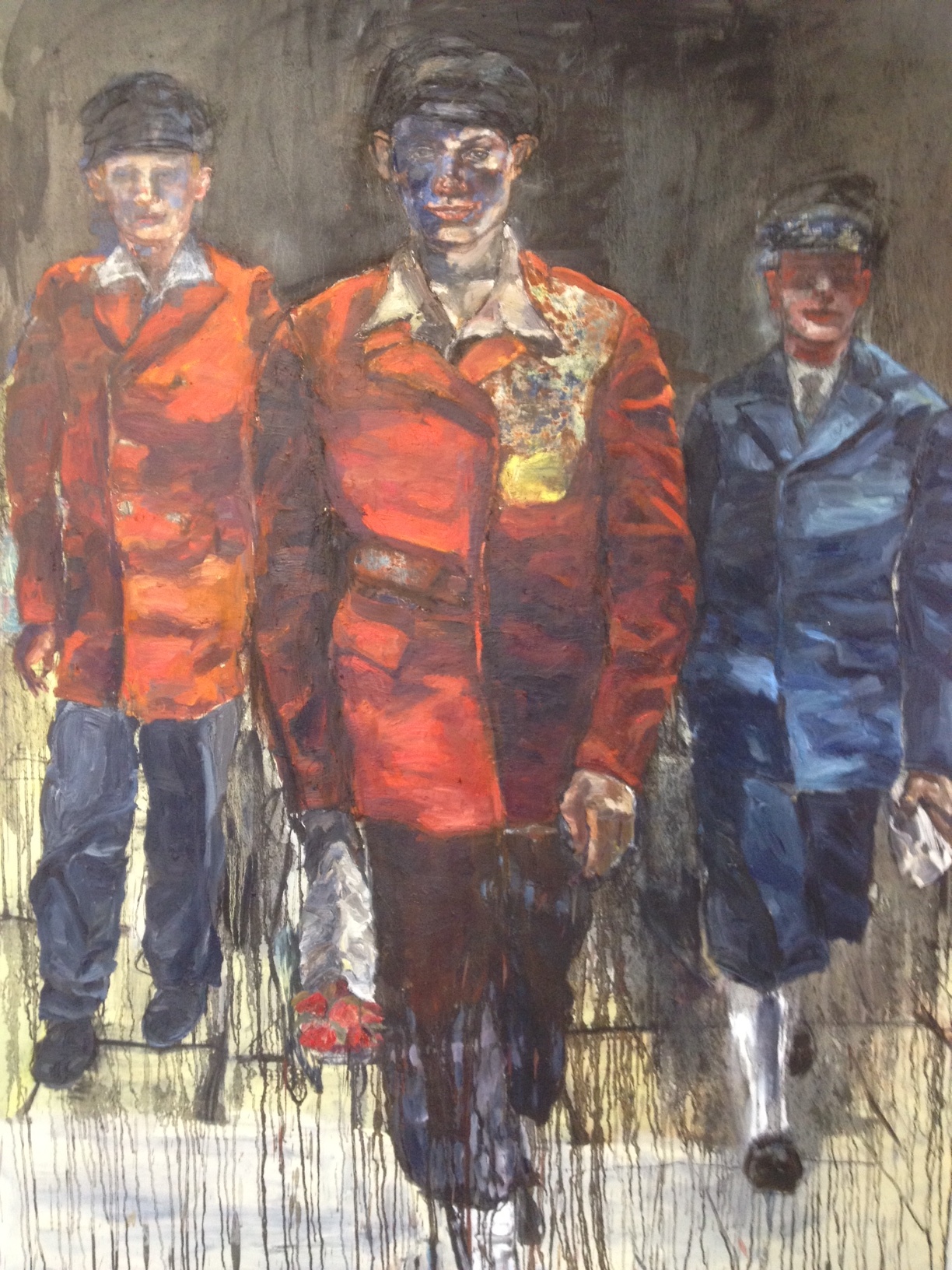
The exhibition also includes a set of works which have been on show before at the Pluspace Gallery in Coventry in 2012. There’s Cadet with Flag, then the same young man with Roses, Poppies and Brown Background.

Other works are more abstract, representing his other favoured style, lots with heavy impasto. Crazy Golf Mark One is a strange piece with what look like rocky islands bursting out of the sea with little golf flags on them. Fecundity Mark One, and Two, are two small abstracts which work well.

The title, An Old Bird Still Sings, comes from one particular work, which features a fairly abstract pile of computer hardware – but at the opening Terry said rather dryly that people had decided to interpret it as being rather a more personal title.

The exhibition fills the Lewis Gallery at Rugby School in Rugby, and the exhibition is on this week, 2-5pm.

terry williams jpeg poster