Reviews

Strong Rooms are a powerful experience of history in the making

Strong Rooms have come to make their mark in Coventry this week, and call in for an illuminating experience

And enjoy them from what you find out, rather than focusing on the slightly confusing story of what’s behind them.

After a week in Rugby, two shipping containers are in University Square, opposite the cathedral steps, until Monday, July 18, for a project called Strong Arms. They seem to be part of a number of different things though  – a leaflet describes Strong Arms as a new project by artist Mohammed Ali and Soul City Arts, developed by Archives West Midlands and Arts Connect, the Bridge organisation for the West Midlands and Arts Council England Lottery Funding.

It’s also described in a press release from Crisis Skylight Coventry and Warwickshire as a project delivered with The Herbert Museum and Art Gallery as part of Art in Crisis 2016, with work by Coventry-based artists who have experienced homelessness.

However it is defined it’s an interesting dip into history and art in one go, with research carried out at West Midlands archives.

On the outside of one container, Ali has painted, in his graffiti, street art style, Dorothie Feilding, who was born at Newnham Paddox near Rugby, a child of the Earl of Denbigh, but who went on to drive ambulances in the First World War.

Inside one of the containers, he has painted six portraits of people from the West Midlands, some well known and others not. They include Samuel Coleridge-Taylor, the composer who had an African father, and Coventry-born Colonel Wyley who is well known for leaving the Charterhouse to the city, but I didn’t know he was the founder of the Coventry and Warwickshire Society of Artists in 1912. There’s also Emma Sproson, born in West Bromwich, who became a suffragette, and Scottish-born Mary Macarthur who led women chainmakers in Cradley Heath in a fight for a fair wage in 1910.

The floors and walls are covered with old, detailed maps of parts of the Midlands, and there’s also atmospheric sound effects, and a film of a poem being read in a field.

The other container shows works by Midlands artists who have experienced homelessness. There’s some ‘Lost’ posters, featuring various places on earth, including the Temple of the Sun, Baalbek, Syria, marked as “Destroyed”, and the Sphinx of Giza.

A desk has been beautifully customised with cut outs of tiny feet, flowers, with letters sticking out of the drawers and what look like fezs hanging from the ceiling. A huge collage of people and artefacts also brightens one wall.

There is a work, The Book of Known Thieves, 1895-1910, inspired by an archival document which contained information on 1,400 people from Aston in Birmingham who came before the courts in Warwickshire, and were recorded in it.

As a project to promote use of the archives it make a good point of what of interest can be found there; it’s a shame that (in Coventry at least) the opening hours and days of archives are being continually cut back to make it harder to visit and explore.

The Art in Crisis Coventry project continues with an exhibition at the Glass Box in the city centre from July 18-28, by Crisis clients who have worked with photographer Jamie Gray to explore the city, and Pride & Perusal at The Urban Coffee Company at Fargo from July 18-29, a mixed media exhibition celebrating the work of Crisis clients in Coventry in 2015-16.
The New Art Gallery has a trio of great reasons to visit now

The Garman Ryan Collection at The New Art Gallery in Walsall means it’s always worth a visit, but the temporary exhibitions on at the moment make now an extra good time to go.

The Humble Vessel on the top floor looks at the symbol of the simple boat as depicted by various artists through time, and made relevant now by sights of refugees fleeing so often by boat.

It includes a newly-commissioned work by Pakistani artist Fazal Rizvi, a three-screen video installation of what looks like a small fishing boat from anywhere in the world bobbing about on the water. There are concrete boats which will be going nowhere, by Bob and Roberta Smith, and in an 1873 painting by Jules-Ėmile Saintin a woman in black looks sadly out to sea, a reminder that the waters have often taken lives.

Eric Ravilious’s Storm is a wonderfully blowy, colourful work, and there are other appealing depictions of boats and harbours from the past century. The exhibition ends on July 24, but is worth toiling up to the top floor to visit.

The more recently opened Land, Sea and Air takes as its starting point artists who have used maps as their source material. The exhibition brings together works by seven international artists using maps in very different ways.

You can get pleasantly lost in Frank Bowling’s huge colourful Map Paintings, made between 1967-71 – if you step back parts of the world can be seen through the vivid and attractive colours.

Cornelia Parker’s works show a series of London street maps with burns in them from a meteorite which came down in Namibia in 1836, which has been heated and then burnt over the various locations.

Tiffany Chung’s mixed installation includes photography, a map on the wall showing a timeline, and pieces from history to tell the story of her father, shot down in a mission during the Vietnam war and held prisoner for her entire childhood. It’s a moving and intriguing work.

Shilpa Gupta’s There is No Border Here is very relevant because of recent and ongoing events. It’s a poem on the wall talking of battle, conflict and love, beautifully written in tape which reads “there is no border here”.

These are the highlights of a fascinating exhibition.

Finally, if you think you’ve seen the Garman Ryan collection enough times, think again. As part of a three-year partnership, there are interventions in the collection from the Tate. A total of 16 works from the Tate have been paired with the gallery’s own pieces, related by either artist, theme or subject matter.

It’s fascinating to wander around and read the interesting booklet which investigates the ideas behind these links. Sometimes it’s similarities in theme – there are two paintings of Suffolk with different sky scenes, by John Nash and John Constable, for example.

In other cases it’s the same artist – an oil and a watercolour landscape by Camille Pisarro, and a bronze sculture and ink drawing by Henri Gaudier-Brzeska. There are also other big name artists featured – Picasso, Braque, Rodin, Modigliani, Degas, Gainsborough, Freud, Epstein, Eric Gill, and Odile Redon. One comparison puts a Bernard Leach fruit bowl from 1955 with a Solomon Islands fruit bowl from the nineteenth or twentieth century. My favourite is the huge Raoul Dufy painting of The Wheatfield from Tate paired with a much smaller Harvest Scene watercolour from Walsall.

It’s a great set of exhibitions to enjoy and explore in one building.

Summer is here for artists at Deasil gallery in Leamington, anyway

Sea Moon

The Summer Exhibition at Deasil in Leamington brings together some artists from their stable of regulars whose works are shown in venues such as restaurants around the Midlands, plus some newer artists.

With pieces by about 14 people on show there is quite a variety of themes and styles of working.

Nancy Upshall

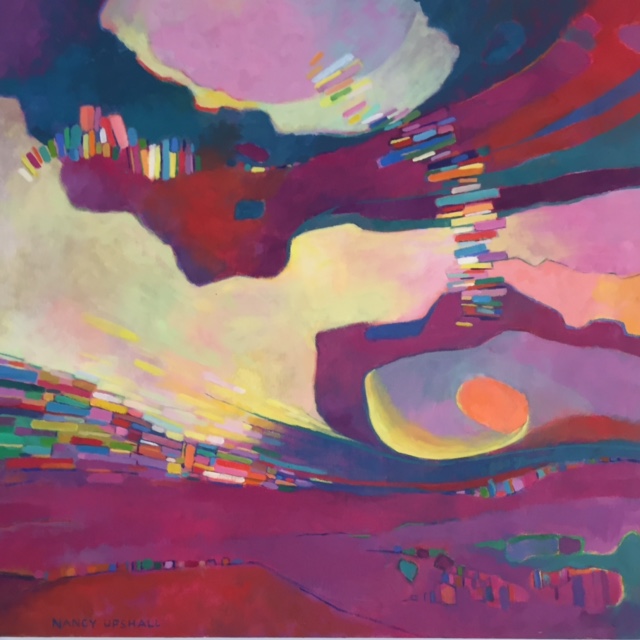
Coventry-based artist Nancy Upshall has three pieces here, including the oil painting Twisted Flax, a small work with a concentration on the turns in a material, and a larger work, Motley.

FullSizeRender

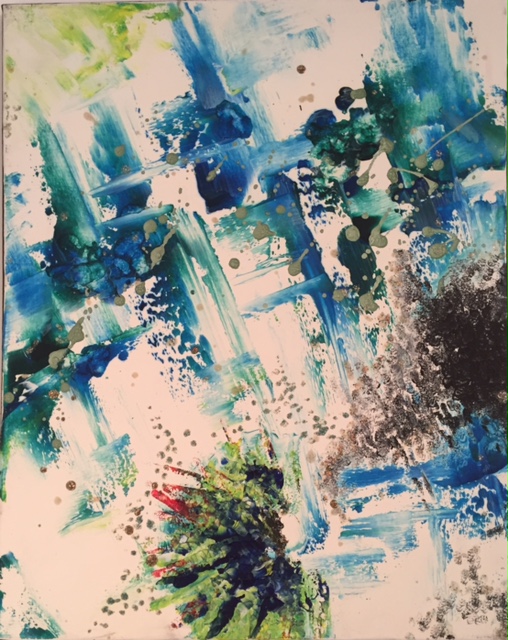
Susannah Rourke’s April Showers (above) are four paint and mixed media works of splashes of movement and colour, which can be rearranged into a different pattern if preferred, as can another set called Here I Am.

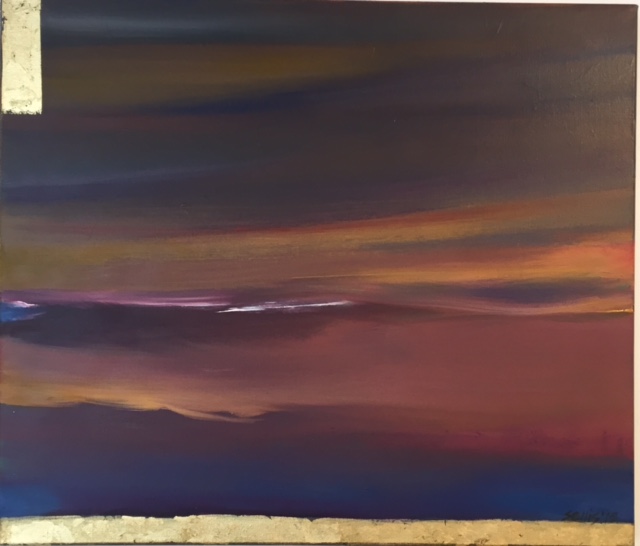
Chris Putt’s large digital print of St Ives is recognisably the resort, with colour added to the buildings. Stuart Ellis’s Sea Moon (top) has a gold base, with purples, oranges and golds going up into the sky, and is very effective.

Sonia Bublaitis’s works are very colourful, with vivid paint patterns on Perspex. In contrast, Mark Allan is showing close-up wildlife photographs to make the keen amateur envious.

Paul Jordan

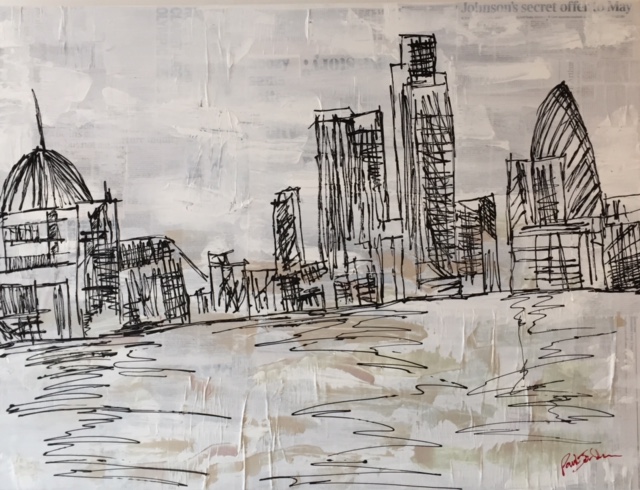
Paul Jordan’s City Limits (above) is a mixed media piece, with buildings drawn in black lines over a board on which newspaper has been stuck, and painted over white. You can tell it’s recently done from the headlines about Johnson and May visible underneath.

It’s another enjoyable and varied exhibition from the gallery which changes its exhibitions every three weeks.


Coventry University art degree show preview – don’t miss this year’s exhibition

P1010954

It’s that time of the year when the studios and classrooms are thrown open, and Coventry University final year students welcome in their guests to see what they’ve created after several years of study.

This year I’ve had a sneak preview of what’s on offer ahead of the Friday opening night, and there’s some interesting stuff (in the top floor and basement anyway – I confined myself to just the two floors).

On the top floor a warning about content unsuitable for the young or easily offended is the first thing you see. The works nearby of Cheuk Man Li, from Hong Kong, are quite shocking and vivid in their depictions of strange human-like people contorting their naked bodies and interacting unpleasantly. Scenes of torture come to mind. For once the warning is valid!

Children may also need to be kept away from the collaborative works by Ryan Williams and Liam Pattison who are also showing individually in the basement. Described here as Pat and Willy, with the work called Ourinal, it features five urinals on the wall, with film of them together above. One holds a heavy tool over the other laying on the floor, they pass the tool to each other endlessly, they play a game in their underpants and more – it’s daft and fun.

Less shockingly, there are some good paintings. Emma Phillips’s acrylic paintings are all about atmosphere and show empty rooms and settings seemingly waiting for some action to appear.

Renata Juroszova’s work concentrates on femininity and domesticity, with scarcely-formed or glimpsed women dressing or bathing.

Decay features quite strongly, with Amelia Horton rescuing a rotting chair for part of her work, and designs on tiles coming away to add to the distraught look of the work. Natalie Seymour has created a digital photo collage of falling down and rotting buildings entwined in an attractive and impressive display which makes you want to keep looking deeper.

Cheuk Hin Li (brother of the first artist mentioned) has followed his sibling’s interest in political matters but less obviously shockingly, doing a number of attractive, sympathetic portraits of a young woman who is apparently a student leader in Hong Kong.

Rebecca Stansbie is from the Black Country and has created some small watercolour and fine liner works depicting buildings in Cradley Heath; some are homely but many are showing wear and tear, or outright dereliction. They’re very attractive works.

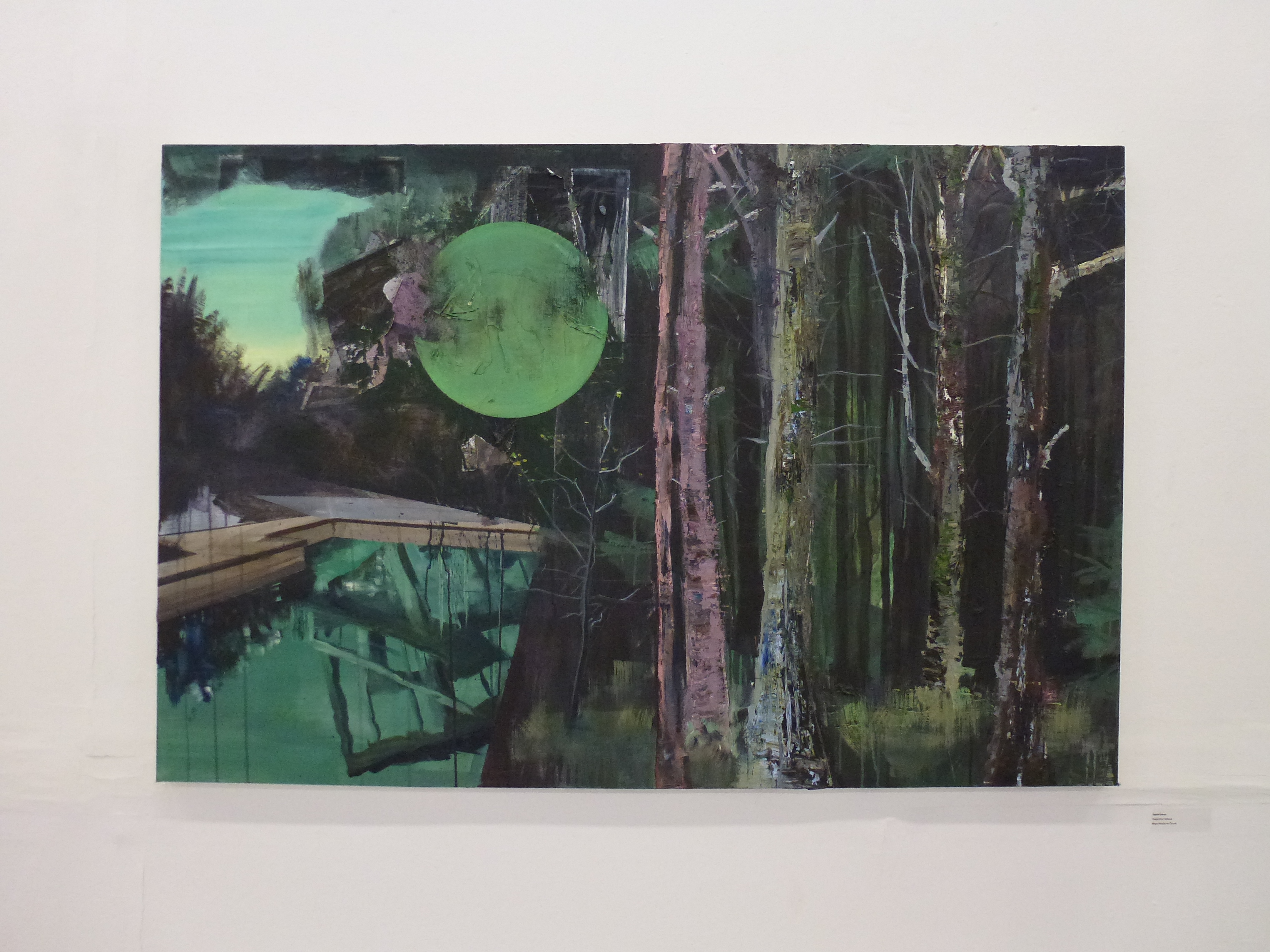
Daniel Smart’s large paintings show people, scenery and large areas of dense painting; they’re intriguing and make you want to linger. There’s one at the top of this blog, and one here.

P1010942

Zoe Harwood has termed herself a walking artist, and uses ‘socially engaged practice’ to explore areas with her father and record them in pictures and documents.

In the basement, the sight of the first work makes you think you’ve wandered into the wrong room. Rob Hamp’s massive installation, which you can walk around, is in some ways a woodworker’s studio, with benches, clamps and tools, but some boards are bent over in a very stress-inducing way. It’s called All He Wanted Was a Garden.

Ryan Williams has created another installation of a small child, his sides filled with home DIY filler, staring up at a climbing frame which is painted with anti-bill posting paint. Gillian Dixon’s work is a contrast, small ceramic forms hanging over a pattern in seeds.

P1010945

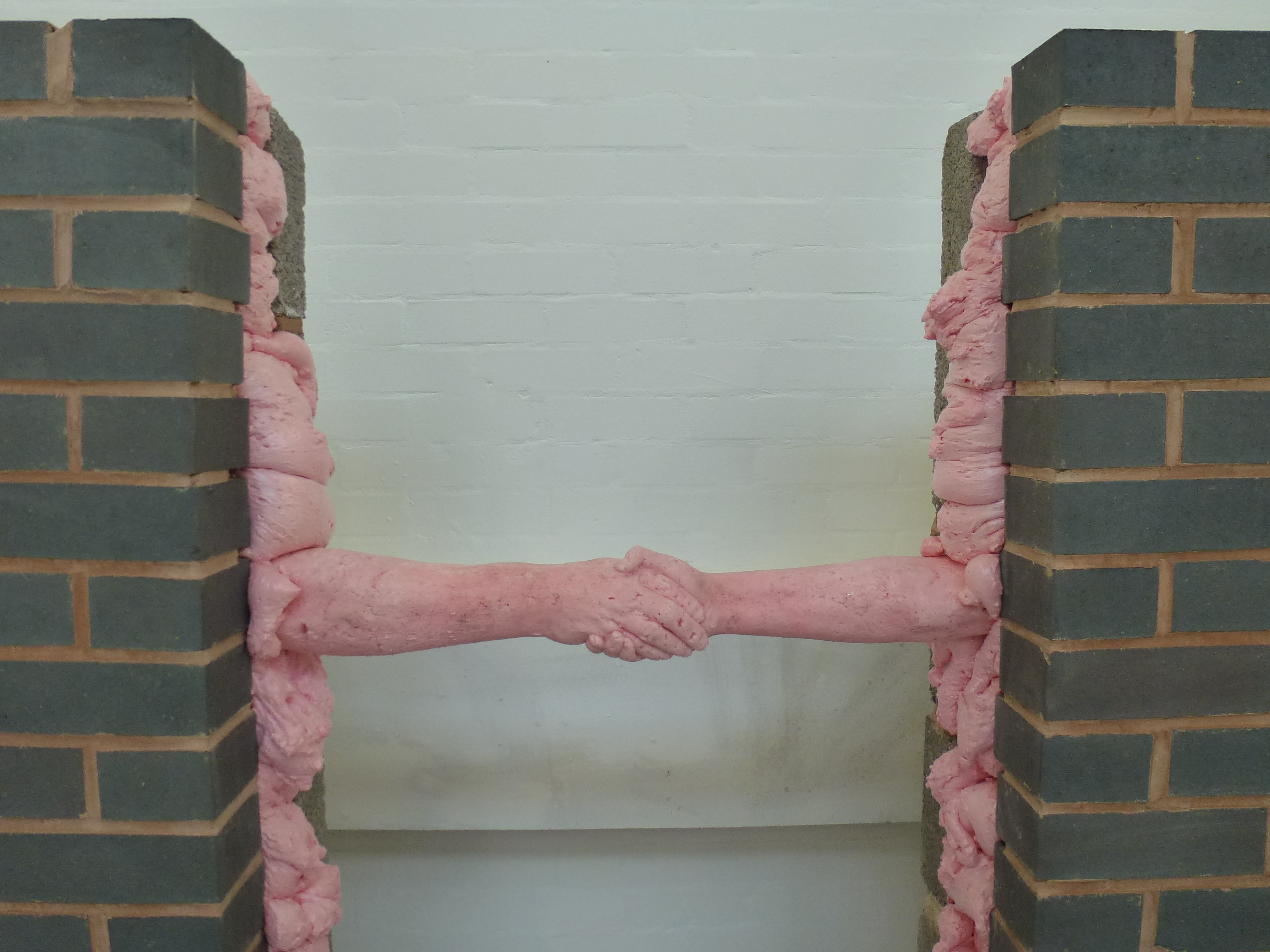
No one’s going to walk off with Liam Pattison’s work (above) easily. There are two walls, with hands reaching out from each to shake, and more filler, plus a model of himself naked entombed in a concrete block. I hope someone’s worked out how to lift it upright by Friday!

Bethany Jones has memorialised her grandmother with old photos and text, and a recreation of a comfy sitting room, with ceramic balls representing thoughts. Abigail Dixon has refashioned her room as a lot of metal frames, removing all the material in between to strip it down to basics.

I was privileged to have two expert guides on my quick sneak tour of the exhibition which might have enhanced my experience more than the plastic cup of wine I usually tour it with on opening nights, but these two floors anyway seemed to offer a really good mix of works, with lots of different and interesting ideas.

Don’t miss it!

Á lui le pompon!

Paysage- G-rard Mermoz

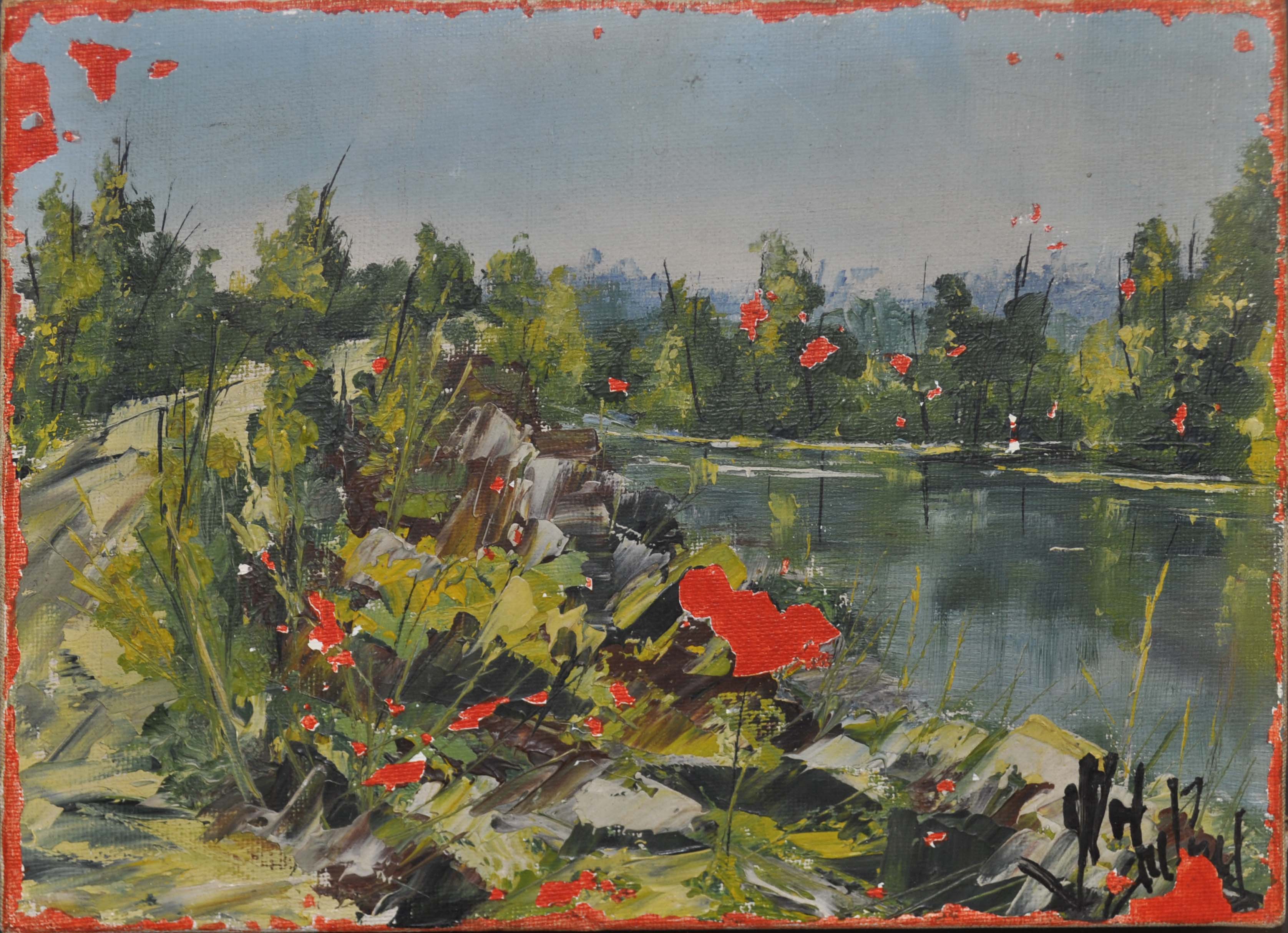
“My first painting in 30 years!” says Gérard Mermoz, with an enigmatic smile, referring to Paysage, which has won the Coventry Open 2016, now on exhibition at the Herbert Art Gallery.

In fact, Mermoz – artist, curator and provocateur – has subjected the notion of painting and the aura of the individual work of art to multiple levels of deconstruction, with the crucial involvement of the exhibition’s organisers at Culture Coventry.

The work is an appropriation – a ‘found’ painting complete with indecipherable signature, subjected to some interventions by Mermoz, chiefly with a sharp implement. For the exhibition poster, and the brochure, the gallery has severely cropped this rather small painting, converting it from landscape to portrait format.

Then, in his speech at the opening Chris Kirby, director of exhibitions at Culture Coventry, called the work ‘Passage’ – a term freighted with significance. This is not so much a work in the Coventry Open, as a work involving the Coventry Open.

The neo-conceptual project, with its subversion of the art object, is widely regarded as having long ago run it course. This splendid collaboration suggests that there may still be just a flicker of life in the genre.

(This was an intervention in the landscape of this blog.)

Fun is sadly over but flamenco exhibition is still on show

I was going to suggest a visit to two small exhibitions, but after a wander past today I see one had closed two days earlier than expected.

Mask, in the Glass Box opposite Drapers, had been due to stay up until Monday, with works on show by a number of artists, and was meant to be a reference to masks used in ritual ceremonies, combining art with fun. It was curated by Matthew Macaulay and Gwennan Thomas and when I looked in today there were still leaflets there but no art – hopefully it wasn’t the worry of an EDL march passing close by that led to the early closure.

The other exhibition was opened on Wednesday, as part of the Flamenko Coventry 2016 festival (sic) at Coventry University, also not without problems, and is entitled the Iconography of Flamenco, Small Moons With Attitude, and was curated by artist Frieda Van de Poll. The works will be on show in the Alan Berry Atrium Gallery at Coventry University (opposite the Cathedral) for a couple of months.

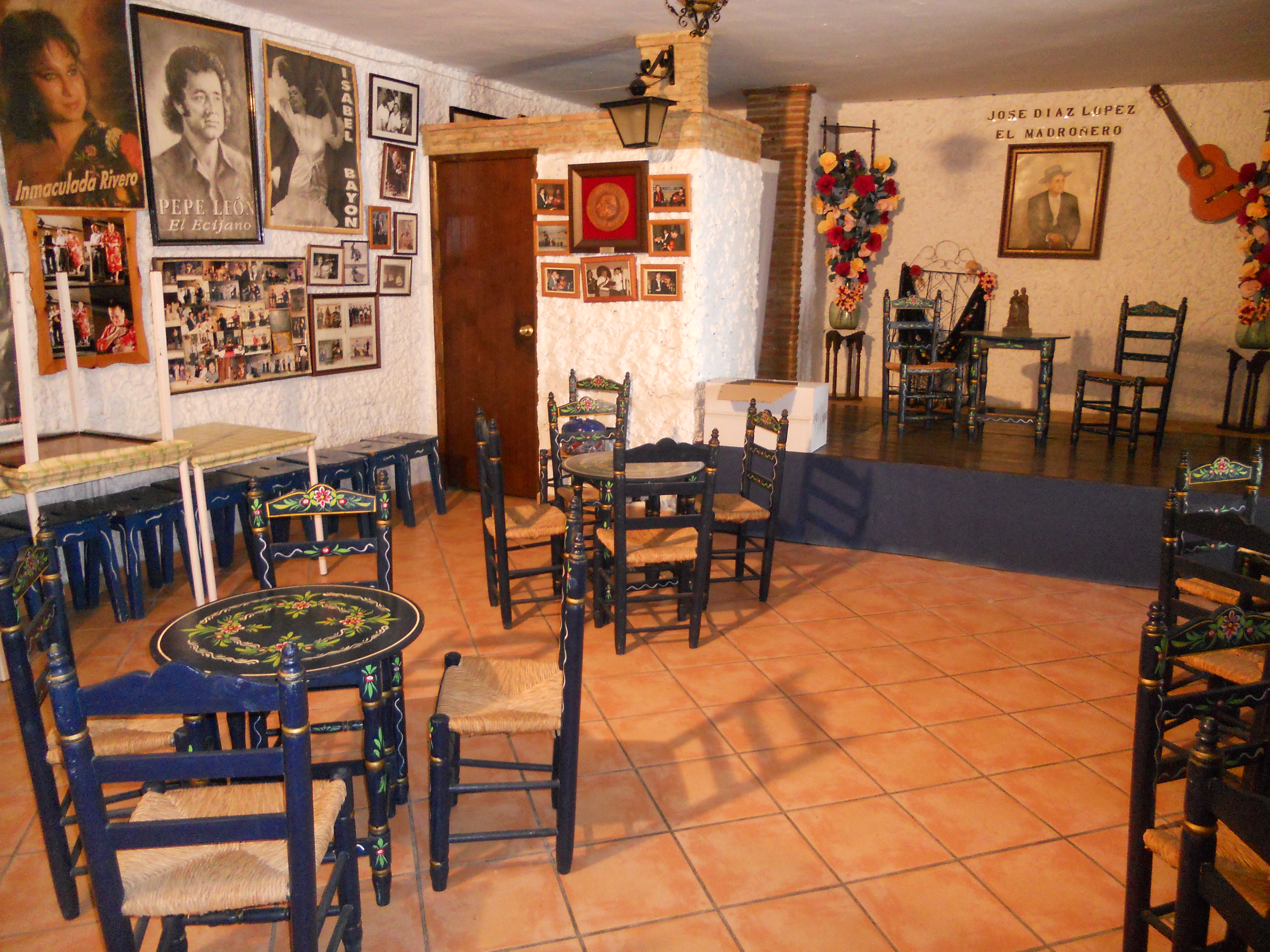
Flamenco furniture

The interior of peña flamenca in Montellano, a village in the province of Seville, that features on one of the posters

The exhibition uses as its source the collection of Marcos, a flamenco artist and senior lecturer at Coventry University. Marcos has been collecting instruments, recordings, posters and other objects on a flamenco theme since the 1960s, and they are photographed and shown in themed posters here.

There’s flamenco furniture, such as the straight-backed, usually rush covered chair the musicians prefer. There’s Marcos’s big collection of capos, or cejillas, photographed.There are photographs of alcohol, and information about the flamenco musicans’ love of a drink, and the information that “flamenco people don’t eat, they only drink”.

There are seven inch single designs for iconic singers such as Paco de Lucia and Camarón, and an entertaining section about The Looks of a flamenco singer, and the importance of the way he enters a bar, checking to see if there are any rivals there.

Unfortunately the exhibition opening was not without hitches, as three posters had been disappeared during the day, apparently by workman carrying out jobs in the building; hopefully they will return before this small but fascinating and educational exhibition is over.

Look closely to find religion and sex in the suburbs in new George Shaw National Gallery show

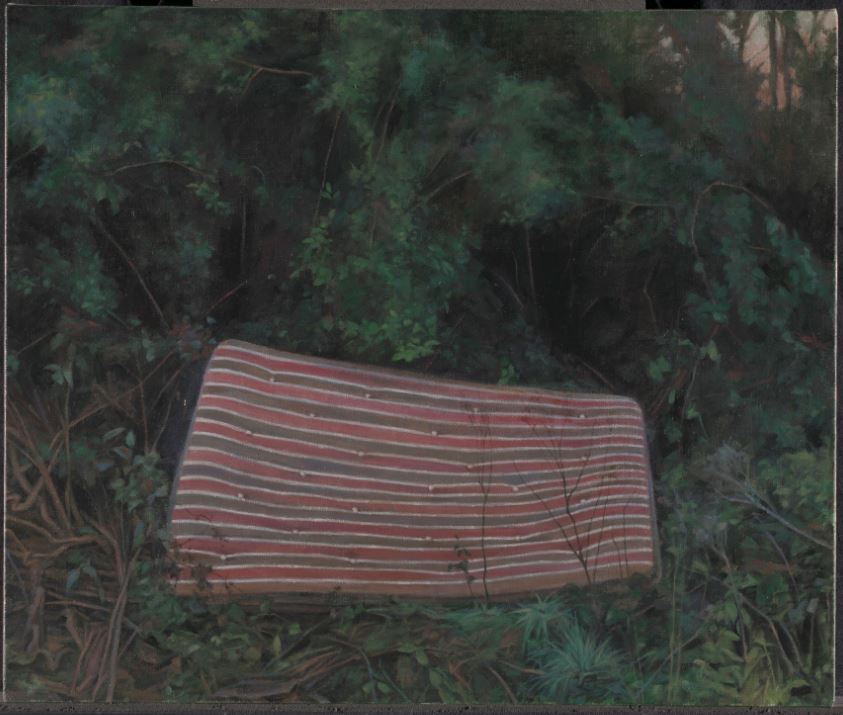
The School of Love

The School of Love, 2015-2016, Enamel on canvas, © Courtesy : The Artist and Wilkinson Gallery, London

Allusions to paintings by great masters, and to seedy going on in the woods, combine for a fascinating new exhibition by George Shaw.

There’s also a set of fairly surprising new works that hit you when you walk in to My Back to Nature in the Sunley Room at the National Gallery.

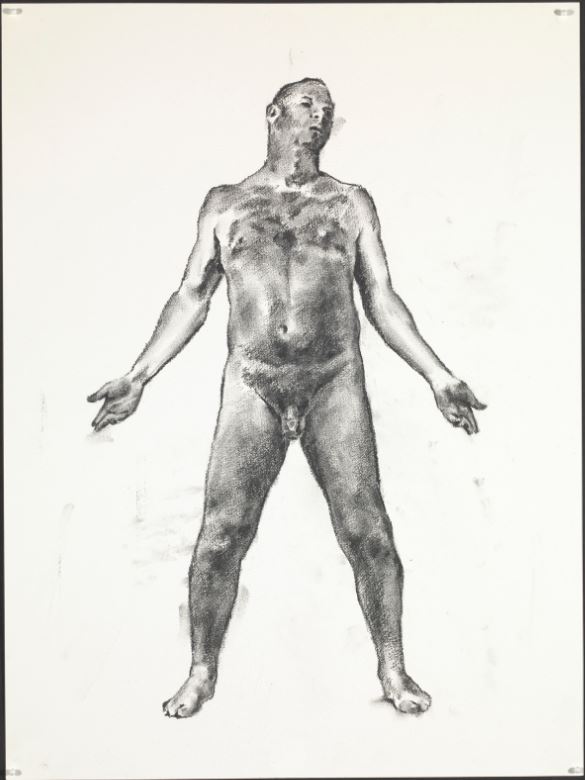
Fourteen charcoal drawings entitled The Sadness of the Middle-Aged Life Model bring us a naked George in all his glory posing in the position of the stations of the cross, which he would have seen in the Catholic church of his upbringing. All the religious paintings in the National Gallery, where he has been Rootstein Hopkins Associate Artist for the past two and a half years, have clearly made quite an impression, though I remember a number of (less revealing) self portraits from his youth in his exhibition at The Herbert.

They create a good, surprising, introduction to the exhibition.

The Sadness of the Middle-Aged Life Model

The Sadness of the Middle-Aged Life Model (10), 2015, Charcoal on paper, © Courtesy : The Artist and Wilkinson Gallery, London

George said he found the National Gallery rooms nearly all contained scenes from woodland, women parading around and many had Jesus. So with the self-portraits, all three elements of that can be seen in this exhibition.

The paintings are a mixture of sizes, all in the usual Humbrol paint but with a move on to canvas rather than board. Thee Afternoons (Study for Drunken Silliness), The Tossed and The Lost are small works focusing on finds in the woods – abandoned colour pornographic photos, empty bottles, leaves concealing things.

A Revel Before Half-Term features a large canvas with the trees standing darkly round, cans scattered about. The Heart of the Wood shows a small circle of bricks as well as the signs of recent partying; is it the base of a fire, or some more sinister black magic practices? The trees aren’t talking.

Studies for Hanging Around are three single trees, a reference to the crosses of the Crucifixion, and another clear influence from the residency, where he said he had become obsessed with the wood on the cross. The Foot of the Tree is a wooden stump left behind and Verso and Recto are reminiscent of some of his earlier works, with muddy paths leading away. The Uncovered Cover shows a blue cloth partly covered with leaves and concealing – anything or nothing?

The Old Master

The Old Master, 2015-2016, Enamel on canvas, © Courtesy : The Artist and Wilkinson Gallery, London

Another section of the gallery, George said at the press preview, he saw as the Adam and Eve corner.

The Old Master and The Old Country represent the male and female – or as George put it “someone’s gone into the woods and painted a cock on a tree – then there’s a very suggestive tree”. Ok ….

The graffiti is crudely and unnecessarily-added amongst the wooded scene, a reminder that it’s not in the depths of the woods but just yards from a Coventry housing estate. The tree has a deep, gaping crevice painted with care and attention.

The School of Love is a painting of an abandoned mattress, dumped and unloved now, deep in the greenery.

Another work is an unusual self-portrait – George seen from behind up close to a tree: “I’m looking at the Observer Book of Moss,” he joked. “It’s called Call of Nature – what else?”

You’ve Changed is a set of nine small paintings of trees, all different, all with holes in their trunks somewhere, or cracked open; George referred to Youtube references to men who liked sexual liaisons with trees, finding the sexual in the suburbs.

George’s three paintings in the style of Titians Diana and Actaeon works command one wall.

A tarpaulin he found in the wood, hanging like a soft, sensuous material over one tree, represents the pulled-aside curtain, and the work is called The Rude Screen, a play on the rood screen which pre-reformation separated the church congregation from the priest.

The Rude Screen

The Rude Screen, 2015-2016, Enamel on canvas, © Courtesy : The Artist and Wilkinson Gallery, London

A hollybush stuffed full of pornographic pictures that he saw as a child – “I have no idea who put it there, it was almost like a branch of John Menzies” – was the inspiration for the painting representing the bathing beauties and is called Möcht’ ich zurücke wieder wanken . Hints of naked flesh and raised clothes can be seen on the images.

The third painting, representing the killing, is entitled Every Brush Stroke is Torn Out of My Body, and shows red paint randomly daubed on a tree, with another tree displaying a target. Again, it’s the imposition of the urban, peopled world into what is supposedly natural.

There is also a film of George at work at the gallery, talking about his influences, and visiting a wood (though unfortunately not the Tile Hill one), which is definitely worth seeing.

It’s a long time since we’ve seen a new body of work from Shaw but it’s been well worth the wait, and also made me eager to go back to some of his inspirations in the rest of the Gallery.


Chelsea’s ‘therapeutic’ art amongst works at new Deasil exhibition

Hide This Somewhere SafeHide This Somewhere Safe

The latest exhibition at Leamington’s Deasil Gallery features works by a number of the gallery’s artist clients.

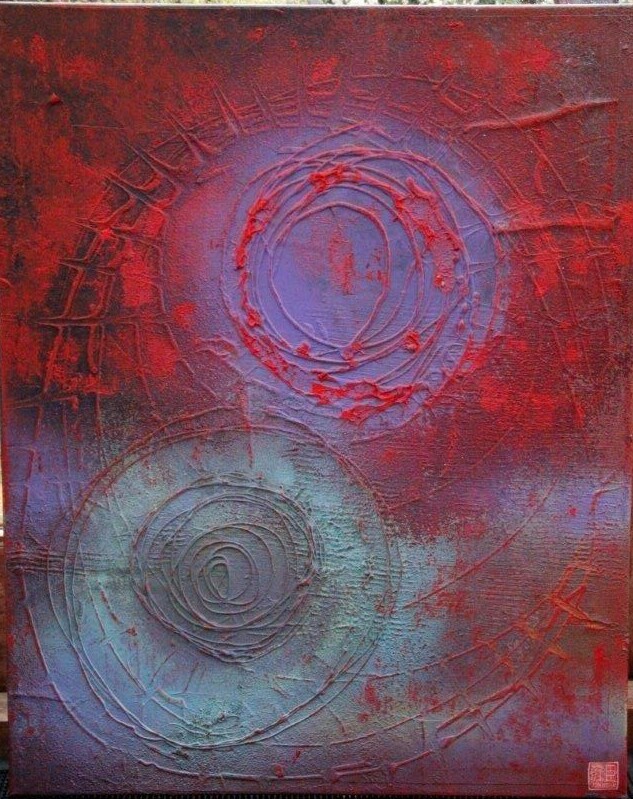
At the opening night, one artist with a tale to tell was present. Chelsea ‘Bunns’ Johnson is 24, originally from South Africa and a survivor of seven years of drug abuse. She now lives in Warwickshire though is soon to move to Coventry.

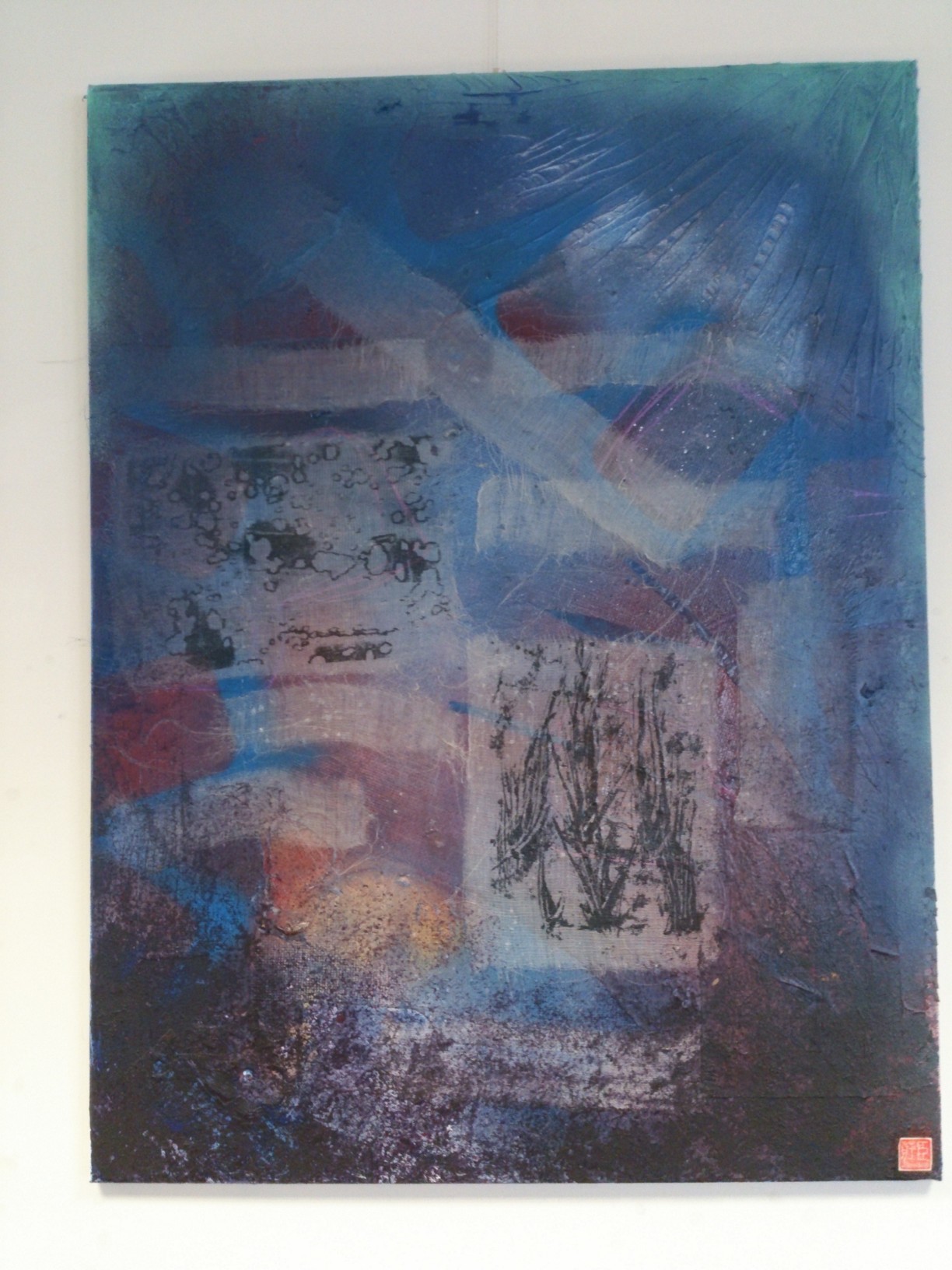
Her paintings are abstracts filled with bold colours and shapes, and often incorporating other items such as muslin and sand; she cited amongst her influences Antoni Tàpies and that interest can be seen in her work.

She said: “It’s very therapeutic for me, it’s an escape and it’s always been one constant thing in my life. It’s good to be using it to try to make a living and it’s keeping me away from the bad things – I have a very addictive personality.”

One work is entitled Hide This Somewhere Safe, and Chelsea said: “It’s when you are in that world, people grab on to you and drag you down and it’s about grab your heart and keep it safe so they don’t get hold of it.”

Get Ready To Hold Your BreathWatering My Roots “is about taking care of yourself and nurturing yourself”.  Get Ready to Hold Your Breath is right.

Chelsea’s paintings also incorporate a small stamp in the corner, made with a kit from Hong Kong her father, who still lives in South Africa, gave to her, and it reminds her of him.

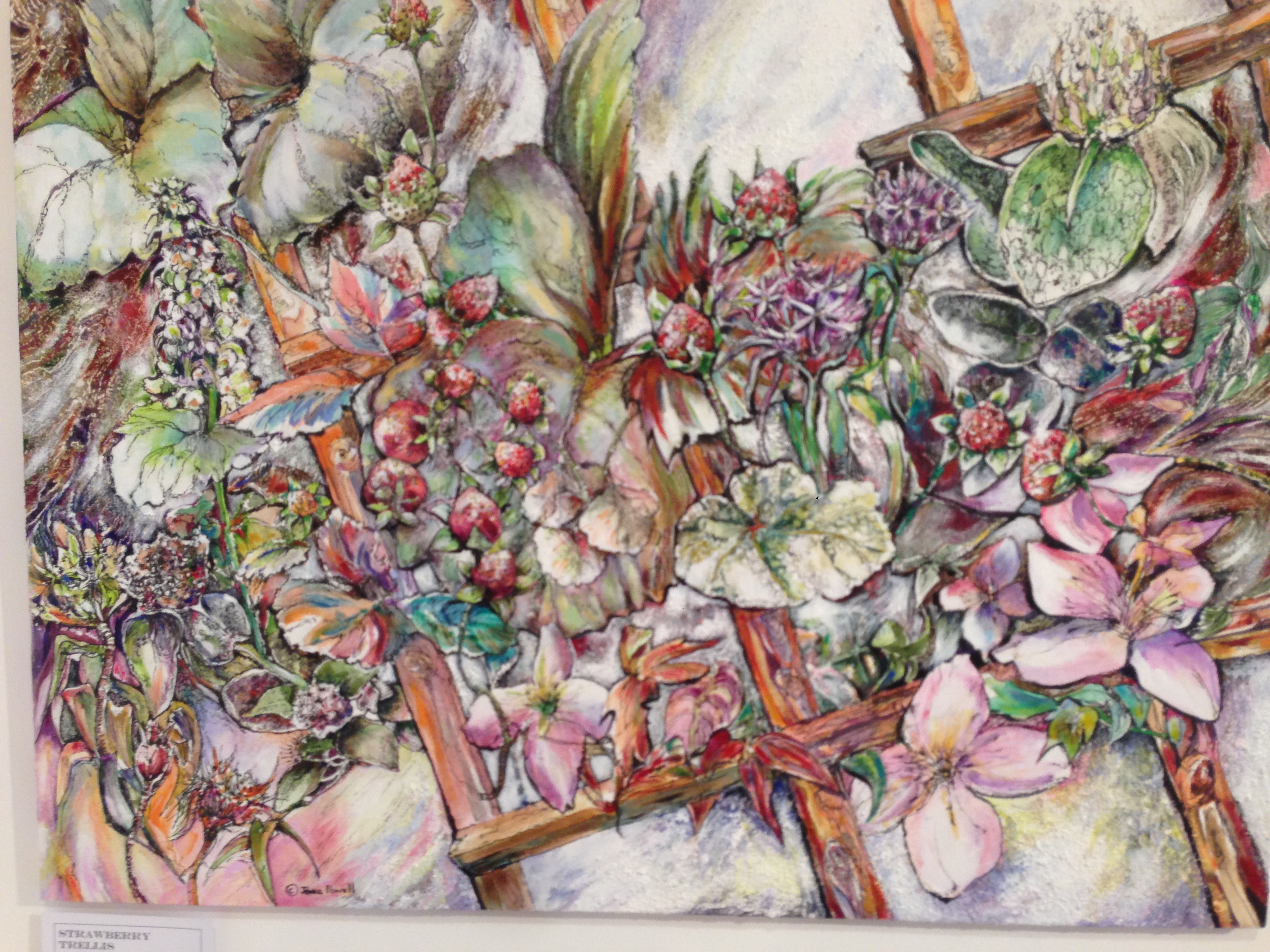
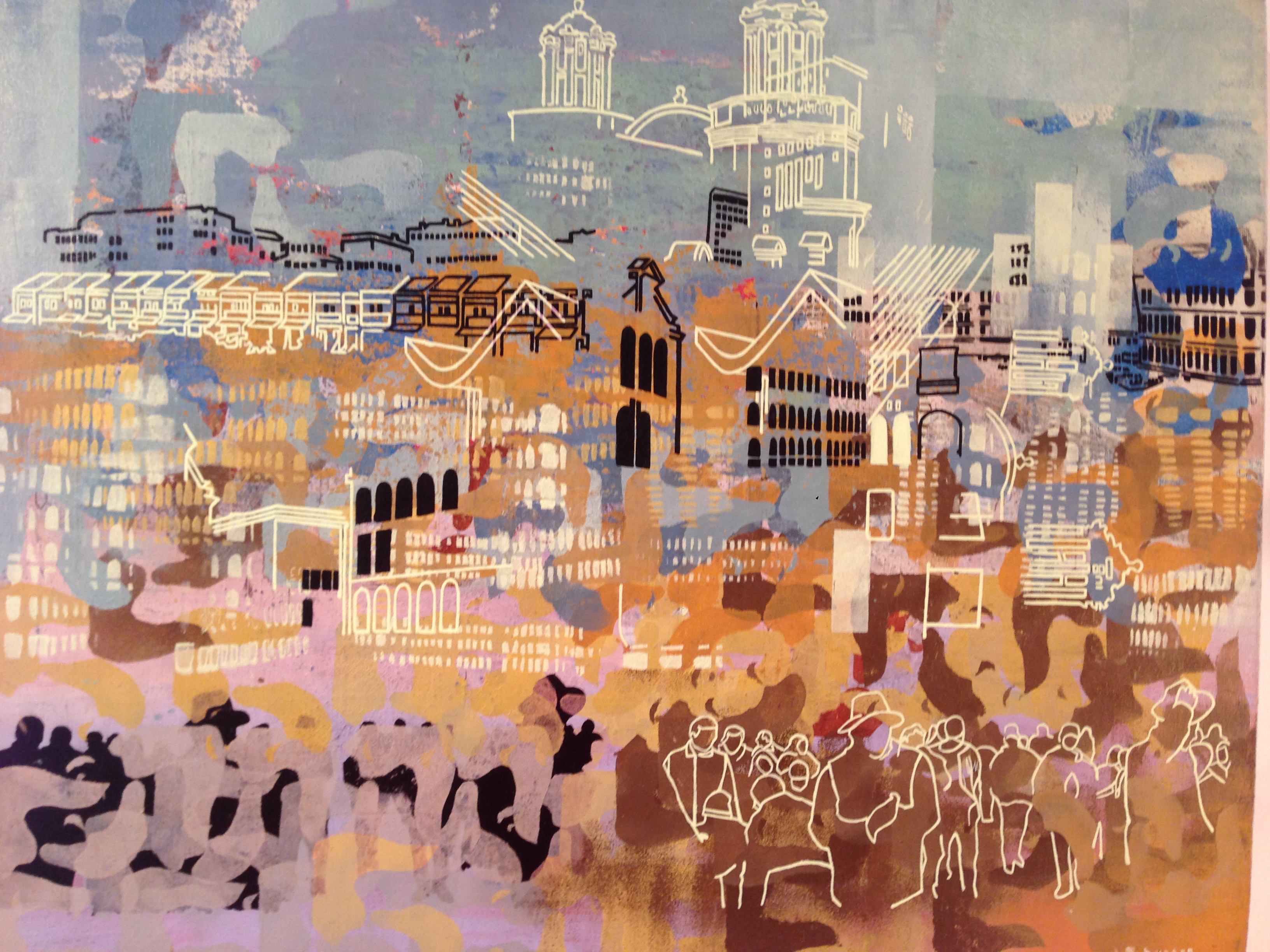
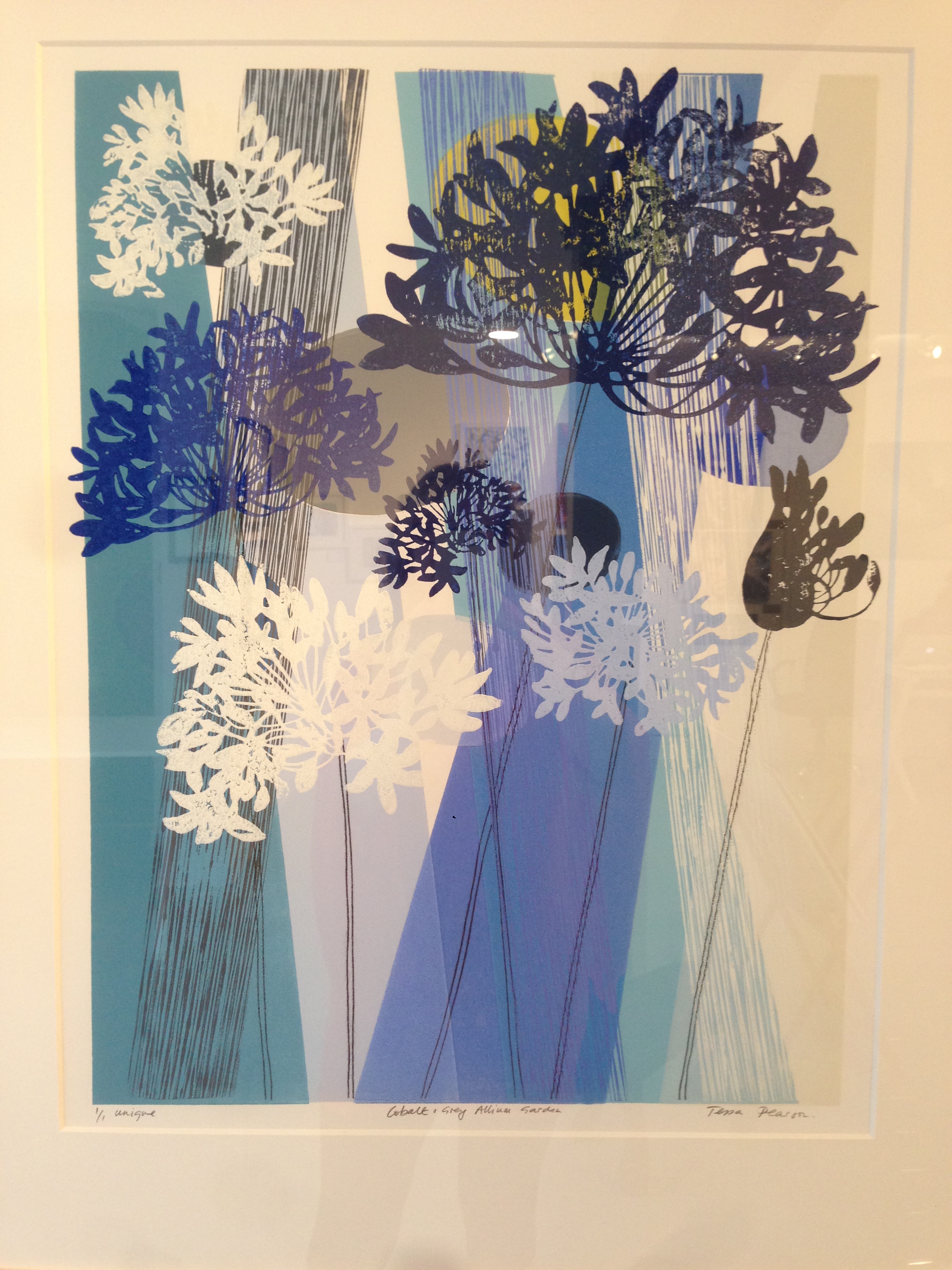
There are also very different works by other artists on show. Phil Davis’s works are detailed and bright, overlaying people and London skylines. Tessa Pearson’s show different flowers in close up, and Jane Powell’s paintings include Strawberry Trellis, a packed study of vegetation through a trellis.

Iso Bella is showing several pleasant landscape studies, and Lousie Morgan’s watercolours are tiny. Sonia Bublaitis’s Tree of Life is gold leaf on a black Perspex background.

The show is on until November 12.

IMG_1899  IMG_1900IMG_1901

Works by Jane Powell, Phil Davis and Tessa Pearson

Ai Weiwei and Giacometti are the stand-out stars of current London exhibitions

There are two exhibitions currently on in London which are must-sees if you’re in the capital any time soon.

Giacometti’s Pure Presence exhibition at the National Portrait Gallery has had five star reviews already, and on the second day it was open crowds were literally queuing out of the door to buy timed tickets. Despite this the gallery still didn’t feel over-full.

Giacometti is up there in my top two of sculptors, but this is apparently the first exhibition to focus on his portraiture, with more than 60 paintings, sculptures and drawings from international collections. He was fascinated throughout his career about how to evoke a human presence in his work, and how people fitted into space, and this exhibition seeks to explore that.

There are some amazing works from his youth, including his first sculpture, a bronze work of his brother Bruno made when the artist was just 13. Their father was a post-impressionist painter, and early paintings of his family are in a similar style. In later works he experimented with surrealism and developed his own style. The Artist’s Mother of 1927 showed her with a flat face, the features engraved on it.

A whole room focuses on works in which Giacometti’s mother, who lived into her 90s, was the model, being depicted depending on how he was working at that time; in one painting she was the only focus, then in 1950 she was seen smaller and at the end of he room, fitting into the context of household items, related to his interest in existentialism at that time.

His brother Diego worked with him much of his life, and there are several portraits of Diego seated more casually than the female models, and also Diego in a Sweater, a bronze from 1953 showing the jumper as huge, and his brother’s head tiny but sculpted in detail.

As Giacometti became more successful, there were other models from outside the family, including Jean Genet, painted off centre in an oil work from 1954-5.

A room shows photos of Giacometti with his family, his ramshackle studio and with companions including Samuel Beckett. However his interests in people were not limited to the well-known; his wife Annette posed for him many times, and towards the end of his life a model he called Caroline who moved in borderline criminal circles became important, and a series of paintings show him focussing in on her face and then more so her eyes.

It’s a fascinating exhibition which although successful in itself left me pining for more of his sculptures again.

Over at the Royal Academy, Ai Weiwei’s exhibition gained lots of publicity on opening because of the British government’s initial refusal to grant him a visa to enter the country, an act later reversed.

However the exhibition deserves fame on its own account, demonstrating art as an undoubtedly political act and process. There are quite a few items made from wood from dismantled temples from the Qing Dynasty (1644-1911), including an unusable table with two legs up the wall, and a table with pillar coming out of it. Kippe is a large structure made from bits of wood fitted together. Outside, you approach the gallery through wooden trees, made up of parts of different trees fitted together, representing the whole of China.

In one room, names and details line both walls, identifying the thousands of school pupils who died in the 2008 earthquake in Sichuan, in which lots of inadequately-built schools collapsed. Metal rods meant to reinforce them are lined up on the floor in a large installation, and there is a film of the aftermath of the collapse, and photos. Pieces like this have not surprisingly made Ai Weiwei unpopular with the Chinese authorities.

Shanghai Studio is the title of another room, where we are told about how Ai Weiwei was invited to build a new studio in a Shanghai district, and this was done, then it was declared illegal and torn down; bits of brick, cement and ornate wood make up a huge block in the gallery from the destruction, ironically entitled Souvenir from Shanghai.

In another room, the destruction of Chinese historical building and artefacts and the race to destroy more through efforts to boost the economy is explored partly through Dust to Dust, ground dust from china dating back to 5000-3000BC stored in jars.

Fragments is a huge wooden structure you can walk underneath, made from some of the larger, attractive parts of dismantled ancient temples, and in another room the popular Chinese building material marble is turned into models of security cameras used to keep an eye on the artist.

In 2011, Ai Weiwei was held for 81 days as he tried to leave the country, and kept constantly in a room with two guards. He has created six small models of this room, which can be viewed through a window, or by looking down into it from positioned steps. In these he has modelled himself going through the motions of living, as the two guards watch; sleeping, reading, eating, showering and even using the toilet. You get some small idea of how intolerable this must have been.

The final room contains a chandelier made partly of bicycles; a bright, glittering end to an amazing exhibition of works by an artist of great significance today.

* Giacometti, Pure Presence, is on until January 10, and Ai Weiwei until December 13.


Double surprise with a sparkling start to exhibitions in Leamington

What’s better than one art exhibition opening with Prosecco on a Friday evening? Two! Specially when the second one was completely unexpected. And the artists are twins!

The exhibition opening at the Deasil Gallery in Oxford Street in Leamington offered pictures by about a dozen photographers and a painter.

After enjoying a chat with artists, fizz and nibbles with the two Kates who run Deasil, I was off home until I passed the Whitewall Gallery in Regent Street and was drawn in by the sight of a tray of sparkling full glasses in the window.

The occasion was the unveiling of a set of paintings by Chris and Steve Rocks, 30-year-old twins from Durham who studied art together in Leeds, and work together. The paintings are described as tributes to the power of nature, and are on a tour of Whitewall Galleries around the country, along with the artists.

Chris said they have their own technique and approach, both bringing something different to the works, with him working on textures and Steve concentrating more on detail. He said: “Some are more descriptive than others, they have that fantasy feel and maybe remind you of somewhere you have been.”

It seems the paintings will only be on show there for a few days before they and the artists move on.

At Deasil, you have until October 2 to see the new exhibition.

Stuart Ellis’s abstract paintings fill the small back room, and the photographs out front are vary varied in style. A number wouldn’t be out of place in a classy travel magazine; James Callaghan’s Antigua photographs make you long for the blue sea and sky, and Matthew Sugars’s works make St Michael’s Mount in Cornwall mysterious and Venice as attractive as it is. Hilary Roberts has, in her word, fiddled with the images digitally to make a Cuban car stand out against a fading background, and to turn wave marks in sand into trees. Ray Spence’s black and white images date from 25 years ago and use altered negatives taken on film.

Other artists use mixed media, cutting, collage and old postcards to interesting effect; more detail to follow in the Coventry Telegraph on Friday.